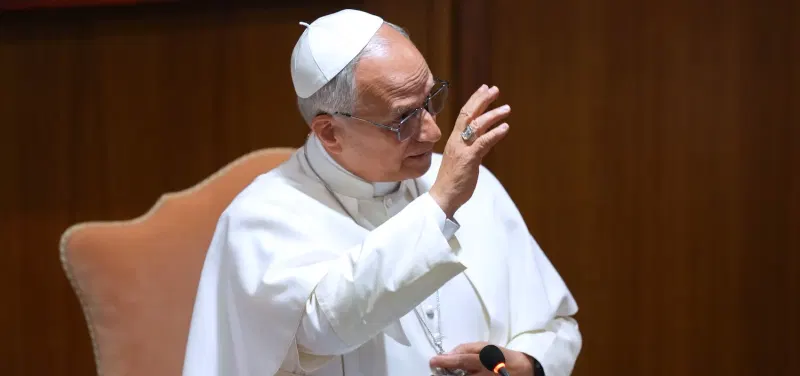
Presentation and promulgation of the Encyclical Letter "Magnifica humanitas"
3 distinct publishers, one article each in this sample.
Ownership mix: Other: 3
3 publishers · 3 articles · switch to 1-minute for disagreement and framing.
What happened
Pope Leo XIV’s first encyclical, on safeguarding the human person in the time of artificial intelligence, begins with the Tower of Babel (Gen. 11:1–9). Babel represents the grandiosity of...
Why the coverage differs
AI-assisted comparison · labeled · generated May 26, 2026, 1:45 AM · not a verdict
Pope Leo XIV issued his first encyclical, "Magnifica Humanitas," focusing on the implications of artificial intelligence for human dignity. The document emphasizes the need to safeguard the human person in the face of technological advancements, drawing on biblical references such as the Tower of Babel. This encyclical was officially presented and promulgated by the Vatican.
Coverage diverges primarily in thematic emphasis and interpretation. The Vatican's official releases present the encyclical in a straightforward manner, focusing on its content and implications for the Church's teachings. In contrast, First Things offers a more critical analysis, framing the encyclical within a broader theological context and emphasizing the potential dangers of technological hubris. The Vatican's coverage is more neutral and descriptive, while First Things engages with the encyclical's philosophical underpinnings.
Comparison summary
AI-assisted · Cerebras / Llama · May 26, 2026, 1:45 AM · inspect sources below rather than trusting this alone
Pope Leo XIV issued his first encyclical, "Magnifica Humanitas," focusing on the implications of artificial intelligence for human dignity. The document emphasizes the need to safeguard the human person in the face of technological advancements, drawing on biblical references such as the Tower of Babel. This encyclical was officially presented and promulgated by the Vatican.
Coverage diverges primarily in thematic emphasis and interpretation. The Vatican's official releases present the encyclical in a straightforward manner, focusing on its content and implications for the Church's teachings. In contrast, First Things offers a more critical analysis, framing the encyclical within a broader theological context and emphasizing the potential dangers of technological hubris. The Vatican's coverage is more neutral and descriptive, while First Things engages with the encyclical's philosophical underpinnings.
What's missing from the coverage is a discussion of potential responses from various stakeholders, such as technology experts or ethicists, regarding the encyclical's implications. This absence may reflect a blind spot in both the Vatican's and First Things' narratives, as neither outlet explores the practical applications or critiques of the encyclical's proposals.
Report timeline
Oldest → newest among clustered members. Gaps may mean delayed pickup, not silence.
-
May 25, 2026, 10:11 AMVatican · CenterMagnifica Humanitas (Encyclical Letter)
-
May 25, 2026, 2:01 PMFirst Things · RightA Boomer, But An Augustinian: On Magnifica Humanitas
-
May 26, 2026, 12:07 AM
Coverage by perspective
Perspective labels are external consensus ratings (AllSides / Ad Fontes / MBFC-style), not WeSearch truth scores. Center is not automatically more accurate.
Center · 2
Right · 1
Headline framing
Vocabulary fingerprints · not a political endorsement
The headlines cover the encyclical 'Magnifica Humanitas' with a neutral presentation from center sources and a personal angle from a right-leaning source.
Bias/ownership: published methodology on source profiles · AI text always labeled · no reader paywall · no engagement ranking of news · transparency · contribute Ws · home