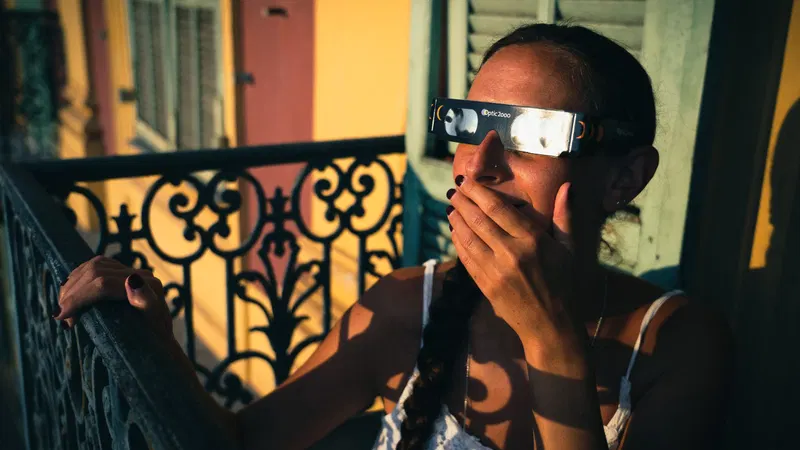
How to watch the solar eclipse safely
3 distinct publishers across 4 articles (some outlets filed more than once).
Ownership mix: Other: 4
3 publishers · 4 articles · switch to 1-minute for disagreement and framing.
What happened
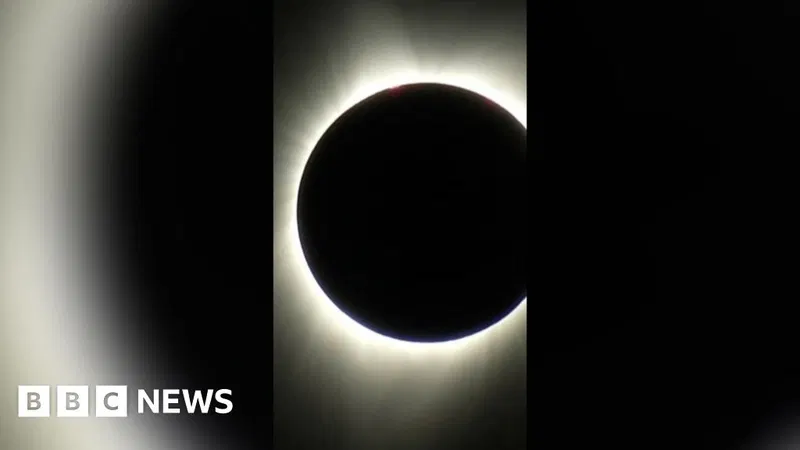
On August 12, the moon will pass in front of the sun, completely obscuring it in a solar eclipse. According to Nasa, parts of Greenland, Iceland, Spain, Russia and Portugal will experience a total solar eclipse. In the…
Why the coverage differs
AI-assisted comparison · labeled · generated Aug 11, 2026, 1:08 PM · not a verdict
A solar eclipse is set to occur on August 12, with parts of Europe experiencing a total eclipse. According to NASA, areas including Greenland, Iceland, and Spain will be affected. The UK will also witness a partial eclipse.
Coverage of the event diverges in terms of emphasis, with The Guardian focusing on safety precautions for viewing the eclipse, while Tom's Guide highlights the spectacle of the event. BBC News, on the other hand, provides an overview of the eclipse's visibility in the UK and Europe.
Comparison summary
AI-assisted · Cerebras / Llama · Aug 11, 2026, 1:08 PM · inspect sources below rather than trusting this alone
A solar eclipse is set to occur on August 12, with parts of Europe experiencing a total eclipse. According to NASA, areas including Greenland, Iceland, and Spain will be affected. The UK will also witness a partial eclipse.
Coverage of the event diverges in terms of emphasis, with The Guardian focusing on safety precautions for viewing the eclipse, while Tom's Guide highlights the spectacle of the event. BBC News, on the other hand, provides an overview of the eclipse's visibility in the UK and Europe.
Only general information about the eclipse has been covered so far, with no in-depth analysis of the scientific significance or potential impacts on the environment. The sources primarily cater to a general audience, omitting technical details that might be of interest to specialists.
Report timeline
Oldest → newest among clustered members. Gaps may mean delayed pickup, not silence.
-
Aug 10, 2026, 6:20 PMBBC News — Science · CenterWho will be able to see the solar eclipse?
-
Aug 11, 2026, 11:05 AMThe Guardian — Science · Lean LeftHow to safely watch the solar eclipse
-
Aug 11, 2026, 1:00 PMTom's Guide · CenterHow you can watch the solar eclipse on August 12
-
Aug 11, 2026, 2:08 PMBBC News — Science · CenterHow to watch the solar eclipse safely
Coverage by perspective
Perspective labels are external consensus ratings (AllSides / Ad Fontes / MBFC-style), not WeSearch truth scores. Center is not automatically more accurate.
Lean Left · 1

Center · 3

Headline framing
Vocabulary fingerprints · not a political endorsement
AI framing analysis temporarily offline. Configure Cerebras in admin to enable framing comparison.
Bias/ownership: published methodology on source profiles · AI text always labeled · no reader paywall · no engagement ranking of news · transparency · contribute Ws · home