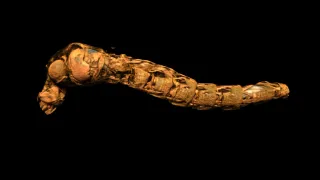
50-foot ancient snake discovered in India may be one of the largest ever
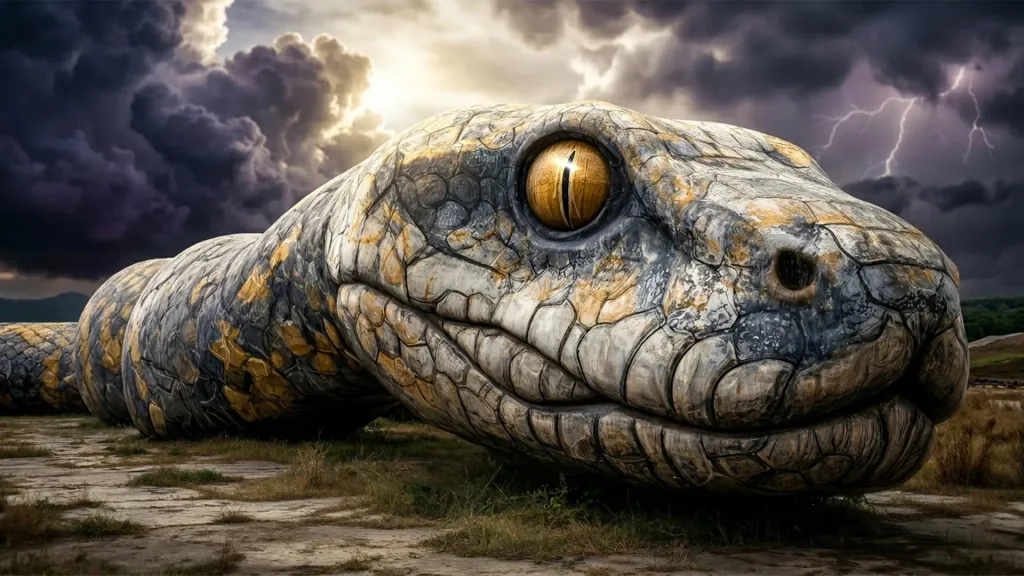
A newly discovered prehistoric snake species, Vasuki indicus, lived around 47 million years ago in what is now Gujarat, India. Fossilized vertebrae suggest it measured between 11 and 15 meters long, placing it among the largest snakes ever known. The snake likely ambushed prey like modern anacondas and belonged to the extinct madtsoiidae family.
- ▪Vasuki indicus lived approximately 47 million years ago during the Middle Eocene period.
- ▪The fossil remains, including 27 vertebrae, were found in the Panandhro Lignite Mine in Gujarat, India.
- ▪Scientists estimate the snake's length at 10.9 to 15.2 meters, comparable to the legendary Titanoboa.
- ▪Vasuki indicus belongs to the madtsoiidae family, a group of snakes that existed from the Late Cretaceous to the Late Pleistocene.
- ▪The species name honors the mythical serpent Vasuki associated with the Hindu deity Shiva and the country of India.
ScienceDaily files mainly under science. We currently carry 84 of its stories.
Story provenance
Source · retrieval · rights · ranking — open for full record
inspect →
Story provenance
Attribution is not the same as permission. This drawer separates discovery metadata, excerpts, WeSearch-generated summaries, reuse status, and whether the publisher receives the visit. Nothing here claims a legal grant the publisher has not made.
Record
| Original publisher | ScienceDaily |
| Canonical URL | https://www.sciencedaily.com/releases/2026/04/260429043500.htm |
| Publication time | Wed, 29 Apr 2026 05:13:03 EDT |
| Retrieval time | 2026-04-29T09:26:54.494Z |
| Last seen | 2026-04-29T09:26:54.494Z |
| Headline source | Publisher (no WeSearch rewrite) |
| Excerpt source | publisher body |
| Excerpt method | First ~120 words (~800 chars) of extracted publisher body, fair-use limited. |
| Summary | WeSearch · cerebras-chat (WeSearch summarizer) |
| Summary source text | contentText |
| Citation coverage | Summary is a WeSearch-generated derivative; primary citation is the original publisher URL. |
| Cluster | -EJMYdUUBnus |
| Cluster logic | Grouped by semantic title/content similarity across sources within a rolling window. Same-publisher template collisions are excluded from coverage comparison. |
| Ranking reason | Story pages are not engagement-ranked. Hub feeds use recency, with optional source-diversified chronological ordering (cap consecutive stories per source). No personalized ranking. |
| Publisher visit | Yes — open original |
| Substitutes article? | No — link-out required for full text |
Rights status (four layers)
WeSearch handling by dimension
| Indexing | May the item be indexed (stored, ranked, made findable)? | Allowed |
| Snippet | May a short excerpt of the publisher's text be shown? | Allowed |
| AI summary | May WeSearch generate its own short summary of the article? | Limited |
| Retrieval / RAG | May the content be exposed for third-party retrieval-augmented generation? | Not asserted |
| Model training | May the content be used to train AI models? | Not asserted |
| Commercial reuse | May the content be reused commercially? | Not permitted |
Basis: Derived from the published RSS/Atom feed. Contact: [email protected]. Reviewed: 2026-07-24.
Opening excerpt (first ~120 words) tap to expand
Science News from research organizations 50-foot ancient snake discovered in India may be one of the largest ever Date: April 29, 2026 Source: Scientific Reports Summary: A massive prehistoric snake discovered in India may rank among the largest ever to slither across Earth. Named Vasuki indicus, this ancient giant lived around 47 million years ago and is estimated to have stretched an astonishing 11 to 15 meters long—rivaling the legendary Titanoboa. Fossilized vertebrae unearthed from a lignite mine in Gujarat reveal a thick-bodied, powerful snake likely built for slow, stealthy ambush attacks, similar to modern anacondas.
…
Excerpt limited to ~120 words for fair-use compliance. The full article is at ScienceDaily.
Discussion
0 commentsMore from ScienceDaily