73-Million-Year-Old Teeth Reveal Three New Mammal Species That Lived in the Arctic, Among Dinosaurs
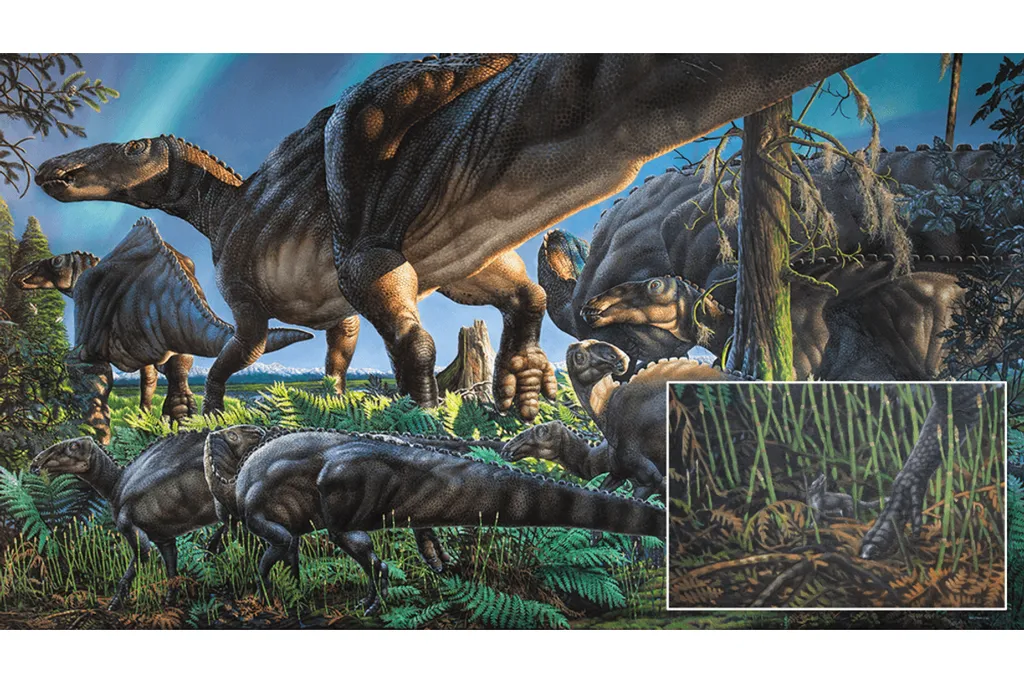
Fossilized teeth from the Arctic have led to the identification of three new mammal species that lived alongside dinosaurs 73 million years ago. These small mammals, part of the multituberculate group, thrived in a harsh Arctic environment. Their discovery provides new insights into prehistoric biodiversity and the adaptability of species in extreme conditions.
- ▪The newly identified species are named Camurodon borealis, Qayaqgruk peregrinus, and Kaniqsiqcosmodon polaris.
- ▪These mammals likely adapted to their environment by having varied diets, which may have helped them survive the mass extinction event.
- ▪The findings suggest that there was a land corridor between Asia and North America that allowed for the migration of these species.
Discover Magazine files mainly under science. We currently carry 86 of its stories.
Story provenance
Source · retrieval · rights · ranking — open for full record
inspect →
Story provenance
Attribution is not the same as permission. This drawer separates discovery metadata, excerpts, WeSearch-generated summaries, reuse status, and whether the publisher receives the visit. Nothing here claims a legal grant the publisher has not made.
Record
| Original publisher | Discover Magazine |
| Canonical URL | https://www.discovermagazine.com/73-million-year-old-teeth-reveal-three-new-mammal-species-that-lived-in-the-arctic-among-dinosaurs-49115 |
| Publication time | Mon, 18 May 2026 21:00:00 GMT |
| Retrieval time | 2026-05-18T21:04:56.980Z |
| Last seen | 2026-05-18T21:04:56.980Z |
| Headline source | Publisher (no WeSearch rewrite) |
| Excerpt source | publisher body |
| Excerpt method | First ~120 words (~800 chars) of extracted publisher body, fair-use limited. |
| Summary | WeSearch · cerebras-chat (WeSearch summarizer) |
| Summary source text | contentText |
| Citation coverage | Summary is a WeSearch-generated derivative; primary citation is the original publisher URL. |
| Cluster | kSf0lqaaOGJz |
| Cluster logic | Grouped by semantic title/content similarity across sources within a rolling window. Same-publisher template collisions are excluded from coverage comparison. |
| Ranking reason | Story pages are not engagement-ranked. Hub feeds use recency, with optional source-diversified chronological ordering (cap consecutive stories per source). No personalized ranking. |
| Publisher visit | Yes — open original |
| Substitutes article? | No — link-out required for full text |
Rights status (four layers)
WeSearch handling by dimension
| Indexing | May the item be indexed (stored, ranked, made findable)? | Allowed |
| Snippet | May a short excerpt of the publisher's text be shown? | Allowed |
| AI summary | May WeSearch generate its own short summary of the article? | Limited |
| Retrieval / RAG | May the content be exposed for third-party retrieval-augmented generation? | Not asserted |
| Model training | May the content be used to train AI models? | Not asserted |
| Commercial reuse | May the content be reused commercially? | Not permitted |
Basis: Derived from the published RSS/Atom feed. Contact: [email protected]. Reviewed: 2026-07-24.
Opening excerpt (first ~120 words) tap to expand
Fossilized teeth from the Prince Creek Formation in the Arctic Circle have been assigned to three newly identified mammal species that likely walked among dinosaurs about 73 million years ago. The findings, published in the Proceedings of the National Academy of Sciences (PNAS), suggest that these small, rodent-sized mammals — ranging in size from a mouse to a rat — once lived in what is now northern Alaska and may have settled in the area after traveling from what is now modern-day Mongolia.
…
Excerpt limited to ~120 words for fair-use compliance. The full article is at Discover Magazine.
Discussion
0 commentsMore from Discover Magazine