‘Lee Cronin’s The Mummy’ Originally Had a Much Bleaker Ending
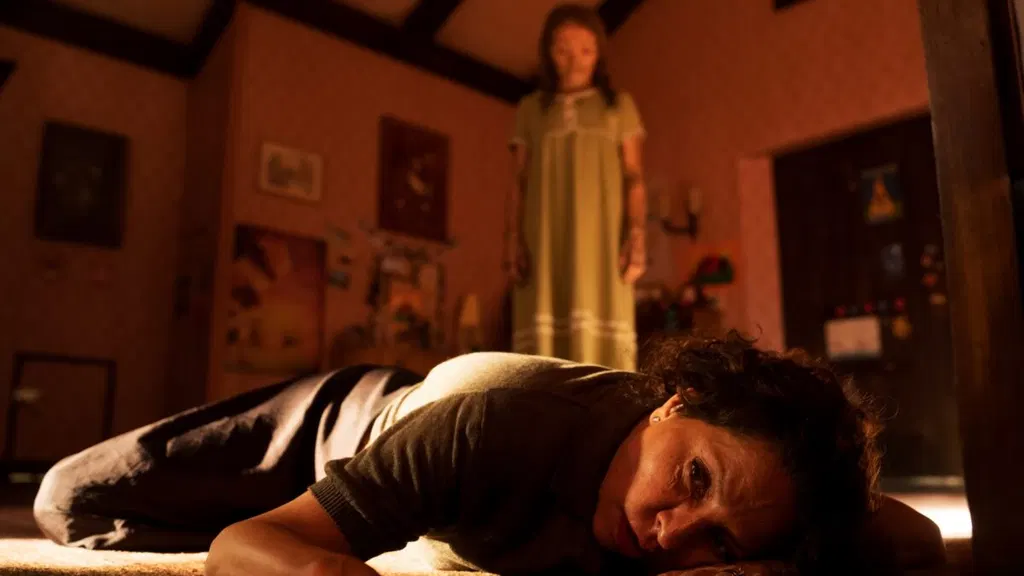
Lee Cronin's The Mummy underwent significant changes before its theatrical release, particularly regarding its ending. The original conclusion was much darker, with the protagonist's father sacrificing himself to save his daughter from a demon. The final version added a scene that provided a more cathartic resolution, but it also raised questions about the future of the demon's containment.
- ▪The original ending of The Mummy featured a darker conclusion where the father sacrifices himself to save his daughter.
- ▪The theatrical version included a reshoot that allowed the father to escape the demon by transferring it to the kidnapper.
- ▪Jack Reynor, who plays the father, expressed mixed feelings about the changes, acknowledging the appeal of both endings.
Gizmodo files mainly under tech. We currently carry 694 of its stories.
Story provenance
Source · retrieval · rights · ranking — open for full record
inspect →
Story provenance
Attribution is not the same as permission. This drawer separates discovery metadata, excerpts, WeSearch-generated summaries, reuse status, and whether the publisher receives the visit. Nothing here claims a legal grant the publisher has not made.
Record
| Original publisher | Gizmodo |
| Canonical URL | https://gizmodo.com/lee-cronins-the-mummy-originally-had-a-much-bleaker-ending-2000751497 |
| Publication time | Tue, 28 Apr 2026 12:00:28 +0000 |
| Retrieval time | 2026-04-28T12:04:31.909Z |
| Last seen | 2026-04-28T12:04:31.909Z |
| Headline source | Publisher (no WeSearch rewrite) |
| Excerpt source | publisher body |
| Excerpt method | First ~120 words (~800 chars) of extracted publisher body, fair-use limited. |
| Summary | WeSearch · cerebras-chat (WeSearch summarizer) |
| Summary source text | contentText |
| Citation coverage | Summary is a WeSearch-generated derivative; primary citation is the original publisher URL. |
| Cluster | oE40Od9brBJF |
| Cluster logic | Grouped by semantic title/content similarity across sources within a rolling window. Same-publisher template collisions are excluded from coverage comparison. |
| Ranking reason | Story pages are not engagement-ranked. Hub feeds use recency, with optional source-diversified chronological ordering (cap consecutive stories per source). No personalized ranking. |
| Publisher visit | Yes — open original |
| Substitutes article? | No — link-out required for full text |
Rights status (four layers)
WeSearch handling by dimension
| Indexing | May the item be indexed (stored, ranked, made findable)? | Allowed |
| Snippet | May a short excerpt of the publisher's text be shown? | Allowed |
| AI summary | May WeSearch generate its own short summary of the article? | Limited |
| Retrieval / RAG | May the content be exposed for third-party retrieval-augmented generation? | Not asserted |
| Model training | May the content be used to train AI models? | Not asserted |
| Commercial reuse | May the content be reused commercially? | Not permitted |
Basis: Derived from the published RSS/Atom feed. Contact: [email protected]. Reviewed: 2026-07-24.
Opening excerpt (first ~120 words) tap to expand
Lee Cronin’s The Mummy wasn’t our favorite mummy movie, but it did have some recommendable qualities, including its high levels of gruesome gore. We also approved of the ending, which offered a satisfying twist to the agony that came before. And while The Mummy‘s test screenings were targeted by some since-debunked negative rumors (look, James Wan just wanted more snacks, that’s all!), apparently those same early showings helped writer-director Cronin figure out that all-important final note for his…
Excerpt limited to ~120 words for fair-use compliance. The full article is at Gizmodo.
Discussion
0 commentsMore from Gizmodo