A Cattle Ranch Is Doing What Ivy League Can't
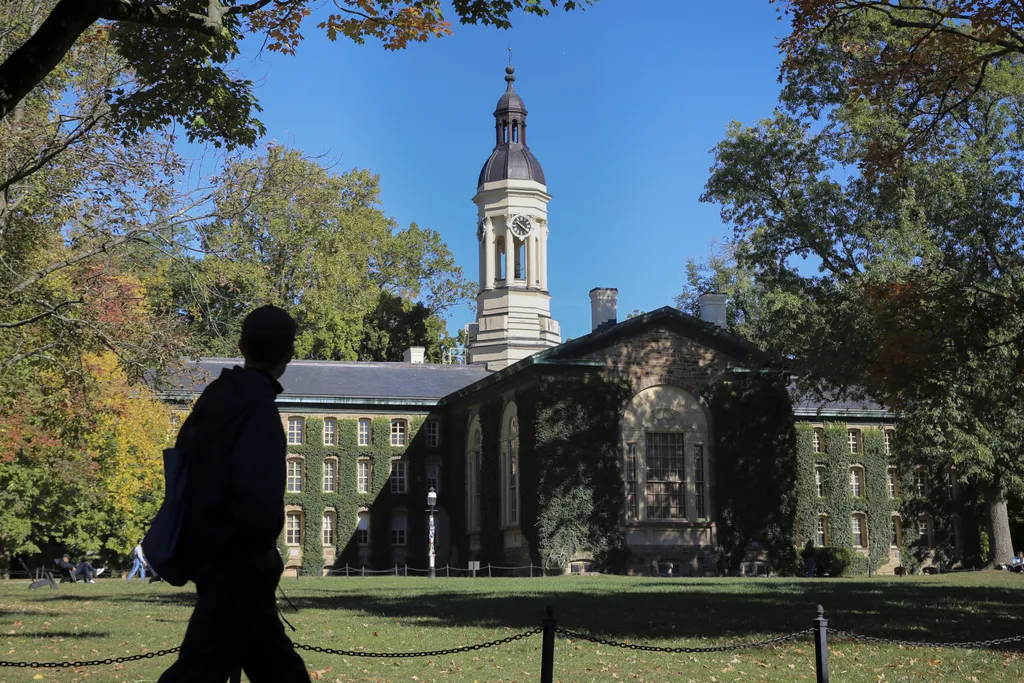
The article reflects on wasteful behaviors observed in college dining halls during the 2010s. It highlights how some students would discard their meals and utensils instead of returning them to the dining area. This behavior, while not common, raises questions about responsibility and sustainability in food consumption.
- ▪Some college students discarded their meals and utensils instead of returning them to the dining hall.
- ▪This wasteful behavior was not the norm among all students.
- ▪The article prompts a discussion on responsibility and sustainability in food consumption.
2 outlets in our directory ran this story, first to last over 23 hours. All of the coverage we found sits in one bucket: lean left. That one-sidedness is itself worth noticing.
- ▪ A Cattle Ranch Is Doing What Ivy League Colleges Can’t — NYT > Top Stories
RealClear Markets files mainly under finance. We currently carry 447 of its stories.
Story provenance
Source · retrieval · rights · ranking — open for full record
inspect →
Story provenance
Attribution is not the same as permission. This drawer separates discovery metadata, excerpts, WeSearch-generated summaries, reuse status, and whether the publisher receives the visit. Nothing here claims a legal grant the publisher has not made.
Record
| Original publisher | RealClear Markets |
| Canonical URL | https://www.realclearmarkets.com/2026/05/21/a_cattle_ranch_is_doing_what_ivy_league_cant_1183991.html |
| Publication time | Thu, 21 May 2026 03:00:28 -0500 |
| Retrieval time | 2026-05-21T08:10:03.731Z |
| Last seen | 2026-05-21T08:10:03.731Z |
| Headline source | Publisher (no WeSearch rewrite) |
| Excerpt source | publisher body |
| Excerpt method | First ~120 words (~800 chars) of extracted publisher body, fair-use limited. |
| Summary | WeSearch · cerebras-chat (WeSearch summarizer) |
| Summary source text | contentText |
| Citation coverage | Summary is a WeSearch-generated derivative; primary citation is the original publisher URL. |
| Cluster | mOAf5CKjFQGN · 2 stories |
| Cluster logic | Grouped by semantic title/content similarity across sources within a rolling window. Same-publisher template collisions are excluded from coverage comparison. |
| Ranking reason | Story pages are not engagement-ranked. Hub feeds use recency, with optional source-diversified chronological ordering (cap consecutive stories per source). No personalized ranking. |
| Publisher visit | Yes — open original |
| Substitutes article? | No — link-out required for full text |
Rights status (four layers)
WeSearch handling by dimension
| Indexing | May the item be indexed (stored, ranked, made findable)? | Allowed |
| Snippet | May a short excerpt of the publisher's text be shown? | Allowed |
| AI summary | May WeSearch generate its own short summary of the article? | Limited |
| Retrieval / RAG | May the content be exposed for third-party retrieval-augmented generation? | Not asserted |
| Model training | May the content be used to train AI models? | Not asserted |
| Commercial reuse | May the content be reused commercially? | Not permitted |
Basis: Derived from the published RSS/Atom feed. Contact: [email protected]. Reviewed: 2026-07-24.
Opening excerpt (first ~120 words) tap to expand
When I was in college in the 2010s, some of my classmates would go to the dining hall, take their meals to their dorm rooms, eat and then dispose of everything that was left — food scraps, ceramic dishes and stainless steel utensils — in the dorm trash cans. It wasn’t like we had to wash the dishes ourselves. We were just supposed to walk them a few yards back to the dining hall and stick them on a conveyor belt that took them to the kitchen. This behavior was the exception, not the norm, and I never did it. But I thought I understood the thinking behind it. Read Full Article »
Excerpt limited to ~120 words for fair-use compliance. The full article is at RealClear Markets.
Discussion
0 commentsMore from RealClear Markets