A History of Obituaries in American Newspapers
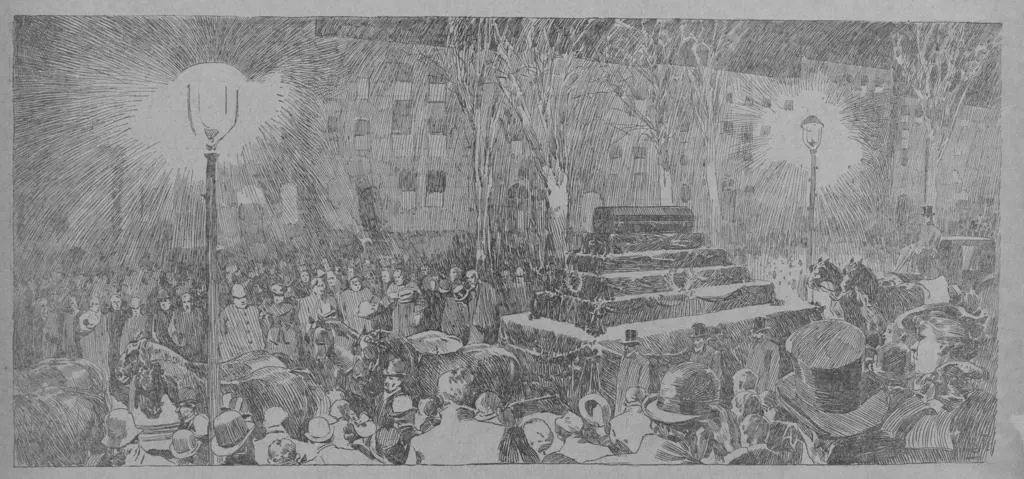
Obituaries in American newspapers have evolved significantly over time, transitioning from simple death notices to detailed accounts of individuals' lives. Historically, these notices were primarily reserved for notable figures, with many deaths going unrecorded in public forums. The publication of obituaries has often reflected societal biases, favoring wealthy and white individuals over others.
- ▪The earliest obituaries were short death notices dating back to 59 BC in Roman times.
- ▪The invention of the Gutenberg Press allowed for more widespread sharing of death notices, but they were still limited to notable individuals in colonial America.
- ▪Obituaries today include rich details about a person's life, but historically, many deaths were communicated through word of mouth rather than in newspapers.
Hacker News (Newest) files mainly under programming. We currently carry 5,306 of its stories.
Story provenance
Source · retrieval · rights · ranking — open for full record
inspect →
Story provenance
Attribution is not the same as permission. This drawer separates discovery metadata, excerpts, WeSearch-generated summaries, reuse status, and whether the publisher receives the visit. Nothing here claims a legal grant the publisher has not made.
Record
| Original publisher | The Library of Congress |
| Canonical URL | https://blogs.loc.gov/headlinesandheroes/2026/05/mourn-not-a-history-of-obituaries-in-american-newspapers/ |
| Publication time | Sun, 24 May 2026 19:22:18 +0000 |
| Retrieval time | 2026-05-24T19:37:34.010Z |
| Last seen | 2026-05-24T19:37:34.010Z |
| Headline source | Publisher (no WeSearch rewrite) |
| Excerpt source | publisher body |
| Excerpt method | First ~120 words (~800 chars) of extracted publisher body, fair-use limited. |
| Summary | WeSearch · cerebras-chat (WeSearch summarizer) |
| Summary source text | contentText |
| Citation coverage | Summary is a WeSearch-generated derivative; primary citation is the original publisher URL. |
| Cluster | ZDzC6M4ZQHct |
| Cluster logic | Grouped by semantic title/content similarity across sources within a rolling window. Same-publisher template collisions are excluded from coverage comparison. |
| Ranking reason | Story pages are not engagement-ranked. Hub feeds use recency, with optional source-diversified chronological ordering (cap consecutive stories per source). No personalized ranking. |
| Publisher visit | Yes — open original |
| Substitutes article? | No — link-out required for full text |
Rights status (four layers)
WeSearch handling by dimension
| Indexing | May the item be indexed (stored, ranked, made findable)? | Allowed |
| Snippet | May a short excerpt of the publisher's text be shown? | Allowed |
| AI summary | May WeSearch generate its own short summary of the article? | Limited |
| Retrieval / RAG | May the content be exposed for third-party retrieval-augmented generation? | Not asserted |
| Model training | May the content be used to train AI models? | Not asserted |
| Commercial reuse | May the content be reused commercially? | Not permitted |
Basis: Derived from the published RSS/Atom feed. Contact: [email protected]. Reviewed: 2026-07-24.
Opening excerpt (first ~120 words) tap to expand
The Body of Henry George Borne at the Head of the Night Pageant, The New York Journal and Advertiser (New York, N.Y.), November 1, 1897. Mourn Not! A History of Obituaries in American Newspapers May 14, 2026 Posted by: Malea Walker Share this post: The following is a guest post by Elizabeth Davidson, a Reference Librarian in the Serial and Government Publications Division. Obituaries as we know them today are rich records of a person’s life. They might include the full name of the deceased, their predeceased and surviving family members, details of their accomplishments, or information about their funerary service or interment.
…
Excerpt limited to ~120 words for fair-use compliance. The full article is at The Library of Congress.
Discussion
0 commentsMore from The Library of Congress