A Tiny Blue Deep-Sea Octopus Near the Galápagos Could Be a New Species
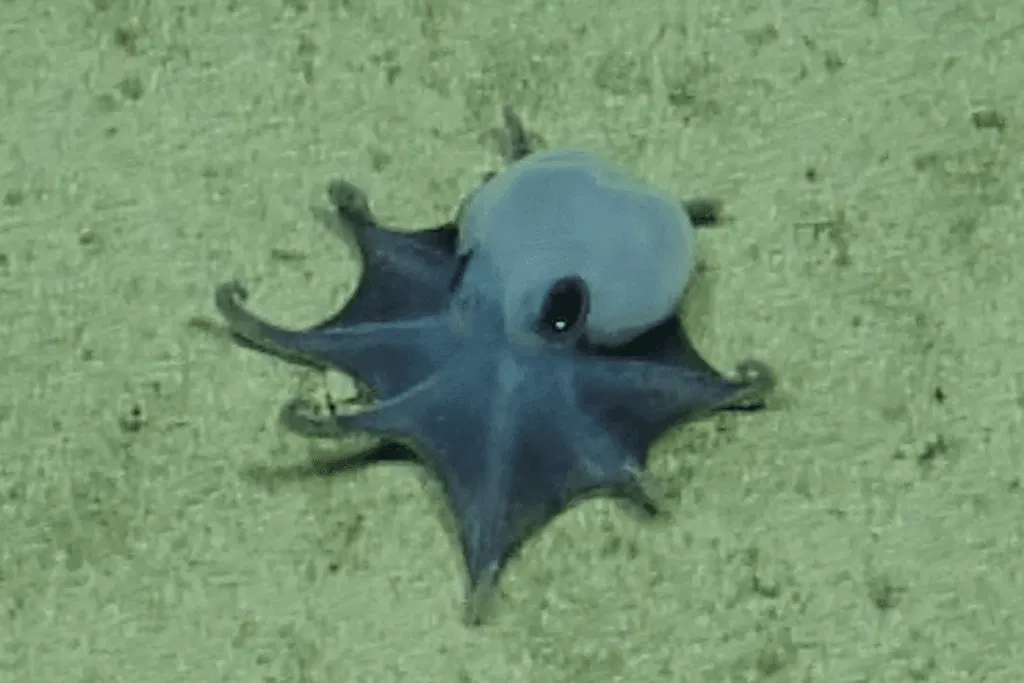
A tiny blue octopus discovered near the Galápagos may represent a new species named Microeledone galapagensis. Researchers were unable to dissect the single specimen collected, so they used CT scans to study its anatomy. This discovery highlights the vast unexplored regions of the deep ocean.
- ▪The octopus was found at a depth of 5,800 feet during a remote-operated vehicle expedition.
- ▪Researchers used non-destructive CT imaging to analyze the octopus without harming it.
- ▪This marks the first new octopus species described by expert Janet Voight in her four-decade career.
3 outlets in our directory ran this story, first to last over 3 hours. All of the coverage we found sits in one bucket: centre. That one-sidedness is itself worth noticing.
- ▪ ‘He’s tiny! It’s blue!’: Scientists find new deep-sea octopus — Straits Times — World
- ▪ New Species of Tiny Blue Octopus Discovered in the Galápagos — TIME — Top
Discover Magazine files mainly under science. We currently carry 86 of its stories.
Story provenance
Source · retrieval · rights · ranking — open for full record
inspect →
Story provenance
Attribution is not the same as permission. This drawer separates discovery metadata, excerpts, WeSearch-generated summaries, reuse status, and whether the publisher receives the visit. Nothing here claims a legal grant the publisher has not made.
Record
| Original publisher | Discover Magazine |
| Canonical URL | https://www.discovermagazine.com/a-tiny-blue-deep-sea-octopus-near-the-gal-pagos-could-be-a-new-species-49149 |
| Publication time | Mon, 25 May 2026 01:01:00 GMT |
| Retrieval time | 2026-05-25T01:07:35.186Z |
| Last seen | 2026-05-25T01:07:35.186Z |
| Headline source | Publisher (no WeSearch rewrite) |
| Excerpt source | publisher body |
| Excerpt method | First ~120 words (~800 chars) of extracted publisher body, fair-use limited. |
| Summary | WeSearch · cerebras-chat (WeSearch summarizer) |
| Summary source text | contentText |
| Citation coverage | Summary is a WeSearch-generated derivative; primary citation is the original publisher URL. |
| Cluster | nuFoP769u9AI · 3 stories |
| Cluster logic | Grouped by semantic title/content similarity across sources within a rolling window. Same-publisher template collisions are excluded from coverage comparison. |
| Ranking reason | Story pages are not engagement-ranked. Hub feeds use recency, with optional source-diversified chronological ordering (cap consecutive stories per source). No personalized ranking. |
| Publisher visit | Yes — open original |
| Substitutes article? | No — link-out required for full text |
Rights status (four layers)
WeSearch handling by dimension
| Indexing | May the item be indexed (stored, ranked, made findable)? | Allowed |
| Snippet | May a short excerpt of the publisher's text be shown? | Allowed |
| AI summary | May WeSearch generate its own short summary of the article? | Limited |
| Retrieval / RAG | May the content be exposed for third-party retrieval-augmented generation? | Not asserted |
| Model training | May the content be used to train AI models? | Not asserted |
| Commercial reuse | May the content be reused commercially? | Not permitted |
Basis: Derived from the published RSS/Atom feed. Contact: [email protected]. Reviewed: 2026-07-24.
Opening excerpt (first ~120 words) tap to expand
Five thousand eight hundred feet beneath the surface of the Pacific Ocean, a tiny blue octopus suddenly drifted across a remotely operated vehicle’s (ROV) camera near an underwater mountain in the Galápagos. For a moment, the scientists watching the live feed sounded less like researchers and more like people spotting something impossible.“He’s tiny!” “It’s blue!”About the size of a golf ball, the little octopus stood out against the dark seafloor around it. The crew later used the ROV to collect the animal and bring it back to the surface. Back on land, researchers would realize they had just encountered a new species.The newly discovered octopus, Microeledone galapagensis, is now described in Zootaxa.
…
Excerpt limited to ~120 words for fair-use compliance. The full article is at Discover Magazine.
Discussion
0 commentsMore from Discover Magazine