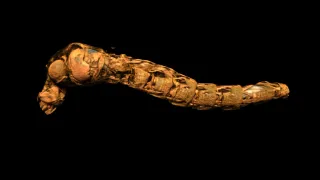
Adorable tiny blue octopus found nearly 6,000 feet beneath the Galápagos
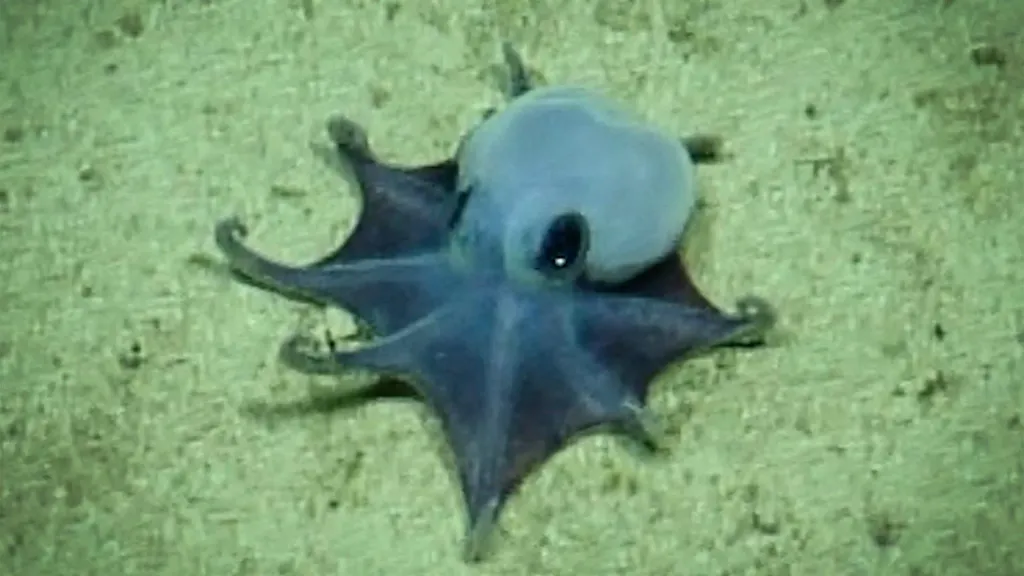
A new species of tiny blue octopus has been discovered nearly 6,000 feet beneath the Galápagos Islands. The octopus, about the size of a golf ball, was first spotted during a deep-sea expedition in 2015 and has now been officially identified. Researchers used advanced imaging technology to study the specimen without damaging it, allowing for a detailed classification of this unique creature.
- ▪The tiny blue octopus was discovered during a deep-sea expedition in 2015.
- ▪It was identified as a new species after being examined at the Field Museum in Chicago.
- ▪Researchers used non-destructive CT scans to study the octopus's anatomy without dissection.
ScienceDaily files mainly under science. We currently carry 84 of its stories.
Story provenance
Source · retrieval · rights · ranking — open for full record
inspect →
Story provenance
Attribution is not the same as permission. This drawer separates discovery metadata, excerpts, WeSearch-generated summaries, reuse status, and whether the publisher receives the visit. Nothing here claims a legal grant the publisher has not made.
Record
| Original publisher | ScienceDaily |
| Canonical URL | https://www.sciencedaily.com/releases/2026/05/260525000446.htm |
| Publication time | Mon, 25 May 2026 02:17:15 EDT |
| Retrieval time | 2026-05-25T06:32:36.770Z |
| Last seen | 2026-05-25T06:32:36.770Z |
| Headline source | Publisher (no WeSearch rewrite) |
| Excerpt source | publisher body |
| Excerpt method | First ~120 words (~800 chars) of extracted publisher body, fair-use limited. |
| Summary | WeSearch · cerebras-chat (WeSearch summarizer) |
| Summary source text | contentText |
| Citation coverage | Summary is a WeSearch-generated derivative; primary citation is the original publisher URL. |
| Cluster | jZ_oYz9DcOPj |
| Cluster logic | Grouped by semantic title/content similarity across sources within a rolling window. Same-publisher template collisions are excluded from coverage comparison. |
| Ranking reason | Story pages are not engagement-ranked. Hub feeds use recency, with optional source-diversified chronological ordering (cap consecutive stories per source). No personalized ranking. |
| Publisher visit | Yes — open original |
| Substitutes article? | No — link-out required for full text |
Rights status (four layers)
WeSearch handling by dimension
| Indexing | May the item be indexed (stored, ranked, made findable)? | Allowed |
| Snippet | May a short excerpt of the publisher's text be shown? | Allowed |
| AI summary | May WeSearch generate its own short summary of the article? | Limited |
| Retrieval / RAG | May the content be exposed for third-party retrieval-augmented generation? | Not asserted |
| Model training | May the content be used to train AI models? | Not asserted |
| Commercial reuse | May the content be reused commercially? | Not permitted |
Basis: Derived from the published RSS/Atom feed. Contact: [email protected]. Reviewed: 2026-07-24.
Opening excerpt (first ~120 words) tap to expand
Science News from research organizations Adorable tiny blue octopus found nearly 6,000 feet beneath the Galápagos Date: May 25, 2026 Source: Field Museum Summary: A mysterious little blue octopus discovered nearly 6,000 feet beneath the waters of the Galápagos Islands has officially been identified as a brand-new species. About the size of a golf ball, the tiny creature stunned researchers during a deep-sea expedition when it suddenly appeared on camera, crawling across the ocean floor near an underwater mountain. Share: Facebook Twitter Pinterest LinkedIN Email FULL STORY Video taken via ROV, with audio of the scientists exclaiming about the octopus's color.
…
Excerpt limited to ~120 words for fair-use compliance. The full article is at ScienceDaily.
Discussion
0 commentsMore from ScienceDaily