Against the Imperial Press
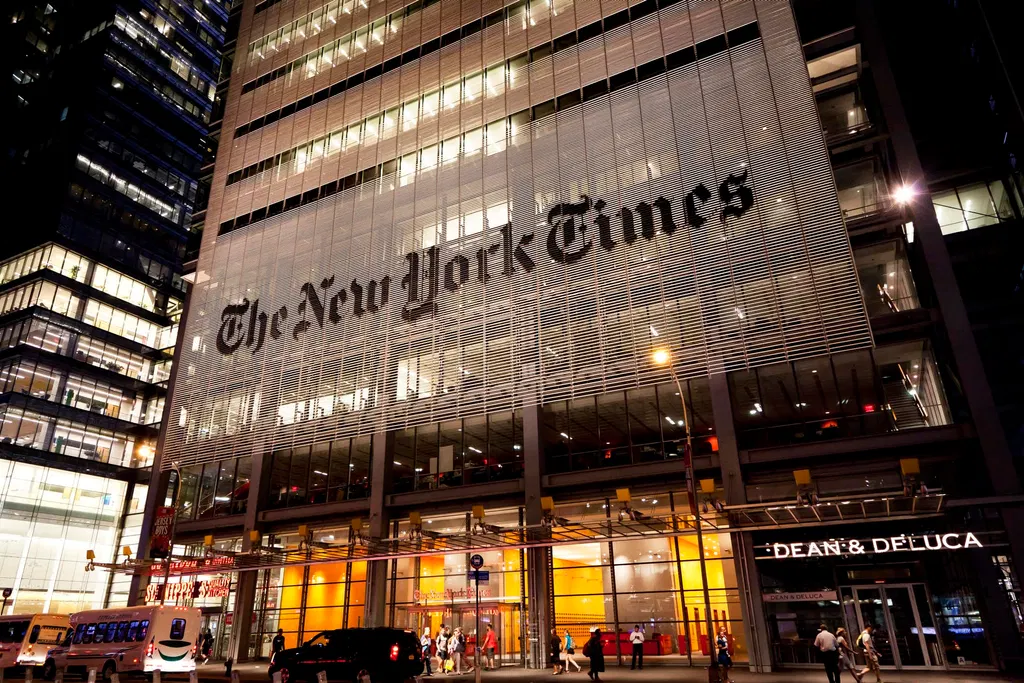
The article critiques the contemporary press's claims of special privileges under the First Amendment. It argues that these assertions often lack constitutional basis and highlights the recent remarks of New York Times publisher A.G. Sulzberger as an example. The author contends that the press should be held accountable like any other entity and that criticisms of the media should not be dismissed as attacks on press freedom.
- ▪Justice Joseph Story warned against an exaggerated conception of press freedom in 1833.
- ▪A.G. Sulzberger claims the press is under assault by President Trump, but the author argues this reflects a misunderstanding of constitutional rights.
- ▪The article suggests that the press's declining public trust may stem from its own misconduct rather than external attacks.
The American Mind files mainly under politics. We currently carry 17 of its stories.
Story provenance
Source · retrieval · rights · ranking — open for full record
inspect →
Story provenance
Attribution is not the same as permission. This drawer separates discovery metadata, excerpts, WeSearch-generated summaries, reuse status, and whether the publisher receives the visit. Nothing here claims a legal grant the publisher has not made.
Record
| Original publisher | The American Mind |
| Canonical URL | https://americanmind.org/salvo/against-the-imperial-press/ |
| Publication time | Fri, 29 May 2026 19:01:26 +0000 |
| Retrieval time | 2026-05-29T19:05:02.842Z |
| Last seen | 2026-05-29T19:05:02.842Z |
| Headline source | Publisher (no WeSearch rewrite) |
| Excerpt source | publisher body |
| Excerpt method | First ~120 words (~800 chars) of extracted publisher body, fair-use limited. |
| Summary | WeSearch · cerebras-chat (WeSearch summarizer) |
| Summary source text | contentText |
| Citation coverage | Summary is a WeSearch-generated derivative; primary citation is the original publisher URL. |
| Cluster | q097S2bKnmpF |
| Cluster logic | Grouped by semantic title/content similarity across sources within a rolling window. Same-publisher template collisions are excluded from coverage comparison. |
| Ranking reason | Story pages are not engagement-ranked. Hub feeds use recency, with optional source-diversified chronological ordering (cap consecutive stories per source). No personalized ranking. |
| Publisher visit | Yes — open original |
| Substitutes article? | No — link-out required for full text |
Rights status (four layers)
WeSearch handling by dimension
| Indexing | May the item be indexed (stored, ranked, made findable)? | Allowed |
| Snippet | May a short excerpt of the publisher's text be shown? | Allowed |
| AI summary | May WeSearch generate its own short summary of the article? | Limited |
| Retrieval / RAG | May the content be exposed for third-party retrieval-augmented generation? | Not asserted |
| Model training | May the content be used to train AI models? | Not asserted |
| Commercial reuse | May the content be reused commercially? | Not permitted |
Basis: Derived from the published RSS/Atom feed. Contact: [email protected]. Reviewed: 2026-07-24.
Opening excerpt (first ~120 words) tap to expand
Salvo 05.29.2026 4 minutes Against the Imperial Press Carson Holloway The Constitution does not grant them special privileges. Writing in 1833, Justice Joseph Story, one of the greatest jurists of the early republic, warned against a dangerously exaggerated conception of the freedom of the press. “There is,” Story observed in his Commentaries on the Constitution of the United States, “a good deal of loose reasoning on the subject of the liberty of the press, as if its inviolability were constitutionally such, that, like the king of England, it could do no wrong, and was free from every inquiry, and afforded a sanctuary for every abuse; that, in short, it implied a despotic sovereignty to do every sort of wrong, without the slightest accountability to private or public justice.” This idea,…
Excerpt limited to ~120 words for fair-use compliance. The full article is at The American Mind.
Discussion
0 commentsMore from The American Mind