Agora-1: The Multi-Agent World Model
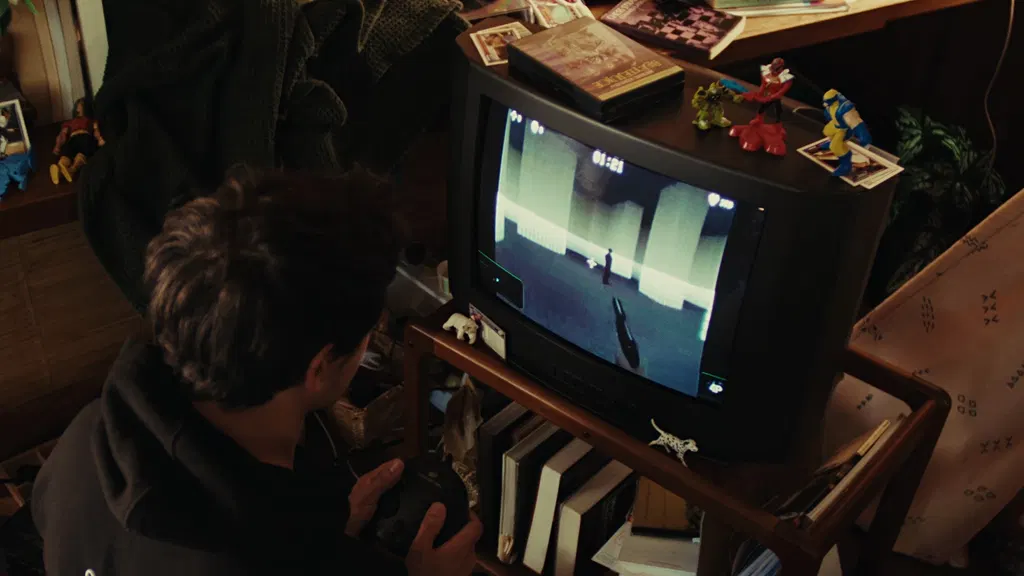
Agora-1 is a multi-agent world model that learns to evolve game states and render them visually. It operates on the internal state of games, specifically GoldenEye, without relying on hard-coded logic. This system allows for the manipulation of game states to create new levels while maintaining gameplay dynamics.
- ▪Agora-1 learns how the world state evolves over time in response to player interaction.
- ▪It uses a model trained on the internal state of games, specifically GoldenEye.
- ▪The system can generate new levels while preserving gameplay dynamics consistent with the source games.
4 outlets in our directory ran this story, first to last over 35 hours. All of the coverage we found sits in one bucket: centre. That one-sidedness is itself worth noticing.
- ▪ Agora-1: The Multi-Agent World Model — r/singularity
- ▪ A Gentle Introduction to World Models — Hacker News (Newest)
- ▪ World Models for Planning Agents — Michal Pándy
Hacker News (Front Page) files mainly under programming. We currently carry 993 of its stories. Top-voted stories on Hacker News.
Story provenance
Source · retrieval · rights · ranking — open for full record
inspect →
Story provenance
Attribution is not the same as permission. This drawer separates discovery metadata, excerpts, WeSearch-generated summaries, reuse status, and whether the publisher receives the visit. Nothing here claims a legal grant the publisher has not made.
Record
| Original publisher | Odyssey |
| Canonical URL | https://odyssey.ml/introducing-agora-1 |
| Publication time | Mon, 18 May 2026 18:43:30 +0000 |
| Retrieval time | 2026-05-18T19:09:56.942Z |
| Last seen | 2026-05-18T19:09:56.942Z |
| Headline source | Publisher (no WeSearch rewrite) |
| Excerpt source | publisher body |
| Excerpt method | First ~120 words (~800 chars) of extracted publisher body, fair-use limited. |
| Summary | WeSearch · cerebras-chat (WeSearch summarizer) |
| Summary source text | contentText |
| Citation coverage | Summary is a WeSearch-generated derivative; primary citation is the original publisher URL. |
| Cluster | Iywq_7vOrOrE · 4 stories |
| Cluster logic | Grouped by semantic title/content similarity across sources within a rolling window. Same-publisher template collisions are excluded from coverage comparison. |
| Ranking reason | Story pages are not engagement-ranked. Hub feeds use recency, with optional source-diversified chronological ordering (cap consecutive stories per source). No personalized ranking. |
| Publisher visit | Yes — open original |
| Substitutes article? | No — link-out required for full text |
Rights status (four layers)
WeSearch handling by dimension
| Indexing | May the item be indexed (stored, ranked, made findable)? | Allowed |
| Snippet | May a short excerpt of the publisher's text be shown? | Allowed |
| AI summary | May WeSearch generate its own short summary of the article? | Limited |
| Retrieval / RAG | May the content be exposed for third-party retrieval-augmented generation? | Not asserted |
| Model training | May the content be used to train AI models? | Not asserted |
| Commercial reuse | May the content be reused commercially? | Not permitted |
Basis: Derived from the published RSS/Atom feed. Contact: [email protected]. Reviewed: 2026-07-24.
Opening excerpt (first ~120 words) tap to expand
Agora-1 learns two distinct functions. First, it learns how the world state evolves over time in response to player interaction. To do this, we train a model directly on the internal state of one or more games—in the case of Agora-1, GoldenEye. This model learns the underlying gameplay dynamics and how state transitions occur from player actions. Second, Agora-1 learns how to render that shared state visually. This is accomplished using a DiT-based world model conditioned directly on the shared game state, rather than prompts, images, or other traditional conditioning signals.You can think of this separation as loosely analogous to the structure of a modern game engine. The difference is that both components are entirely learned systems.
…
Excerpt limited to ~120 words for fair-use compliance. The full article is at Odyssey.
Discussion
0 commentsMore from Odyssey