All non-drone militaries are now obsolete
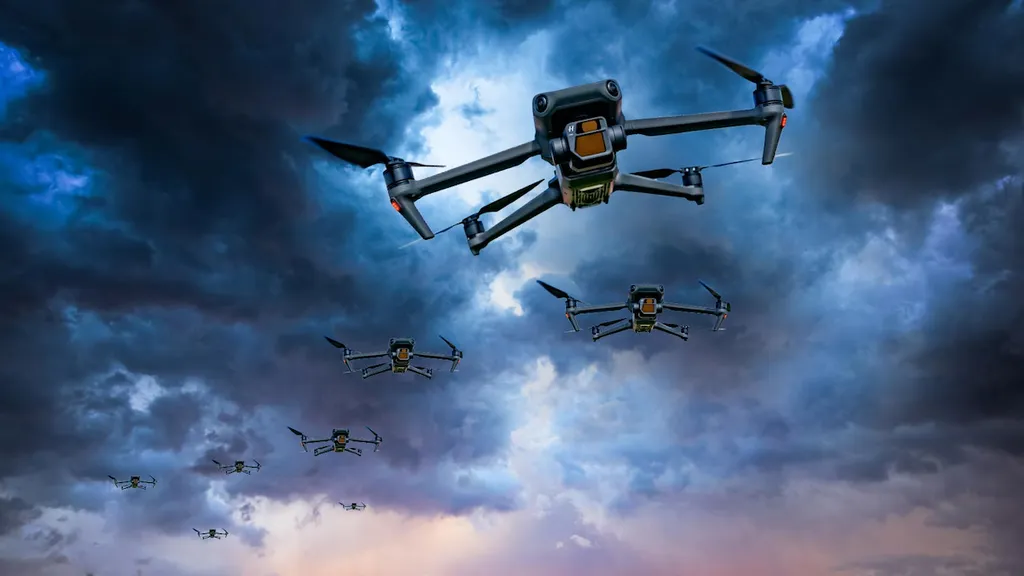
Drone warfare has significantly changed the landscape of modern military conflicts, particularly highlighted by the ongoing war in Ukraine. The use of drones has allowed Ukraine to achieve high casualty rates against Russian forces while minimizing territorial losses. As drone technology continues to advance, traditional military forces may find themselves increasingly obsolete.
- ▪Drones have become a decisive factor in modern warfare, especially in the Ukraine conflict.
- ▪Ukraine's drone usage has surged from a few thousand to around 60,000 FPV drones per day in the past year.
- ▪Approximately 96% of casualties inflicted on the Russian army are attributed to drone strikes.
Asia Times files mainly under world. We currently carry 156 of its stories.
Story provenance
Source · retrieval · rights · ranking — open for full record
inspect →
Story provenance
Attribution is not the same as permission. This drawer separates discovery metadata, excerpts, WeSearch-generated summaries, reuse status, and whether the publisher receives the visit. Nothing here claims a legal grant the publisher has not made.
Record
| Original publisher | Asia Times |
| Canonical URL | https://asiatimes.com/2026/05/all-non-drone-militaries-are-now-obsolete/ |
| Publication time | Mon, 25 May 2026 06:13:28 +0000 |
| Retrieval time | 2026-05-25T06:17:36.337Z |
| Last seen | 2026-05-25T06:17:36.337Z |
| Headline source | Publisher (no WeSearch rewrite) |
| Excerpt source | publisher body |
| Excerpt method | First ~120 words (~800 chars) of extracted publisher body, fair-use limited. |
| Summary | WeSearch · cerebras-chat (WeSearch summarizer) |
| Summary source text | contentText |
| Citation coverage | Summary is a WeSearch-generated derivative; primary citation is the original publisher URL. |
| Cluster | GYY7o8KUmIt4 |
| Cluster logic | Grouped by semantic title/content similarity across sources within a rolling window. Same-publisher template collisions are excluded from coverage comparison. |
| Ranking reason | Story pages are not engagement-ranked. Hub feeds use recency, with optional source-diversified chronological ordering (cap consecutive stories per source). No personalized ranking. |
| Publisher visit | Yes — open original |
| Substitutes article? | No — link-out required for full text |
Rights status (four layers)
WeSearch handling by dimension
| Indexing | May the item be indexed (stored, ranked, made findable)? | Allowed |
| Snippet | May a short excerpt of the publisher's text be shown? | Allowed |
| AI summary | May WeSearch generate its own short summary of the article? | Limited |
| Retrieval / RAG | May the content be exposed for third-party retrieval-augmented generation? | Not asserted |
| Model training | May the content be used to train AI models? | Not asserted |
| Commercial reuse | May the content be reused commercially? | Not permitted |
Basis: Derived from the published RSS/Atom feed. Contact: [email protected]. Reviewed: 2026-07-24.
Opening excerpt (first ~120 words) tap to expand
Drone warfare has been a fascination of mine for a very long time. When I read Daphne du Maurier’s “The Birds” as a kid, I imagined what would happen if the attacking swarms were mechanical birds, controlled with artificial intelligence (AI). When I read about Japanese kamikazes in WWII, I reasoned that someday we’d have drones do the same. In 2013, I wrote a post about the advent of drone warfare that’s still probably the most prophetic thing I’ve ever written. It simply made sense that if we could create AI-controlled swarms of exploding artificial insects, then as long as they had enough battery power to sustain themselves over long flights, they’d be an unstoppable weapon. Thirteen years later, my imagination has mostly become reality.
…
Excerpt limited to ~120 words for fair-use compliance. The full article is at Asia Times.
Discussion
0 commentsMore from Asia Times