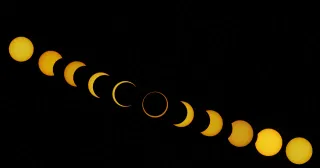
All the Fancy Measuring Devices Used in Science Rely on Two Stone-Age Techniques

The article discusses how modern measuring devices in science fundamentally rely on two ancient techniques: counting and comparing. Despite advancements in technology, the essence of measurement remains unchanged since ancient times. Examples illustrate how these methods are applied in various contexts, from measuring length with rulers to time with sundials.
- ▪Humans have a long history of inventing tools to measure various aspects of the world around them.
- ▪Measurement techniques have not significantly changed, as they still rely on comparison or counting.
- ▪The article provides examples of measurement methods, including the humorous story of measuring a bridge using a person as a unit.
WIRED files mainly under tech. We currently carry 597 of its stories.
Story provenance
Source · retrieval · rights · ranking — open for full record
inspect →
Story provenance
Attribution is not the same as permission. This drawer separates discovery metadata, excerpts, WeSearch-generated summaries, reuse status, and whether the publisher receives the visit. Nothing here claims a legal grant the publisher has not made.
Record
| Original publisher | WIRED |
| Canonical URL | https://www.wired.com/story/story/all-measuring-devices-run-on-two-stone-age-techniques/ |
| Publication time | Fri, 22 May 2026 11:00:00 +0000 |
| Retrieval time | 2026-05-22T11:07:01.332Z |
| Last seen | 2026-05-22T11:07:01.332Z |
| Headline source | Publisher (no WeSearch rewrite) |
| Excerpt source | publisher body |
| Excerpt method | First ~120 words (~800 chars) of extracted publisher body, fair-use limited. |
| Summary | WeSearch · cerebras-chat (WeSearch summarizer) |
| Summary source text | contentText |
| Citation coverage | Summary is a WeSearch-generated derivative; primary citation is the original publisher URL. |
| Cluster | vhSa0LiXmZum |
| Cluster logic | Grouped by semantic title/content similarity across sources within a rolling window. Same-publisher template collisions are excluded from coverage comparison. |
| Ranking reason | Story pages are not engagement-ranked. Hub feeds use recency, with optional source-diversified chronological ordering (cap consecutive stories per source). No personalized ranking. |
| Publisher visit | Yes — open original |
| Substitutes article? | No — link-out required for full text |
Rights status (four layers)
WeSearch handling by dimension
| Indexing | May the item be indexed (stored, ranked, made findable)? | Allowed |
| Snippet | May a short excerpt of the publisher's text be shown? | Allowed |
| AI summary | May WeSearch generate its own short summary of the article? | Limited |
| Retrieval / RAG | May the content be exposed for third-party retrieval-augmented generation? | Not asserted |
| Model training | May the content be used to train AI models? | Not asserted |
| Commercial reuse | May the content be reused commercially? | Not permitted |
Basis: Derived from the published RSS/Atom feed. Contact: [email protected]. Reviewed: 2026-07-24.
Opening excerpt (first ~120 words) tap to expand
Rhett AllainScienceMay 22, 2026 7:00 AMAll the Fancy Measuring Devices Used in Science Rely on Two Stone-Age TechniquesThe multifarious methods we use to gather experimental data ultimately boil down to counting or comparing.Photograph: Muhammad Labib AdilahCommentLoaderSave StorySave this storyCommentLoaderSave StorySave this storyHumans are animals that measure things. Call us Homo mensura. We have a compulsion to quantify, and for millennia we’ve been inventing new ways to go about it. For anything you can think of, there’s a device to measure it—from sphygmomanometers to spectrophotofluorometers. And of course nowhere is this more true than in science. Well, science and baseball.Physicists build models to explain how the world works.
…
Excerpt limited to ~120 words for fair-use compliance. The full article is at WIRED.
Discussion
0 commentsMore from WIRED


.jpg&w=320)