Ancient DNA Reveals People Traveled Over 400 Miles Along Peru’s Coast Before the Inca Empire — and Kept Their Identities Intact
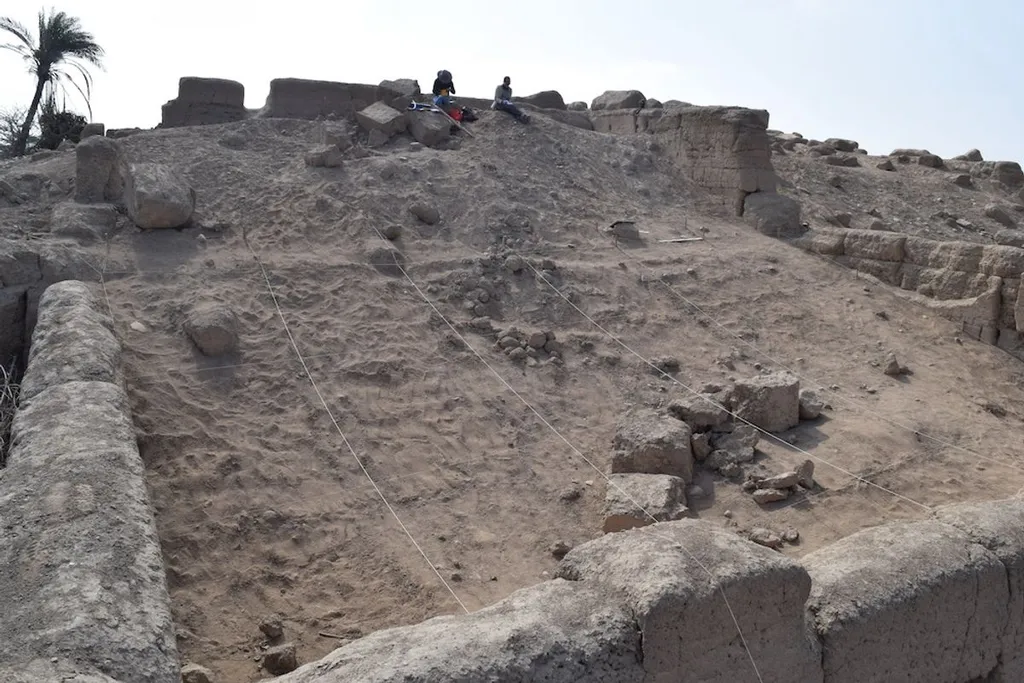
Research has revealed that people traveled over 400 miles along Peru's coast before the Inca Empire, maintaining their identities and traditions. The study, which combined ancient DNA with archaeological evidence, showed that migrants from the north coast reached the Chincha Valley by at least the 13th century. Burial practices indicated a strong local identity and social ties among these early communities.
- ▪Researchers found that individuals traveled more than 400 miles along Peru's coast centuries before the Inca Empire.
- ▪The study analyzed DNA from 21 individuals buried in the Chincha Valley to trace family relationships and cultural practices.
- ▪Burial traditions revealed differences in status and group membership, indicating a shared culture among the communities.
Discover Magazine files mainly under science. We currently carry 86 of its stories.
Story provenance
Source · retrieval · rights · ranking — open for full record
inspect →
Story provenance
Attribution is not the same as permission. This drawer separates discovery metadata, excerpts, WeSearch-generated summaries, reuse status, and whether the publisher receives the visit. Nothing here claims a legal grant the publisher has not made.
Record
| Original publisher | Discover Magazine |
| Canonical URL | https://www.discovermagazine.com/ancient-dna-reveals-people-traveled-over-400-miles-along-peru-s-coast-before-the-inca-empire-and-kept-their-identities-intact-49135 |
| Publication time | Fri, 22 May 2026 09:00:00 GMT |
| Retrieval time | 2026-05-22T09:02:01.206Z |
| Last seen | 2026-05-22T09:02:01.206Z |
| Headline source | Publisher (no WeSearch rewrite) |
| Excerpt source | publisher body |
| Excerpt method | First ~120 words (~800 chars) of extracted publisher body, fair-use limited. |
| Summary | WeSearch · cerebras-chat (WeSearch summarizer) |
| Summary source text | contentText |
| Citation coverage | Summary is a WeSearch-generated derivative; primary citation is the original publisher URL. |
| Cluster | 6zDbCM9ZCWUZ |
| Cluster logic | Grouped by semantic title/content similarity across sources within a rolling window. Same-publisher template collisions are excluded from coverage comparison. |
| Ranking reason | Story pages are not engagement-ranked. Hub feeds use recency, with optional source-diversified chronological ordering (cap consecutive stories per source). No personalized ranking. |
| Publisher visit | Yes — open original |
| Substitutes article? | No — link-out required for full text |
Rights status (four layers)
WeSearch handling by dimension
| Indexing | May the item be indexed (stored, ranked, made findable)? | Allowed |
| Snippet | May a short excerpt of the publisher's text be shown? | Allowed |
| AI summary | May WeSearch generate its own short summary of the article? | Limited |
| Retrieval / RAG | May the content be exposed for third-party retrieval-augmented generation? | Not asserted |
| Model training | May the content be used to train AI models? | Not asserted |
| Commercial reuse | May the content be reused commercially? | Not permitted |
Basis: Derived from the published RSS/Atom feed. Contact: [email protected]. Reviewed: 2026-07-24.
Opening excerpt (first ~120 words) tap to expand
What stood out most to researchers was not just that people traveled more than 400 miles (700 kilometres) along Peru’s coast centuries before the rise of the Inca Empire. It was that many of them appear to have carried their identities and traditions with them.One woman buried in Peru’s Chincha Valley had traces of red pigment on her cheek centuries after her death. Beside her lay spinning tools wrapped with yarn and cotton. Her pelvic bones also showed signs that she had likely given birth.For Jordan Dalton, co-lead author of the study published in Nature Communications, details like this are what made the research feel more human.“It was interesting to think about how the very powerful and personal experience of giving birth can be inscribed in bones,” Dalton told Discover.
…
Excerpt limited to ~120 words for fair-use compliance. The full article is at Discover Magazine.
Discussion
0 commentsMore from Discover Magazine