Ancient Teeth Suggest Europeans Rarely Ate Bugs—and May Have Been Less Adapted to Digest Them
A recent study reveals that ancient Europeans rarely consumed insects, with evidence found in their dental plaque. The research indicates that this aversion may stem from a long ecological and evolutionary history rather than just cultural factors. Genetic analysis shows that European populations have had reduced chitin digestion capabilities for at least 9,000 years.
- ▪Ancient Europeans consumed insects only rarely and likely by accident.
- ▪Neanderthals had higher levels of insect DNA in their dental plaque compared to ancient Europeans.
- ▪Genetic variants linked to reduced chitin digestion have been present in European populations for at least 9,000 years.
Discover Magazine files mainly under science. We currently carry 86 of its stories.
Story provenance
Source · retrieval · rights · ranking — open for full record
inspect →
Story provenance
Attribution is not the same as permission. This drawer separates discovery metadata, excerpts, WeSearch-generated summaries, reuse status, and whether the publisher receives the visit. Nothing here claims a legal grant the publisher has not made.
Record
| Original publisher | Discover Magazine |
| Canonical URL | https://www.discovermagazine.com/ancient-teeth-suggest-europeans-rarely-ate-bugs-and-may-have-been-less-adapted-to-digest-them-49212 |
| Publication time | Fri, 05 Jun 2026 21:50:00 GMT |
| Retrieval time | 2026-06-05T21:58:46.950Z |
| Last seen | 2026-06-05T21:58:46.950Z |
| Headline source | Publisher (no WeSearch rewrite) |
| Excerpt source | publisher body |
| Excerpt method | First ~120 words (~800 chars) of extracted publisher body, fair-use limited. |
| Summary | WeSearch · cerebras-chat (WeSearch summarizer) |
| Summary source text | contentText |
| Citation coverage | Summary is a WeSearch-generated derivative; primary citation is the original publisher URL. |
| Cluster | y1fZhfabiUGZ |
| Cluster logic | Grouped by semantic title/content similarity across sources within a rolling window. Same-publisher template collisions are excluded from coverage comparison. |
| Ranking reason | Story pages are not engagement-ranked. Hub feeds use recency, with optional source-diversified chronological ordering (cap consecutive stories per source). No personalized ranking. |
| Publisher visit | Yes — open original |
| Substitutes article? | No — link-out required for full text |
Rights status (four layers)
WeSearch handling by dimension
| Indexing | May the item be indexed (stored, ranked, made findable)? | Allowed |
| Snippet | May a short excerpt of the publisher's text be shown? | Allowed |
| AI summary | May WeSearch generate its own short summary of the article? | Limited |
| Retrieval / RAG | May the content be exposed for third-party retrieval-augmented generation? | Not asserted |
| Model training | May the content be used to train AI models? | Not asserted |
| Commercial reuse | May the content be reused commercially? | Not permitted |
Basis: Derived from the published RSS/Atom feed. Contact: [email protected]. Reviewed: 2026-07-24.
Opening excerpt (first ~120 words) tap to expand
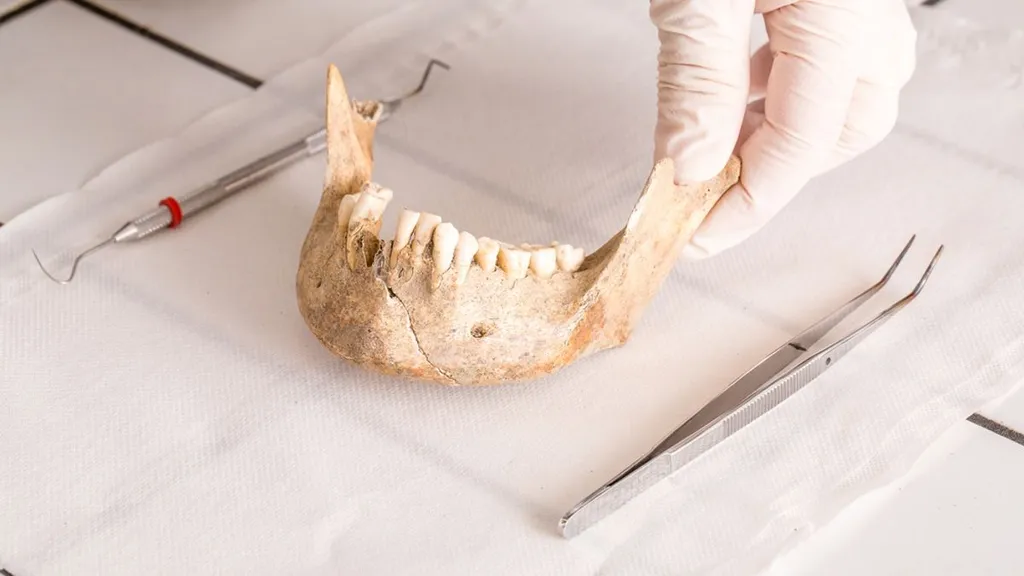
Twenty-nine thousand years ago, in what is now the Czech Republic, someone may have swallowed a lake-dwelling midge without realizing it. Thousands of years later, in Germany, another person may have eaten food infested with insects. In the teeth of ancient Europeans, insects look less like food than accidental evidence.Today, edible insects are often promoted as a sustainable protein source, but Western consumers remain hard to convince. A new study published in Science Advances points to a reason that may reach further back than taste or culture.By analyzing ancient dental plaque from anatomically modern humans, Neanderthals, and great apes, the researchers found that ancient Europeans consumed insects only rarely and likely by accident, with far less insect DNA in their teeth than in…
Excerpt limited to ~120 words for fair-use compliance. The full article is at Discover Magazine.
Discussion
0 commentsMore from Discover Magazine