Astronomers Accidentally Uncover Magnetic Fields on Alien Worlds That May Help Protect Their Atmospheres
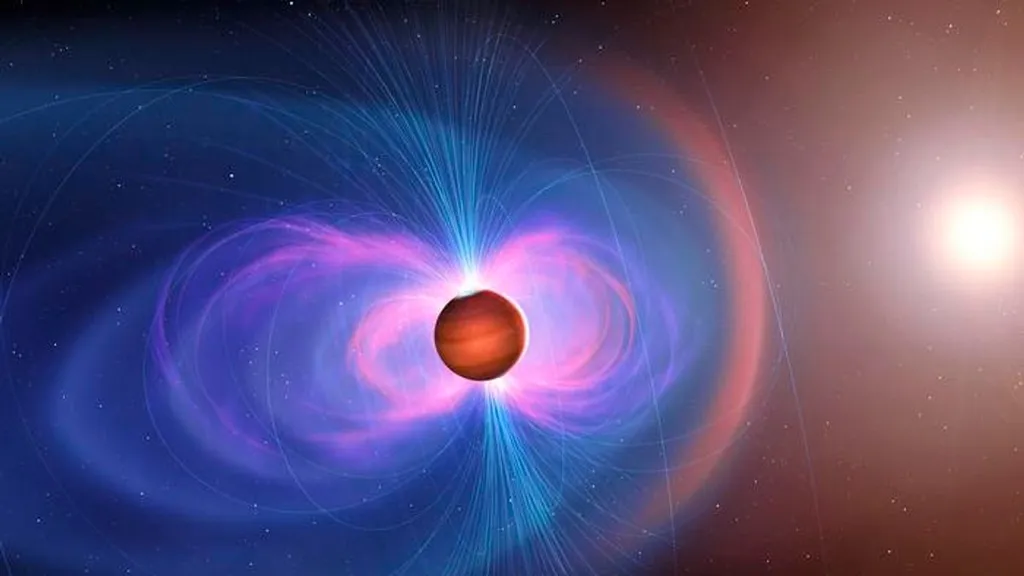
Astronomers have discovered magnetic fields on seven ultra-hot Jupiters, which are gas giants orbiting close to their stars. This finding, resulting from a study originally aimed at measuring atmospheric winds, suggests that these magnetic fields may be comparable to those found in our Solar System. The research opens new avenues for understanding how magnetic fields influence planetary atmospheres and the potential for life on other worlds.
- ▪The study provides the first strong estimates of magnetic field strengths for seven ultra-hot Jupiters.
- ▪The researchers initially aimed to measure atmospheric winds but found anomalies indicating magnetic fields.
- ▪The magnetic fields on these planets could be four times stronger than Saturn's or half as strong as Jupiter's.
Discover Magazine files mainly under science. We currently carry 86 of its stories.
Story provenance
Source · retrieval · rights · ranking — open for full record
inspect →
Story provenance
Attribution is not the same as permission. This drawer separates discovery metadata, excerpts, WeSearch-generated summaries, reuse status, and whether the publisher receives the visit. Nothing here claims a legal grant the publisher has not made.
Record
| Original publisher | Discover Magazine |
| Canonical URL | https://www.discovermagazine.com/astronomers-accidentally-uncover-magnetic-fields-on-alien-worlds-that-may-help-protect-their-atmospheres-49191 |
| Publication time | Wed, 03 Jun 2026 15:00:00 GMT |
| Retrieval time | 2026-06-03T15:12:09.866Z |
| Last seen | 2026-06-03T15:12:09.866Z |
| Headline source | Publisher (no WeSearch rewrite) |
| Excerpt source | publisher body |
| Excerpt method | First ~120 words (~800 chars) of extracted publisher body, fair-use limited. |
| Summary | WeSearch · cerebras-chat (WeSearch summarizer) |
| Summary source text | contentText |
| Citation coverage | Summary is a WeSearch-generated derivative; primary citation is the original publisher URL. |
| Cluster | 0eEWNb0uX1wT |
| Cluster logic | Grouped by semantic title/content similarity across sources within a rolling window. Same-publisher template collisions are excluded from coverage comparison. |
| Ranking reason | Story pages are not engagement-ranked. Hub feeds use recency, with optional source-diversified chronological ordering (cap consecutive stories per source). No personalized ranking. |
| Publisher visit | Yes — open original |
| Substitutes article? | No — link-out required for full text |
Rights status (four layers)
WeSearch handling by dimension
| Indexing | May the item be indexed (stored, ranked, made findable)? | Allowed |
| Snippet | May a short excerpt of the publisher's text be shown? | Allowed |
| AI summary | May WeSearch generate its own short summary of the article? | Limited |
| Retrieval / RAG | May the content be exposed for third-party retrieval-augmented generation? | Not asserted |
| Model training | May the content be used to train AI models? | Not asserted |
| Commercial reuse | May the content be reused commercially? | Not permitted |
Basis: Derived from the published RSS/Atom feed. Contact: [email protected]. Reviewed: 2026-07-24.
Opening excerpt (first ~120 words) tap to expand
Earth has one. So do Jupiter, Saturn, and Uranus. Mars and Venus, on the other hand, don't have a global version of it. We're talking about magnetic fields — invisible force fields generated deep inside some planets by the movement of electrically conducting material.On Earth, this magnetic shield does much more than create dazzling auroras. It also helps protect our atmosphere from harmful radiation, making the planet a friendlier place for life.Finding magnetic fields beyond our Solar System, however, has proven extremely difficult.
…
Excerpt limited to ~120 words for fair-use compliance. The full article is at Discover Magazine.
Discussion
0 commentsMore from Discover Magazine