Bees May Be Killing the Plants They Feed From
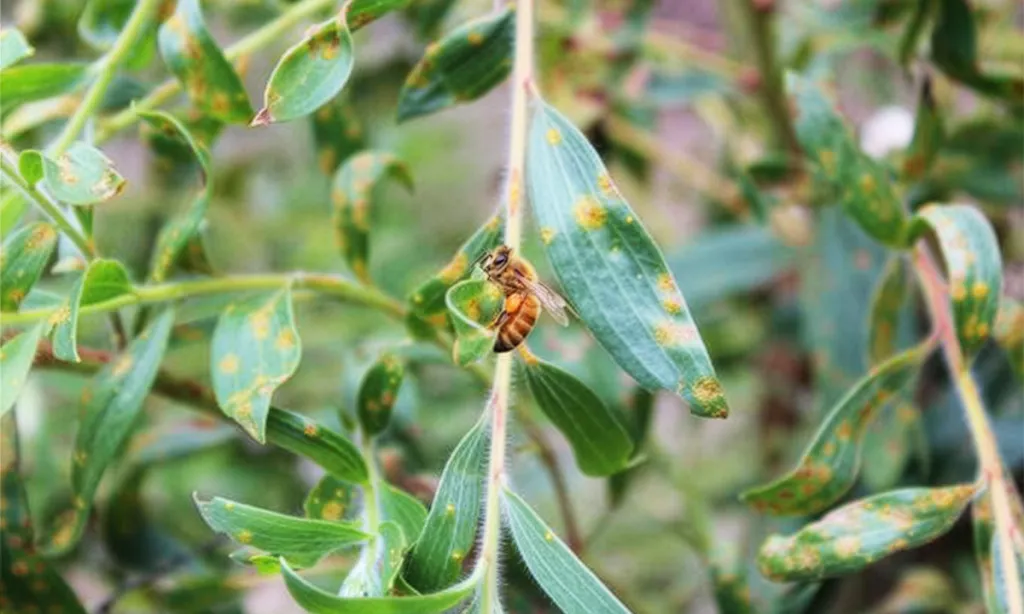
New research suggests that Western honeybees in Australia may be contributing to the spread of myrtle rust, a harmful fungal blight. The bees, initially introduced for pollination, have been observed foraging from infected flowers and potentially acting as disease vectors. This interaction raises concerns about a feedback loop where bees inadvertently aid in the destruction of the plants they rely on for survival.
- ▪Myrtle rust, a fungal blight, threatens up to 17 percent of Australia's flora.
- ▪Research shows that honeybees are foraging from rust-infected flowers and carrying spores back to their hives.
- ▪Half of the bees studied returned with myrtle-rust spores, and 45 percent of pollen storage cells were contaminated.
Hacker News (Newest) files mainly under programming. We currently carry 5,306 of its stories.
Story provenance
Source · retrieval · rights · ranking — open for full record
inspect →
Story provenance
Attribution is not the same as permission. This drawer separates discovery metadata, excerpts, WeSearch-generated summaries, reuse status, and whether the publisher receives the visit. Nothing here claims a legal grant the publisher has not made.
Record
| Original publisher | Nautil |
| Canonical URL | https://nautil.us/why-these-bees-may-be-killing-the-plants-they-feed-from-1281014 |
| Publication time | Thu, 21 May 2026 12:44:17 +0000 |
| Retrieval time | 2026-05-21T12:51:11.071Z |
| Last seen | 2026-05-21T12:51:11.071Z |
| Headline source | Publisher (no WeSearch rewrite) |
| Excerpt source | publisher body |
| Excerpt method | First ~120 words (~800 chars) of extracted publisher body, fair-use limited. |
| Summary | WeSearch · cerebras-chat (WeSearch summarizer) |
| Summary source text | contentText |
| Citation coverage | Summary is a WeSearch-generated derivative; primary citation is the original publisher URL. |
| Cluster | O60-QE5VYeq5 · 2 stories |
| Cluster logic | Grouped by semantic title/content similarity across sources within a rolling window. Same-publisher template collisions are excluded from coverage comparison. |
| Ranking reason | Story pages are not engagement-ranked. Hub feeds use recency, with optional source-diversified chronological ordering (cap consecutive stories per source). No personalized ranking. |
| Publisher visit | Yes — open original |
| Substitutes article? | No — link-out required for full text |
Rights status (four layers)
WeSearch handling by dimension
| Indexing | May the item be indexed (stored, ranked, made findable)? | Allowed |
| Snippet | May a short excerpt of the publisher's text be shown? | Allowed |
| AI summary | May WeSearch generate its own short summary of the article? | Limited |
| Retrieval / RAG | May the content be exposed for third-party retrieval-augmented generation? | Not asserted |
| Model training | May the content be used to train AI models? | Not asserted |
| Commercial reuse | May the content be reused commercially? | Not permitted |
Basis: Derived from the published RSS/Atom feed. Contact: [email protected]. Reviewed: 2026-07-24.
Opening excerpt (first ~120 words) tap to expand
{"@context":"https://schema.org","@type":"Article","headline":"Why These Bees May Be Killing the Plants They Feed From","description":"Why These Bees May Be Killing the Plants They Feed From: The dark side of pollinators","image":["https://lede-admin.nautil.us/wp-content/uploads/sites/70/2026/05/Currie_HERO_0956ac.png"],"datePublished":"2026-05-20T18:00:00+00:00","dateModified":"2026-05-20T16:56:54+00:00","author":[{"@type":"Person","name":"Jake…
Excerpt limited to ~120 words for fair-use compliance. The full article is at Nautil.
Discussion
0 commentsMore from Nautil