Beetroot Juice May Help Lower Blood Pressure in Two Weeks for Older Adults, with Links to the Mouth’s Microbiome
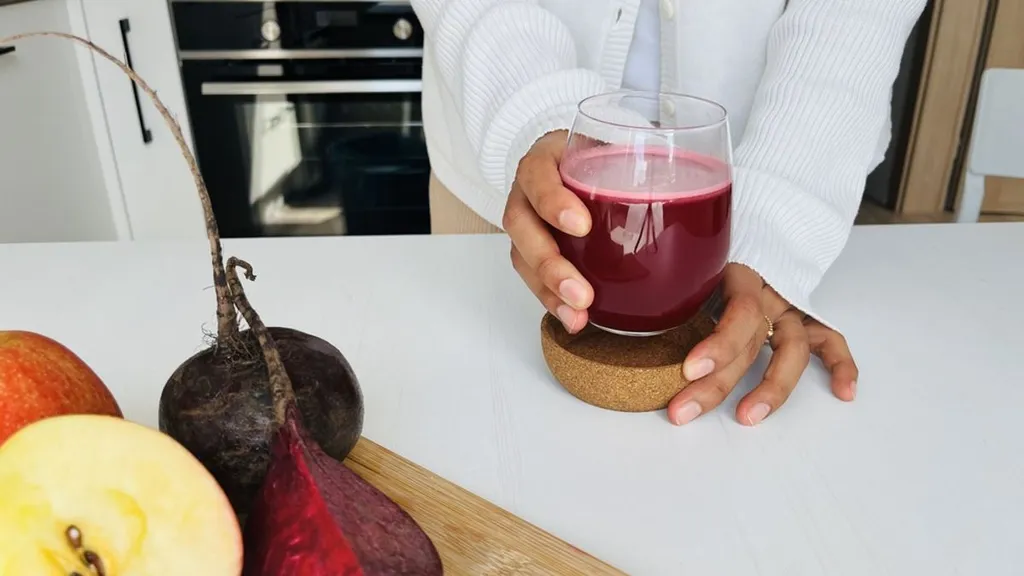
Recent research indicates that beetroot juice may lower blood pressure in older adults by altering oral bacteria. The study found that drinking nitrate-rich beetroot juice twice daily for two weeks resulted in measurable reductions in blood pressure. This discovery highlights the potential health benefits of dietary nitrate for older individuals who often struggle with blood pressure regulation.
- ▪The study published in Free Radical Biology and Medicine involved 75 adults, with a focus on those aged 60 and 70.
- ▪Older adults who consumed concentrated beetroot juice experienced significant reductions in blood pressure compared to younger participants.
- ▪The research suggests that beetroot juice may suppress harmful oral bacteria while promoting beneficial microbes linked to better health.
Discover Magazine files mainly under science. We currently carry 86 of its stories.
Story provenance
Source · retrieval · rights · ranking — open for full record
inspect →
Story provenance
Attribution is not the same as permission. This drawer separates discovery metadata, excerpts, WeSearch-generated summaries, reuse status, and whether the publisher receives the visit. Nothing here claims a legal grant the publisher has not made.
Record
| Original publisher | Discover Magazine |
| Canonical URL | https://www.discovermagazine.com/beetroot-juice-may-help-lower-blood-pressure-in-two-weeks-for-older-adults-with-links-to-the-mouth-s-microbiome-49173 |
| Publication time | Fri, 29 May 2026 19:30:00 GMT |
| Retrieval time | 2026-05-29T19:35:02.961Z |
| Last seen | 2026-05-29T19:35:02.961Z |
| Headline source | Publisher (no WeSearch rewrite) |
| Excerpt source | publisher body |
| Excerpt method | First ~120 words (~800 chars) of extracted publisher body, fair-use limited. |
| Summary | WeSearch · cerebras-chat (WeSearch summarizer) |
| Summary source text | contentText |
| Citation coverage | Summary is a WeSearch-generated derivative; primary citation is the original publisher URL. |
| Cluster | uF6Ych0dOKGa |
| Cluster logic | Grouped by semantic title/content similarity across sources within a rolling window. Same-publisher template collisions are excluded from coverage comparison. |
| Ranking reason | Story pages are not engagement-ranked. Hub feeds use recency, with optional source-diversified chronological ordering (cap consecutive stories per source). No personalized ranking. |
| Publisher visit | Yes — open original |
| Substitutes article? | No — link-out required for full text |
Rights status (four layers)
WeSearch handling by dimension
| Indexing | May the item be indexed (stored, ranked, made findable)? | Allowed |
| Snippet | May a short excerpt of the publisher's text be shown? | Allowed |
| AI summary | May WeSearch generate its own short summary of the article? | Limited |
| Retrieval / RAG | May the content be exposed for third-party retrieval-augmented generation? | Not asserted |
| Model training | May the content be used to train AI models? | Not asserted |
| Commercial reuse | May the content be reused commercially? | Not permitted |
Basis: Derived from the published RSS/Atom feed. Contact: [email protected]. Reviewed: 2026-07-24.
Opening excerpt (first ~120 words) tap to expand
Love them or hate them, beets have earned a reputation as a heart-healthy food. Now, new research suggests that beets could help lower blood pressure in an unexpected way — by altering the bacteria living inside your mouth.In the largest study of its kind, published in Free Radical Biology and Medicine, scientists found that drinking nitrate-rich beetroot juice lowered blood pressure in older adults by reshaping the oral microbiome. Researchers say the discovery may help explain why nitrate-rich foods appear beneficial for older people, who naturally lose some ability to regulate blood pressure as they age.“This research is a great example of how bioscience can help us better understand the complex links between diet, the microbiome and healthy aging.
…
Excerpt limited to ~120 words for fair-use compliance. The full article is at Discover Magazine.
Discussion
0 commentsMore from Discover Magazine