Beijing says US Tiananmen comments 'smear' China
China has condemned U.S. Secretary of State Marco Rubio's comments regarding the Tiananmen Square crackdown, labeling them as a distortion of historical facts. The Chinese government maintains that the events of 1989 were a counter-revolutionary riot and justifies its actions as necessary for restoring order. Meanwhile, commemorations of the crackdown continue to be suppressed in Hong Kong, with police detaining activists attempting to honor the victims.
- ▪China accused the U.S. of smearing its political system after comments on the Tiananmen Square crackdown.
- ▪The Chinese government claims the protests were a counter-revolutionary riot and justifies the use of force.
- ▪Authorities in Hong Kong have increased police presence to prevent public commemorations of the Tiananmen protests.
Korea Times publishes from South Korea and files mainly under world. We currently carry 375 of its stories.
Story provenance
Source · retrieval · rights · ranking — open for full record
inspect →
Story provenance
Attribution is not the same as permission. This drawer separates discovery metadata, excerpts, WeSearch-generated summaries, reuse status, and whether the publisher receives the visit. Nothing here claims a legal grant the publisher has not made.
Record
| Original publisher | Korea Times |
| Canonical URL | https://www.koreatimes.co.kr/world/20260605/beijing-says-us-tiananmen-comments-smear-china?utm_source=rss |
| Publication time | Fri, 05 Jun 2026 03:17:03 GMT |
| Retrieval time | 2026-06-05T03:21:10.232Z |
| Last seen | 2026-06-05T03:21:10.232Z |
| Headline source | Publisher (no WeSearch rewrite) |
| Excerpt source | publisher body |
| Excerpt method | First ~120 words (~800 chars) of extracted publisher body, fair-use limited. |
| Summary | WeSearch · cerebras-chat (WeSearch summarizer) |
| Summary source text | contentText |
| Citation coverage | Summary is a WeSearch-generated derivative; primary citation is the original publisher URL. |
| Cluster | wQ1IvK1BFv2J |
| Cluster logic | Grouped by semantic title/content similarity across sources within a rolling window. Same-publisher template collisions are excluded from coverage comparison. |
| Ranking reason | Story pages are not engagement-ranked. Hub feeds use recency, with optional source-diversified chronological ordering (cap consecutive stories per source). No personalized ranking. |
| Publisher visit | Yes — open original |
| Substitutes article? | No — link-out required for full text |
Rights status (four layers)
WeSearch handling by dimension
| Indexing | May the item be indexed (stored, ranked, made findable)? | Allowed |
| Snippet | May a short excerpt of the publisher's text be shown? | Allowed |
| AI summary | May WeSearch generate its own short summary of the article? | Limited |
| Retrieval / RAG | May the content be exposed for third-party retrieval-augmented generation? | Not asserted |
| Model training | May the content be used to train AI models? | Not asserted |
| Commercial reuse | May the content be reused commercially? | Not permitted |
Basis: Derived from the published RSS/Atom feed. Contact: [email protected]. Reviewed: 2026-07-24.
Opening excerpt (first ~120 words) tap to expand
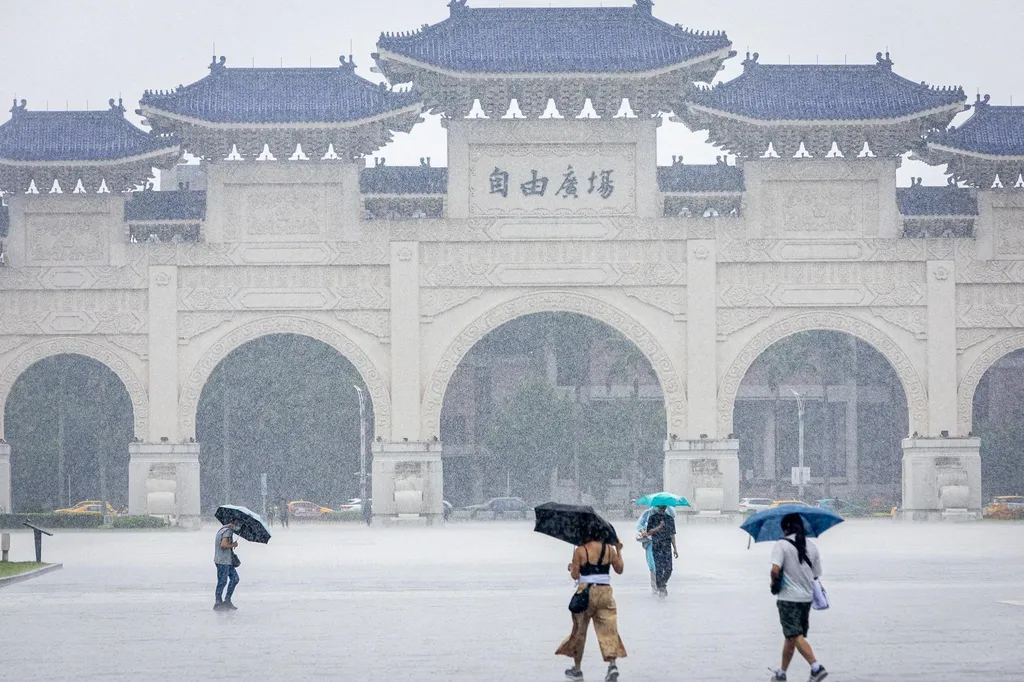
Pedestrians hold umbrellas as they walk amid rainfall during a vigil at Liberty Square in Taipe, Thursday, to commemorate the anniversary of China's 1989 crackdown on pro-democracy protesters in Beijing's Tiananmen Square. AFP-YonhapBEIJING — China accused the United States on Thursday of distorting facts and smearing its political system, after Secretary of State Marco Rubio said censorship could not "erase" the memory of Beijing's 1989 Tiananmen crackdown.On June 4 that year, the Chinese government sent troops and tanks to crush protests calling for political reform in and around Beijing's Tiananmen Square.The death toll remains unknown, and discussion of what happened is censored in mainland China.Rubio told a news conference on Wednesday that "no amount of censorship can erase the…
Excerpt limited to ~120 words for fair-use compliance. The full article is at Korea Times.
Discussion
0 commentsMore from Korea Times