Beluga Whales May Recognize Themselves in Mirrors — and One Even Returned with a Hoop
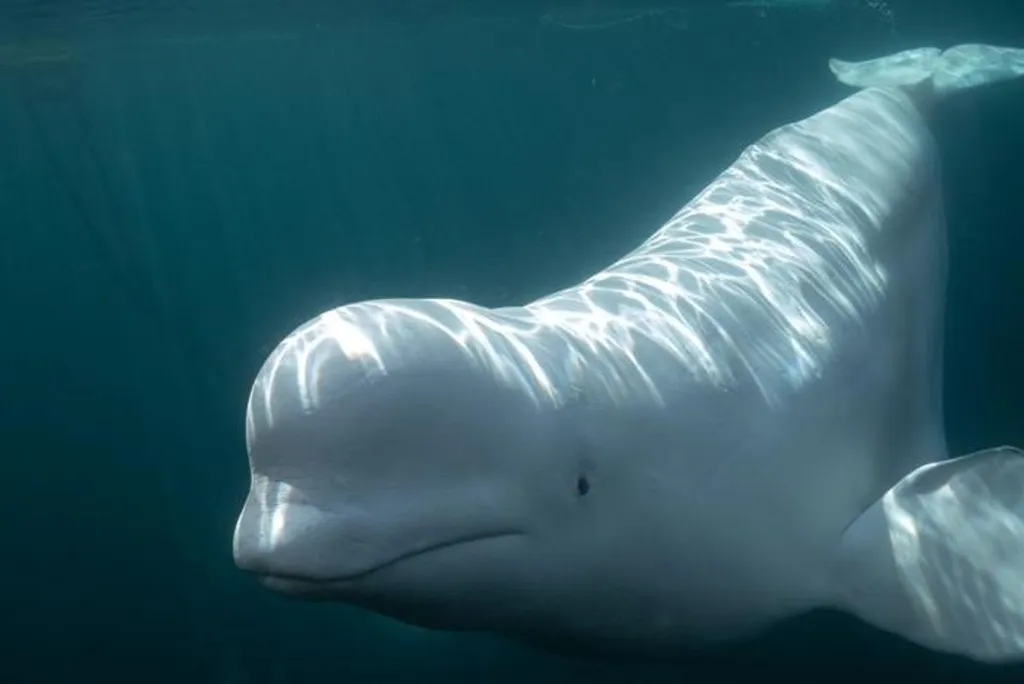
A study has shown that beluga whales, specifically a juvenile named Maris and her mother Natasha, can recognize themselves in mirrors. This behavior indicates a level of self-awareness previously thought to be unique to humans and a few other species. The findings may lead to increased empathy and conservation efforts for these marine mammals.
- ▪Maris and Natasha displayed self-directed behaviors while interacting with a mirror, suggesting self-recognition.
- ▪The study involved a mark test, where Natasha successfully identified a mark on her body using the mirror.
- ▪Belugas are known for their complex social structures and vocal mimicry, which adds to their remarkable nature.
Discover Magazine files mainly under science. We currently carry 86 of its stories.
Story provenance
Source · retrieval · rights · ranking — open for full record
inspect →
Story provenance
Attribution is not the same as permission. This drawer separates discovery metadata, excerpts, WeSearch-generated summaries, reuse status, and whether the publisher receives the visit. Nothing here claims a legal grant the publisher has not made.
Record
| Original publisher | Discover Magazine |
| Canonical URL | https://www.discovermagazine.com/beluga-whales-may-recognize-themselves-in-mirrors-and-one-even-returned-with-a-hoop-49151 |
| Publication time | Tue, 26 May 2026 16:15:00 GMT |
| Retrieval time | 2026-05-26T16:27:49.920Z |
| Last seen | 2026-05-26T16:27:49.920Z |
| Headline source | Publisher (no WeSearch rewrite) |
| Excerpt source | publisher body |
| Excerpt method | First ~120 words (~800 chars) of extracted publisher body, fair-use limited. |
| Summary | WeSearch · cerebras-chat (WeSearch summarizer) |
| Summary source text | contentText |
| Citation coverage | Summary is a WeSearch-generated derivative; primary citation is the original publisher URL. |
| Cluster | RZHFxQj0RXIK |
| Cluster logic | Grouped by semantic title/content similarity across sources within a rolling window. Same-publisher template collisions are excluded from coverage comparison. |
| Ranking reason | Story pages are not engagement-ranked. Hub feeds use recency, with optional source-diversified chronological ordering (cap consecutive stories per source). No personalized ranking. |
| Publisher visit | Yes — open original |
| Substitutes article? | No — link-out required for full text |
Rights status (four layers)
WeSearch handling by dimension
| Indexing | May the item be indexed (stored, ranked, made findable)? | Allowed |
| Snippet | May a short excerpt of the publisher's text be shown? | Allowed |
| AI summary | May WeSearch generate its own short summary of the article? | Limited |
| Retrieval / RAG | May the content be exposed for third-party retrieval-augmented generation? | Not asserted |
| Model training | May the content be used to train AI models? | Not asserted |
| Commercial reuse | May the content be reused commercially? | Not permitted |
Basis: Derived from the published RSS/Atom feed. Contact: [email protected]. Reviewed: 2026-07-24.
Opening excerpt (first ~120 words) tap to expand
In their second session with a mirror, a juvenile beluga named Maris pulled up close to the glass and started blowing bubbles from her blowhole, then biting them as they floated upward. Bubble biting is a common beluga play behavior, but this time, she appeared to be doing it while watching herself. When she eventually swam off, her mother, Natasha moved in and did the same thing.The two were among four beluga whales at the New York Aquarium given access to a large underwater mirror as part of a study now published in PLOS ONE. Their behavior suggests that belugas can recognize themselves in a mirror, joining chimpanzees, bottlenose dolphins, elephants, and magpies in a club once thought to belong exclusively to humans.
…
Excerpt limited to ~120 words for fair-use compliance. The full article is at Discover Magazine.
Discussion
0 commentsMore from Discover Magazine