Beyond the Scroll: How Social Media Algorithms Shape Your Reality

Social media algorithms curate content based on user engagement to keep individuals on platforms longer. These algorithms utilize techniques like collaborative filtering and content-based filtering to predict user preferences. While they aim to enhance user experience, they can inadvertently lead to echo chambers and the spread of misinformation.
- ▪Social media algorithms are designed to maximize user engagement by predicting what content users will interact with.
- ▪They use data from user behavior, such as clicks and watch time, to recommend similar content.
- ▪Techniques like collaborative filtering and content-based filtering help these algorithms suggest posts that align with user interests.
Towards Data Science files mainly under ai. We currently carry 106 of its stories.
Story provenance
Source · retrieval · rights · ranking — open for full record
inspect →
Story provenance
Attribution is not the same as permission. This drawer separates discovery metadata, excerpts, WeSearch-generated summaries, reuse status, and whether the publisher receives the visit. Nothing here claims a legal grant the publisher has not made.
Record
| Original publisher | Towards Data Science |
| Canonical URL | https://towardsdatascience.com/beyond-the-scroll-how-social-media-algorithms-shape-your-reality/ |
| Publication time | Sat, 23 May 2026 15:00:00 +0000 |
| Retrieval time | 2026-05-23T15:12:27.337Z |
| Last seen | 2026-05-23T15:12:27.337Z |
| Headline source | Publisher (no WeSearch rewrite) |
| Excerpt source | publisher body |
| Excerpt method | First ~120 words (~800 chars) of extracted publisher body, fair-use limited. |
| Summary | WeSearch · cerebras-chat (WeSearch summarizer) |
| Summary source text | contentText |
| Citation coverage | Summary is a WeSearch-generated derivative; primary citation is the original publisher URL. |
| Cluster | q-kMh53yyDvG |
| Cluster logic | Grouped by semantic title/content similarity across sources within a rolling window. Same-publisher template collisions are excluded from coverage comparison. |
| Ranking reason | Story pages are not engagement-ranked. Hub feeds use recency, with optional source-diversified chronological ordering (cap consecutive stories per source). No personalized ranking. |
| Publisher visit | Yes — open original |
| Substitutes article? | No — link-out required for full text |
Rights status (four layers)
WeSearch handling by dimension
| Indexing | May the item be indexed (stored, ranked, made findable)? | Allowed |
| Snippet | May a short excerpt of the publisher's text be shown? | Allowed |
| AI summary | May WeSearch generate its own short summary of the article? | Limited |
| Retrieval / RAG | May the content be exposed for third-party retrieval-augmented generation? | Not asserted |
| Model training | May the content be used to train AI models? | Not asserted |
| Commercial reuse | May the content be reused commercially? | Not permitted |
Basis: Derived from the published RSS/Atom feed. Contact: [email protected]. Reviewed: 2026-07-24.
Opening excerpt (first ~120 words) tap to expand
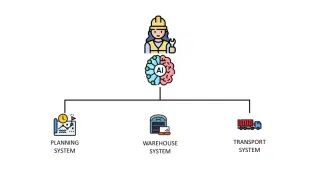
Social Media Beyond the Scroll: How Social Media Algorithms Shape Your Reality An intro to recommender systems Ivo Bernardo May 23, 2026 13 min read Share Recommendation from an AI Model – Image by Author You’ve probably felt that your social media feed may know you too well. When you browse social media, you notice a very typical behavior: you watch one video, and suddenly your timeline is flooded with more of the same. 5 years ago, it felt a bit like magic. But today, we talk about “the algorithm” as if it were a mysterious entity pulling strings in some Silicon Valley basement. The truth is much less dramatic, and much more interesting. The algorithm isn’t inherently evil, it doesn’t sit there plotting your radicalisation.
…
Excerpt limited to ~120 words for fair-use compliance. The full article is at Towards Data Science.
Discussion
0 commentsMore from Towards Data Science