
Centre proposes Bill to strengthen anti-cheating law in bid to curb exam malpractices
Beyond paper leaks, the question of trust and institutional integrityState Governments and UT Administrations will designate Sessions Courts to conduct trials on a continuous, day-to-day basis.Trials must wrap up within three months of the chargesheet being filed. All ongoing cases under the 2024 Act will immediately transfer to the newly designated Special Fast Track Courts and must be completed within three months of transfer. “The amendments ensure time-bound investigations, speedy trials, and enhanced deterrence against organized crime groups and institutions.”
- ▪Beyond paper leaks, the question of trust and institutional integrityState Governments and UT Administrations will designate Sessions Courts to conduct trials on a continuous, day-to-day basis.Trials must wrap up within three months of the
- ▪All ongoing cases under the 2024 Act will immediately transfer to the newly designated Special Fast Track Courts and must be completed within three months of transfer.
- ▪“The amendments ensure time-bound investigations, speedy trials, and enhanced deterrence against organized crime groups and institutions.”
The Hindu — Top publishes from India and files mainly under world. We currently carry 7,904 of its stories.
Story provenance
Source · retrieval · rights · ranking — open for full record
inspect →
Story provenance
Attribution is not the same as permission. This drawer separates discovery metadata, excerpts, WeSearch-generated summaries, reuse status, and whether the publisher receives the visit. Nothing here claims a legal grant the publisher has not made.
Record
| Original publisher | The Hindu |
| Canonical URL | https://www.thehindu.com/news/national/centre-proposes-bill-to-strengthen-anti-cheating-law-in-bid-to-curb-exam-malpractices/article71265665.ece |
| Publication time | Sat, 25 Jul 2026 14:12:16 +0530 |
| Retrieval time | 2026-07-25T08:48:37.605Z |
| Last seen | 2026-07-25T08:48:37.605Z |
| Headline source | Publisher (no WeSearch rewrite) |
| Excerpt source | publisher body |
| Excerpt method | First ~120 words (~800 chars) of extracted publisher body, fair-use limited. |
| Summary | WeSearch · cerebras-chat (WeSearch summarizer) |
| Summary source text | contentText |
| Citation coverage | Summary is a WeSearch-generated derivative; primary citation is the original publisher URL. |
| Cluster | 0MToXF8U92Ri |
| Cluster logic | Grouped by semantic title/content similarity across sources within a rolling window. Same-publisher template collisions are excluded from coverage comparison. |
| Ranking reason | Story pages are not engagement-ranked. Hub feeds use recency, with optional source-diversified chronological ordering (cap consecutive stories per source). No personalized ranking. |
| Publisher visit | Yes — open original |
| Substitutes article? | No — link-out required for full text |
Rights status (four layers)
WeSearch handling by dimension
| Indexing | May the item be indexed (stored, ranked, made findable)? | Allowed |
| Snippet | May a short excerpt of the publisher's text be shown? | Allowed |
| AI summary | May WeSearch generate its own short summary of the article? | Limited |
| Retrieval / RAG | May the content be exposed for third-party retrieval-augmented generation? | Not asserted |
| Model training | May the content be used to train AI models? | Not asserted |
| Commercial reuse | May the content be reused commercially? | Not permitted |
Basis: Derived from the published RSS/Atom feed. Contact: [email protected]. Reviewed: 2026-07-24.
Opening excerpt (first ~120 words) tap to expand
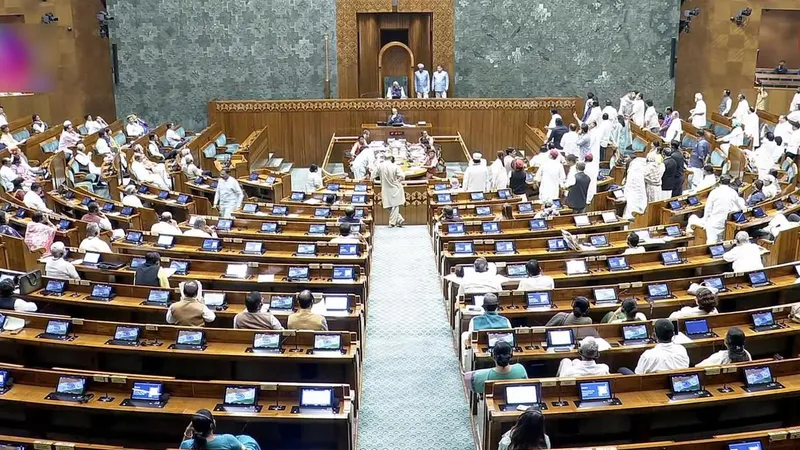
In a move to strengthen the anti-cheating law, the Union Government has proposed The Public Examinations (Prevention of Unfair Means) Amendment Bill, 2026, a copy of which was circulated among members of Parliament on Saturday (July 25, 2026).The Centre is likely to introduce the bill in the Parliament on Monday (July 27, 2026).Jantar Mantar protest updates on July 25, 2026The proposed legislation significantly toughens the penalties established under the 2024 Act, introduces mandatory two-month investigation deadlines, along with designated Special Fast Track Courts, and steep financial penalties reaching up to ₹10 crore for organised crime networks.Maximum imprisonment sentences for individual and institutional offenders have been increased, alongside a steep hike in financial…
Excerpt limited to ~120 words for fair-use compliance. The full article is at The Hindu.
Discussion
0 commentsMore from The Hindu


