ChatGPT Isn't Just Changing How We Work. It's Harming How We Think
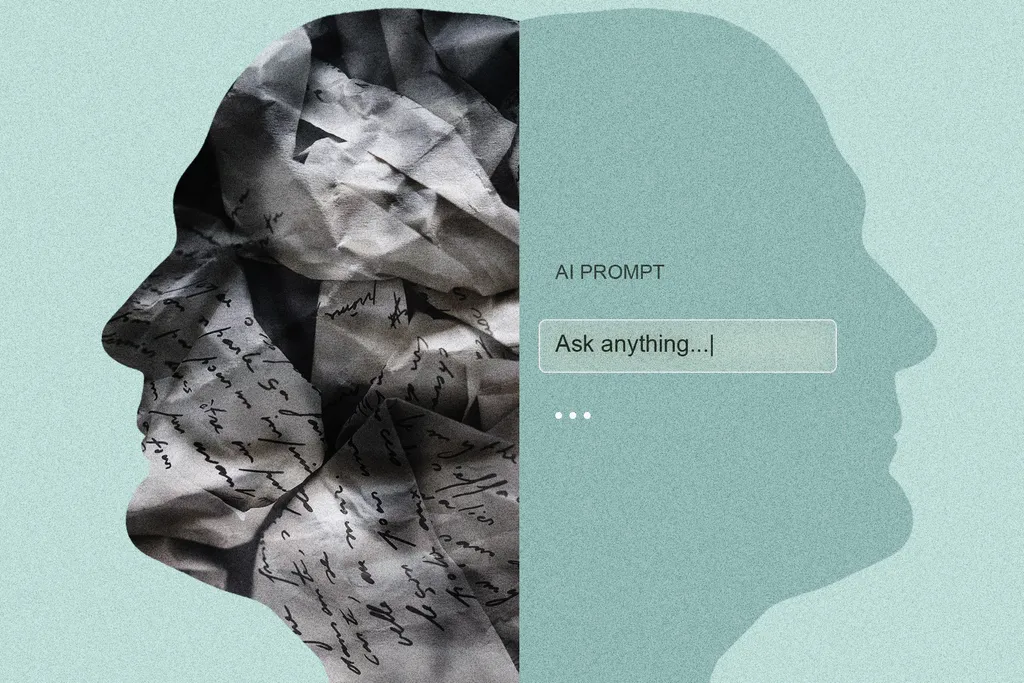
Recent research indicates that the cognitive costs of AI, particularly generative models like ChatGPT, may be more significant than previously thought. While proponents argue that AI changes how we work rather than how we think, evidence suggests it may impact cognitive processes and creativity. This raises concerns about the implications of AI on the inner life of writers and the quality of human expression.
- ▪Generative AI can automate tasks that once required deep focus, shifting the effort from composing to supervising.
- ▪Studies show that ChatGPT leads professional writers to spend less time on rough drafting and more on editing and idea generation.
- ▪There is growing concern that AI may drain language of its soul and affect the cognitive processes of adults.
Hacker News (Newest) files mainly under programming. We currently carry 5,306 of its stories.
Story provenance
Source · retrieval · rights · ranking — open for full record
inspect →
Story provenance
Attribution is not the same as permission. This drawer separates discovery metadata, excerpts, WeSearch-generated summaries, reuse status, and whether the publisher receives the visit. Nothing here claims a legal grant the publisher has not made.
Record
| Original publisher | The Walrus |
| Canonical URL | https://thewalrus.ca/chatgpt-isnt-just-changing-how-we-work-its-harming-how-we-think/ |
| Publication time | Wed, 03 Jun 2026 12:35:57 +0000 |
| Retrieval time | 2026-06-03T12:42:07.659Z |
| Last seen | 2026-06-03T12:42:07.659Z |
| Headline source | Publisher (no WeSearch rewrite) |
| Excerpt source | publisher body |
| Excerpt method | First ~120 words (~800 chars) of extracted publisher body, fair-use limited. |
| Summary | WeSearch · cerebras-chat (WeSearch summarizer) |
| Summary source text | contentText |
| Citation coverage | Summary is a WeSearch-generated derivative; primary citation is the original publisher URL. |
| Cluster | CbSHTI9N82ND |
| Cluster logic | Grouped by semantic title/content similarity across sources within a rolling window. Same-publisher template collisions are excluded from coverage comparison. |
| Ranking reason | Story pages are not engagement-ranked. Hub feeds use recency, with optional source-diversified chronological ordering (cap consecutive stories per source). No personalized ranking. |
| Publisher visit | Yes — open original |
| Substitutes article? | No — link-out required for full text |
Rights status (four layers)
WeSearch handling by dimension
| Indexing | May the item be indexed (stored, ranked, made findable)? | Allowed |
| Snippet | May a short excerpt of the publisher's text be shown? | Allowed |
| AI summary | May WeSearch generate its own short summary of the article? | Limited |
| Retrieval / RAG | May the content be exposed for third-party retrieval-augmented generation? | Not asserted |
| Model training | May the content be used to train AI models? | Not asserted |
| Commercial reuse | May the content be reused commercially? | Not permitted |
Basis: Derived from the published RSS/Atom feed. Contact: [email protected]. Reviewed: 2026-07-24.
Opening excerpt (first ~120 words) tap to expand
TechnologyChatGPT Isn’t Just Changing How We Work. It’s Harming How We ThinkNew research says the cognitive costs of AI may be higher than we realize June 3, 2026June 3, 2026 - by Sheldon FernandezSheldon Fernandez Updated 8:37, Jun. 3, 2026 | Published 6:30, Jun. 3, 2026 Gustavo Sánchez, Marcus Ganahl (Unsplash) / Alana Enahoro A Relic. Several years from now, I wonder if these two words might describe the very paragraph you are reading right now, a collection of sentences drafted painstakingly by a human author. It underwent multiple iterations—editorial notes included—before the final version confronting you.
…
Excerpt limited to ~120 words for fair-use compliance. The full article is at The Walrus.
Discussion
0 commentsMore from The Walrus