
Cities meet ecology: New framework measures urban vibrancy through 13 human activity types
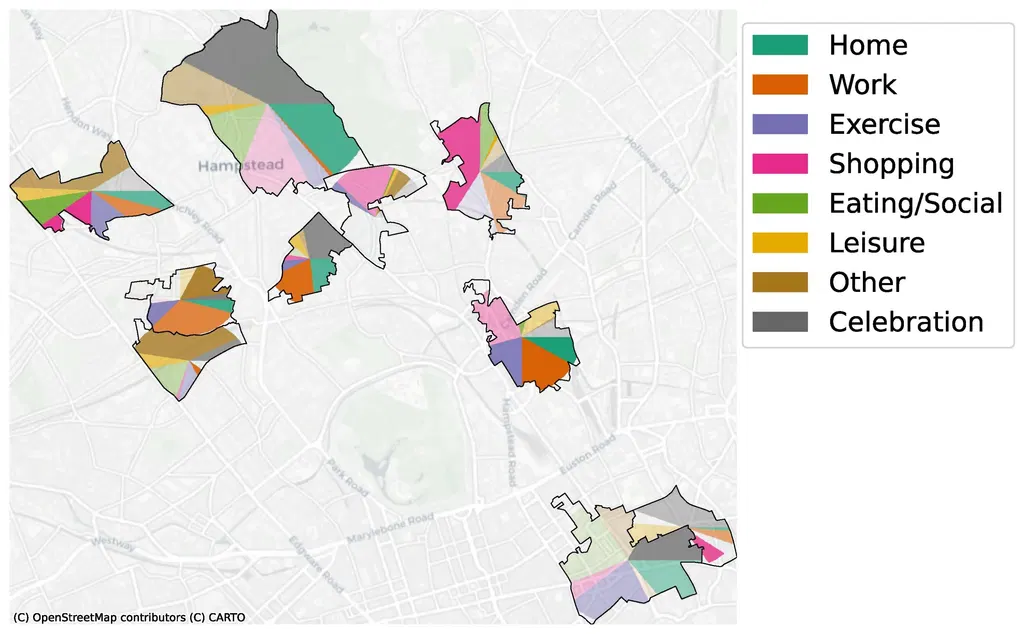
A new framework likens urban vibrancy to ecological biodiversity, assessing both the frequency and intensity of human activities in city spaces. The authors present a taxonomy of 13 activity categories derived from actual usage patterns rather than traditional land-use labels. They propose integrating mobile data, street-level imagery, and AI for real‑time monitoring while emphasizing privacy and inclusivity, and call for interdisciplinary pilot studies worldwide.
- ▪The researchers propose measuring urban vibrancy using ecological concepts such as frequency and intensity of human activities.
- ▪They introduce a taxonomy of 13 activity categories based on how people actually use urban spaces.
- ▪The framework suggests employing mobile data, street-level imagery, and AI to detect activities in real time, with attention to privacy and inclusivity.
- ▪Ecological ideas like carrying capacity and niche differentiation are applied to explain how overcrowding can diminish vibrancy.
- ▪The authors invite interdisciplinary collaborations across computer science, ecology, geography, and urban policy to pilot the framework in cities globally.
Phys.org files mainly under science. We currently carry 1,272 of its stories.
Story provenance
Source · retrieval · rights · ranking — open for full record
inspect →
Story provenance
Attribution is not the same as permission. This drawer separates discovery metadata, excerpts, WeSearch-generated summaries, reuse status, and whether the publisher receives the visit. Nothing here claims a legal grant the publisher has not made.
Record
| Original publisher | Phys.org |
| Canonical URL | https://phys.org/news/2026-05-urban-vibrancy.html |
| Publication time | Tue, 19 May 2026 09:40:05 EDT |
| Retrieval time | 2026-05-19T13:44:57.670Z |
| Last seen | 2026-05-19T13:44:58.889Z |
| Headline source | Publisher (no WeSearch rewrite) |
| Excerpt source | publisher body |
| Excerpt method | First ~120 words (~800 chars) of extracted publisher body, fair-use limited. |
| Summary | WeSearch · cerebras-chat (WeSearch summarizer) |
| Summary source text | contentText |
| Citation coverage | Summary is a WeSearch-generated derivative; primary citation is the original publisher URL. |
| Cluster | x_U2jO_9vvbn |
| Cluster logic | Grouped by semantic title/content similarity across sources within a rolling window. Same-publisher template collisions are excluded from coverage comparison. |
| Ranking reason | Story pages are not engagement-ranked. Hub feeds use recency, with optional source-diversified chronological ordering (cap consecutive stories per source). No personalized ranking. |
| Publisher visit | Yes — open original |
| Substitutes article? | No — link-out required for full text |
Rights status (four layers)
WeSearch handling by dimension
| Indexing | May the item be indexed (stored, ranked, made findable)? | Allowed |
| Snippet | May a short excerpt of the publisher's text be shown? | Allowed |
| AI summary | May WeSearch generate its own short summary of the article? | Limited |
| Retrieval / RAG | May the content be exposed for third-party retrieval-augmented generation? | Not asserted |
| Model training | May the content be used to train AI models? | Not asserted |
| Commercial reuse | May the content be reused commercially? | Not permitted |
Basis: Derived from the published RSS/Atom feed. Contact: [email protected]. Reviewed: 2026-07-24.
Opening excerpt (first ~120 words) tap to expand
May 19, 2026 Cities meet ecology: New framework measures urban vibrancy through 13 human activity types by PNAS Nexus edited by Gaby Clark, reviewed by Andrew Zinin Gaby Clark Scientific Editor Meet our editorial team Behind our editorial process Andrew Zinin Lead Editor Meet our editorial team Behind our editorial process Editors' notes This article has been reviewed according to Science X's editorial process and policies. Editors have highlighted the following attributes while ensuring the content's credibility: fact-checked peer-reviewed publication trusted source proofread The GIST Add as preferred source Urban vibrancy frequency and intensity.
…
Excerpt limited to ~120 words for fair-use compliance. The full article is at Phys.org.