Colossal and the US Government Are Creating an Endangered Species ‘BioVault’
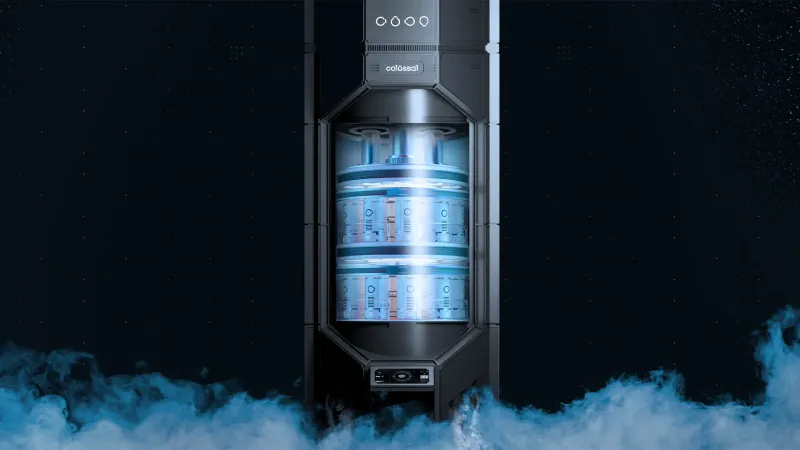
The samples will be cryopreserved and stored at Colossal’s lab in Dallas, with duplicate samples distributed across the country.The company, which last year claimed to have created living dire wolf pups, will perform genetic sequencing on the samples and make the data available to researchers and conservationists. Fish and Wildlife did this when it cloned the black-footed ferret—one of the most endangered mammals in North America—using cryopreserved cells of a ferret that died in the 1980s. Announced in 2021, it was the first instance of cloning a US endangered species.
- ▪The samples will be cryopreserved and stored at Colossal’s lab in Dallas, with duplicate samples distributed across the country.The company, which last year claimed to have created living dire wolf pups, will perform genetic sequencing on t
- ▪Fish and Wildlife did this when it cloned the black-footed ferret—one of the most endangered mammals in North America—using cryopreserved cells of a ferret that died in the 1980s.
- ▪Announced in 2021, it was the first instance of cloning a US endangered species.
WIRED files mainly under tech. We currently carry 597 of its stories.
Story provenance
Source · retrieval · rights · ranking — open for full record
inspect →
Story provenance
Attribution is not the same as permission. This drawer separates discovery metadata, excerpts, WeSearch-generated summaries, reuse status, and whether the publisher receives the visit. Nothing here claims a legal grant the publisher has not made.
Record
| Original publisher | WIRED |
| Canonical URL | https://www.wired.com/story/colossal-interior-department-team-up-endangered-species-dna/ |
| Publication time | Thu, 25 Jun 2026 13:00:00 +0000 |
| Retrieval time | 2026-06-25T14:45:35.664Z |
| Last seen | 2026-06-25T14:45:35.664Z |
| Headline source | Publisher (no WeSearch rewrite) |
| Excerpt source | publisher body |
| Excerpt method | First ~120 words (~800 chars) of extracted publisher body, fair-use limited. |
| Summary | WeSearch · cerebras-chat (WeSearch summarizer) |
| Summary source text | contentText |
| Citation coverage | Summary is a WeSearch-generated derivative; primary citation is the original publisher URL. |
| Cluster | ZXuFXaMve-50 |
| Cluster logic | Grouped by semantic title/content similarity across sources within a rolling window. Same-publisher template collisions are excluded from coverage comparison. |
| Ranking reason | Story pages are not engagement-ranked. Hub feeds use recency, with optional source-diversified chronological ordering (cap consecutive stories per source). No personalized ranking. |
| Publisher visit | Yes — open original |
| Substitutes article? | No — link-out required for full text |
Rights status (four layers)
WeSearch handling by dimension
| Indexing | May the item be indexed (stored, ranked, made findable)? | Allowed |
| Snippet | May a short excerpt of the publisher's text be shown? | Allowed |
| AI summary | May WeSearch generate its own short summary of the article? | Limited |
| Retrieval / RAG | May the content be exposed for third-party retrieval-augmented generation? | Not asserted |
| Model training | May the content be used to train AI models? | Not asserted |
| Commercial reuse | May the content be reused commercially? | Not permitted |
Basis: Derived from the published RSS/Atom feed. Contact: [email protected]. Reviewed: 2026-07-24.
Opening excerpt (first ~120 words) tap to expand
Emily MullinScienceJun 25, 2026 9:00 AMColossal and the US Government Are Creating an Endangered Species ‘BioVault’The move comes as the Trump administration is trying to weaken the act that’s meant to protect endangered species from going extinct in the first place.Courtesy of ColossalCommentLoaderSave StorySave this storyCommentLoaderSave StorySave this storyThe US government is partnering with Texas-based de-extinction company Colossal Biosciences to build a national repository of genetic material from endangered and threatened species.
…
Excerpt limited to ~120 words for fair-use compliance. The full article is at WIRED.
Discussion
0 commentsMore from WIRED

.jpg&w=320)