Colossal Hatches Healthy Chicks From an Artificial Egg, Setting the Stage for Giant Moa De-Extinction
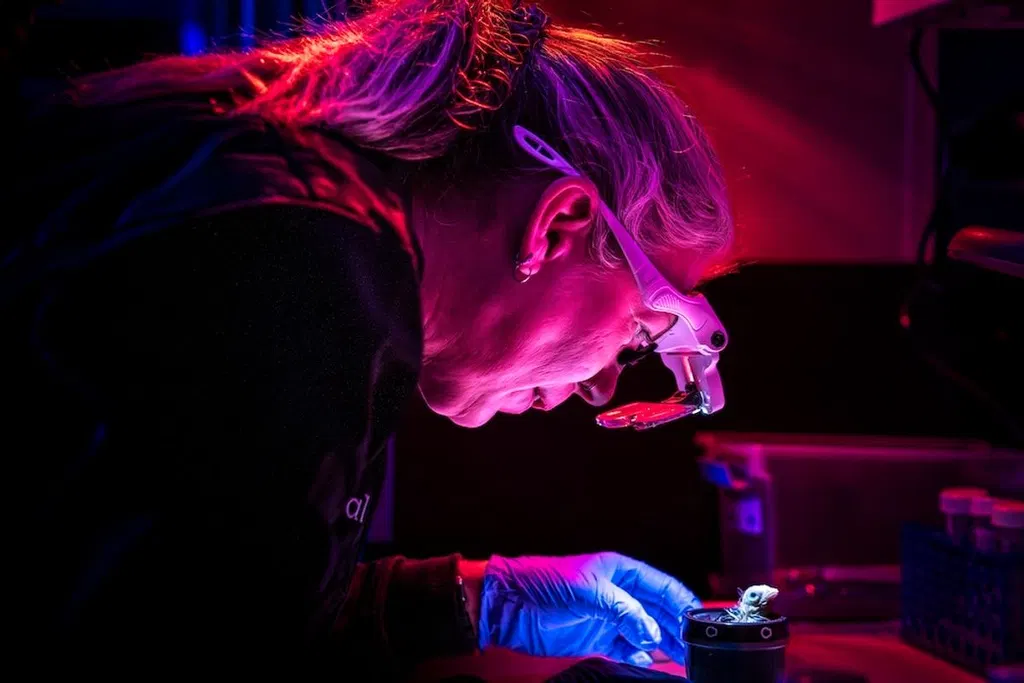
Colossal Biosciences has successfully hatched chicks from an artificial egg, marking a significant advancement in de-extinction technology. This innovation is aimed at reviving the extinct South Island Giant Moa, a bird that stood nearly 12 feet tall. The artificial egg allows for better observation and genetic manipulation of avian embryos, which could enhance conservation efforts.
- ▪Colossal Biosciences has developed an artificial egg that supports avian embryo development.
- ▪The South Island Giant Moa was hunted to extinction in the mid-15th century and is a focus of Colossal's de-extinction efforts.
- ▪The artificial egg features a 3D-printed lattice shell and a silicone-based membrane for optimal oxygen intake.
2 outlets in our directory ran this story, first to last over 3 hours. All of the coverage we found sits in one bucket: lean right. That one-sidedness is itself worth noticing.
- ▪ Colossal Unveils Artificial Egg Incubator To De-Extinct Giant Moa — Forbes — Business
Discover Magazine files mainly under science. We currently carry 86 of its stories.
Story provenance
Source · retrieval · rights · ranking — open for full record
inspect →
Story provenance
Attribution is not the same as permission. This drawer separates discovery metadata, excerpts, WeSearch-generated summaries, reuse status, and whether the publisher receives the visit. Nothing here claims a legal grant the publisher has not made.
Record
| Original publisher | Discover Magazine |
| Canonical URL | https://www.discovermagazine.com/colossal-hatches-healthy-chicks-from-an-artificial-egg-setting-the-stage-for-giant-moa-de-extinction-49124 |
| Publication time | Tue, 19 May 2026 22:05:00 GMT |
| Retrieval time | 2026-05-19T22:14:58.321Z |
| Last seen | 2026-05-19T22:14:58.321Z |
| Headline source | Publisher (no WeSearch rewrite) |
| Excerpt source | publisher body |
| Excerpt method | First ~120 words (~800 chars) of extracted publisher body, fair-use limited. |
| Summary | WeSearch · cerebras-chat (WeSearch summarizer) |
| Summary source text | contentText |
| Citation coverage | Summary is a WeSearch-generated derivative; primary citation is the original publisher URL. |
| Cluster | D6k8l3dXoT6F · 2 stories |
| Cluster logic | Grouped by semantic title/content similarity across sources within a rolling window. Same-publisher template collisions are excluded from coverage comparison. |
| Ranking reason | Story pages are not engagement-ranked. Hub feeds use recency, with optional source-diversified chronological ordering (cap consecutive stories per source). No personalized ranking. |
| Publisher visit | Yes — open original |
| Substitutes article? | No — link-out required for full text |
Rights status (four layers)
WeSearch handling by dimension
| Indexing | May the item be indexed (stored, ranked, made findable)? | Allowed |
| Snippet | May a short excerpt of the publisher's text be shown? | Allowed |
| AI summary | May WeSearch generate its own short summary of the article? | Limited |
| Retrieval / RAG | May the content be exposed for third-party retrieval-augmented generation? | Not asserted |
| Model training | May the content be used to train AI models? | Not asserted |
| Commercial reuse | May the content be reused commercially? | Not permitted |
Basis: Derived from the published RSS/Atom feed. Contact: [email protected]. Reviewed: 2026-07-24.
Opening excerpt (first ~120 words) tap to expand
Colossal Biosciences, the company that is bringing de-extinction into the limelight, has broken new ground by hatching chicks from an artificial egg for the first time. This technology, now proven to successfully support the development of avian embryos, is expected to become a vital component of the company’s endeavor to bring back to life a gargantuan extinct bird, the South Island Giant Moa. When designing the artificial egg, Colossal’s scientists needed to consider everything that makes a natural egg the perfect environment for an avian embryo to grow.
…
Excerpt limited to ~120 words for fair-use compliance. The full article is at Discover Magazine.
Discussion
0 commentsMore from Discover Magazine