Complex animals evolved up to 10 million years earlier than previously thought, fossil discovery shows
A recent fossil discovery in northwestern Canada indicates that complex animals evolved up to 10 million years earlier than previously believed. The site contains over 100 fossils, including six taxa not previously found in North America, dating back 567 million years. This research provides new insights into the evolution of multicellular life during the Ediacaran period.
- ▪The fossil site in Canada suggests complex animals evolved earlier than previously thought.
- ▪More than 100 fossils were discovered, including six taxa never found in North America before.
- ▪The findings push back the origins of mobile animals by several million years.
Live Science files mainly under science. We currently carry 137 of its stories.
Story provenance
Source · retrieval · rights · ranking — open for full record
inspect →
Story provenance
Attribution is not the same as permission. This drawer separates discovery metadata, excerpts, WeSearch-generated summaries, reuse status, and whether the publisher receives the visit. Nothing here claims a legal grant the publisher has not made.
Record
| Original publisher | Live Science |
| Canonical URL | https://www.livescience.com/planet-earth/evolution/complex-animals-evolved-up-to-10-million-years-earlier-than-previously-thought-fossil-discovery-shows |
| Publication time | Wed, 20 May 2026 22:28:18 +0000 |
| Retrieval time | 2026-05-20T22:35:03.084Z |
| Last seen | 2026-05-20T22:35:03.084Z |
| Headline source | Publisher (no WeSearch rewrite) |
| Excerpt source | publisher body |
| Excerpt method | First ~120 words (~800 chars) of extracted publisher body, fair-use limited. |
| Summary | WeSearch · cerebras-chat (WeSearch summarizer) |
| Summary source text | contentText |
| Citation coverage | Summary is a WeSearch-generated derivative; primary citation is the original publisher URL. |
| Cluster | rA6qgqYlTnCb |
| Cluster logic | Grouped by semantic title/content similarity across sources within a rolling window. Same-publisher template collisions are excluded from coverage comparison. |
| Ranking reason | Story pages are not engagement-ranked. Hub feeds use recency, with optional source-diversified chronological ordering (cap consecutive stories per source). No personalized ranking. |
| Publisher visit | Yes — open original |
| Substitutes article? | No — link-out required for full text |
Rights status (four layers)
WeSearch handling by dimension
| Indexing | May the item be indexed (stored, ranked, made findable)? | Allowed |
| Snippet | May a short excerpt of the publisher's text be shown? | Allowed |
| AI summary | May WeSearch generate its own short summary of the article? | Limited |
| Retrieval / RAG | May the content be exposed for third-party retrieval-augmented generation? | Not asserted |
| Model training | May the content be used to train AI models? | Not asserted |
| Commercial reuse | May the content be reused commercially? | Not permitted |
Basis: Derived from the published RSS/Atom feed. Contact: [email protected]. Reviewed: 2026-07-24.
Opening excerpt (first ~120 words) tap to expand
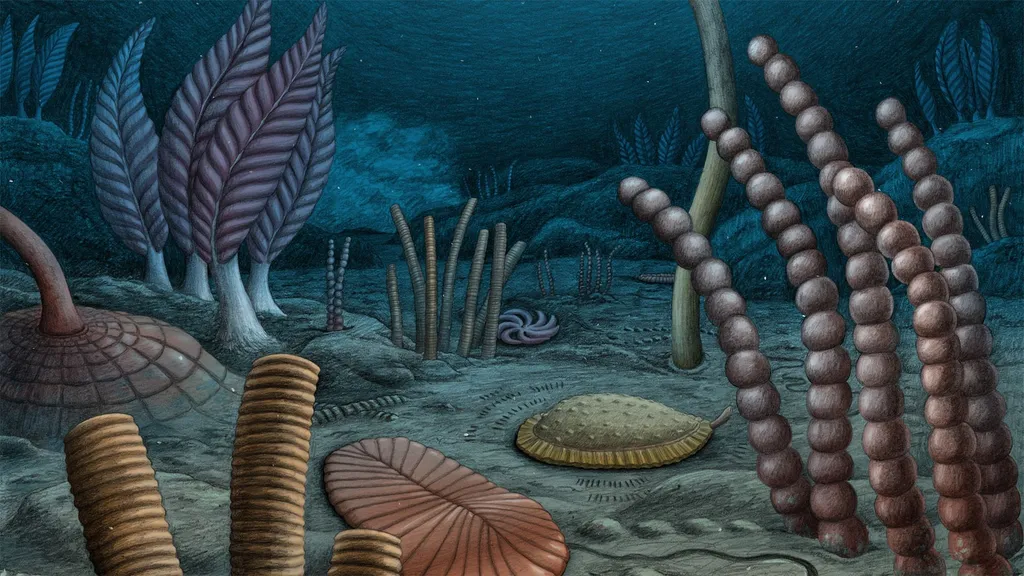
Planet Earth Evolution Complex animals evolved up to 10 million years earlier than previously thought, fossil discovery shows Trove of fossils discovered in Canada sheds light on "when life first became large, complex and unmistakenly animal." By Skyler Ware published 20 May 2026 in News When you purchase through links on our site, we may earn an affiliate commission. Here’s how it works. An illustration of a possible ancient ecosystem based on a new fossil site in Canada's Northwest Territories, inspired by the fossils recently found there.
…
Excerpt limited to ~120 words for fair-use compliance. The full article is at Live Science.
Discussion
0 commentsMore from Live Science