Cuban drone crisis: US fears Russia-China Caribbean threat
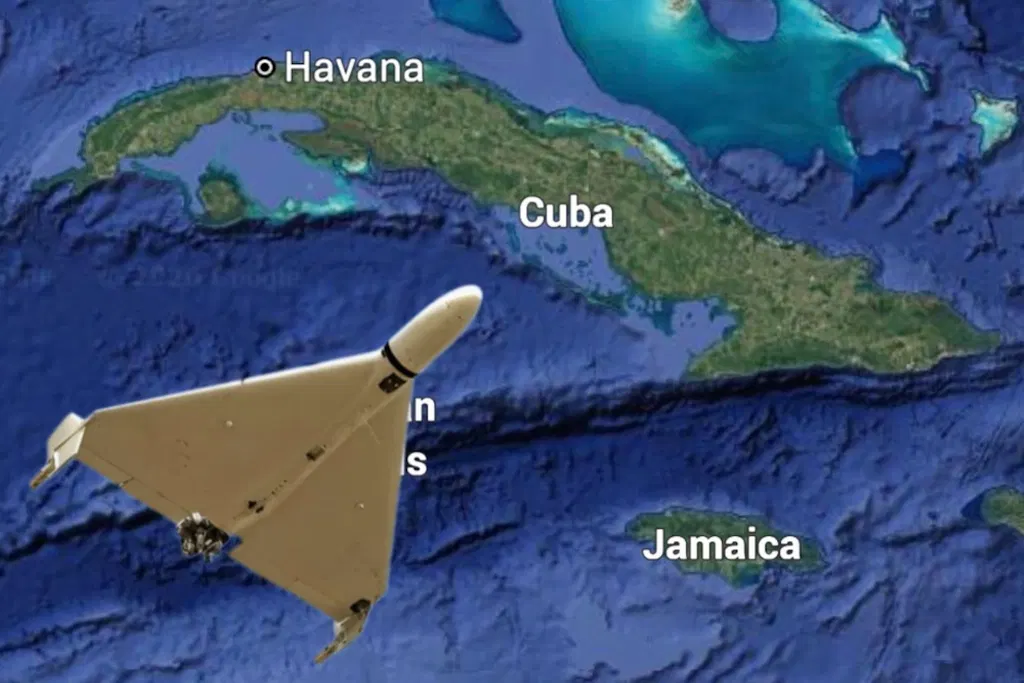
The US is increasingly concerned about Cuba's growing military drone program, which is reportedly supported by Russia and Iran. This development has raised fears that Cuba could become a strategic pressure point for adversaries near US territory. While US officials do not view Cuba as an imminent threat, they are wary of its potential role in asymmetric disruption and surveillance.
- ▪Cuba has obtained over 300 drones since 2023, raising concerns for US military assets.
- ▪US officials are worried that Cuba's drone capabilities could endanger the naval base at Guantanamo Bay.
- ▪Iranian military advisers and Russian intelligence facilities in Cuba have heightened fears of foreign influence near US territory.
2 outlets in our directory ran this story, first to last over 20 hours. All of the coverage we found sits in one bucket: centre. That one-sidedness is itself worth noticing.
- ▪ The Cuban Drone Crisis Of 2026 — Seeking Alpha
Asia Times files mainly under world. We currently carry 156 of its stories.
Story provenance
Source · retrieval · rights · ranking — open for full record
inspect →
Story provenance
Attribution is not the same as permission. This drawer separates discovery metadata, excerpts, WeSearch-generated summaries, reuse status, and whether the publisher receives the visit. Nothing here claims a legal grant the publisher has not made.
Record
| Original publisher | Asia Times |
| Canonical URL | https://asiatimes.com/2026/05/cuban-drone-crisis-us-fears-russia-china-caribbean-threat/ |
| Publication time | Mon, 18 May 2026 10:19:56 +0000 |
| Retrieval time | 2026-05-18T10:24:56.131Z |
| Last seen | 2026-05-18T10:24:56.131Z |
| Headline source | Publisher (no WeSearch rewrite) |
| Excerpt source | publisher body |
| Excerpt method | First ~120 words (~800 chars) of extracted publisher body, fair-use limited. |
| Summary | WeSearch · cerebras-chat (WeSearch summarizer) |
| Summary source text | contentText |
| Citation coverage | Summary is a WeSearch-generated derivative; primary citation is the original publisher URL. |
| Cluster | y113VfJ5RbwP · 2 stories |
| Cluster logic | Grouped by semantic title/content similarity across sources within a rolling window. Same-publisher template collisions are excluded from coverage comparison. |
| Ranking reason | Story pages are not engagement-ranked. Hub feeds use recency, with optional source-diversified chronological ordering (cap consecutive stories per source). No personalized ranking. |
| Publisher visit | Yes — open original |
| Substitutes article? | No — link-out required for full text |
Rights status (four layers)
WeSearch handling by dimension
| Indexing | May the item be indexed (stored, ranked, made findable)? | Allowed |
| Snippet | May a short excerpt of the publisher's text be shown? | Allowed |
| AI summary | May WeSearch generate its own short summary of the article? | Limited |
| Retrieval / RAG | May the content be exposed for third-party retrieval-augmented generation? | Not asserted |
| Model training | May the content be used to train AI models? | Not asserted |
| Commercial reuse | May the content be reused commercially? | Not permitted |
Basis: Derived from the published RSS/Atom feed. Contact: [email protected]. Reviewed: 2026-07-24.
Opening excerpt (first ~120 words) tap to expand
As the US confronts growing fears that Russian, Chinese and Iranian-backed drone and intelligence activities are turning Cuba into a new strategic pressure point near US territory, the island is reemerging as a focal point of great-power rivalry in the Western Hemisphere. This month, Axios reported that US officials are increasingly concerned that Cuba’s growing military drone program, backed by Russian and Iranian support, could endanger the US naval base at Guantanamo Bay, US military vessels and even Key West, Florida, according to classified intelligence. The report stated that Cuba has obtained over 300 drones with different capabilities since 2023.
…
Excerpt limited to ~120 words for fair-use compliance. The full article is at Asia Times.
Discussion
0 commentsMore from Asia Times