Deadly cruise ship outbreak renews push for hantavirus treatments, vaccines
A hantavirus outbreak on the cruise ship MV Hondius has raised concerns about the lack of treatments and vaccines for the virus. Researchers are hopeful that increased attention from this incident will lead to more investment in hantavirus research. The Andes virus, responsible for the outbreak, is particularly concerning due to its potential for human-to-human transmission.
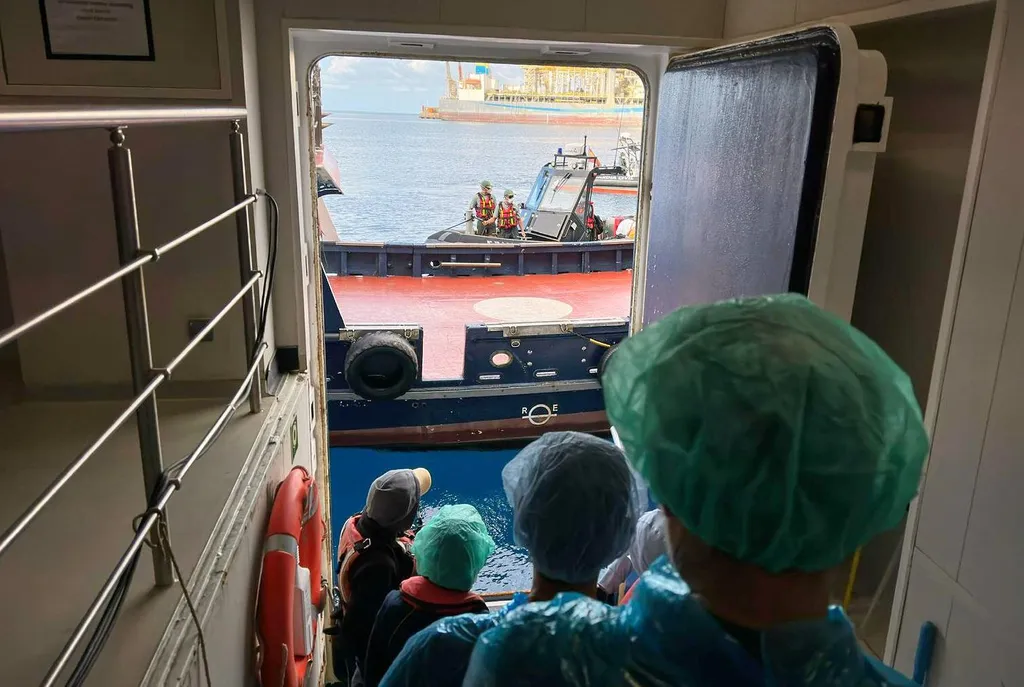
- ▪Passengers were disembarked from the MV Hondius at the port of Granadilla in Tenerife, Spain, on May 10.
- ▪Three of the 13 likely hantavirus cases among cruise ship passengers ended in death.
- ▪Researchers are testing the drug tocilizumab as a potential treatment for hantavirus pulmonary syndrome.
Korea Times publishes from South Korea and files mainly under world. We currently carry 375 of its stories.
Story provenance
Source · retrieval · rights · ranking — open for full record
inspect →
Story provenance
Attribution is not the same as permission. This drawer separates discovery metadata, excerpts, WeSearch-generated summaries, reuse status, and whether the publisher receives the visit. Nothing here claims a legal grant the publisher has not made.
Record
| Original publisher | Korea Times |
| Canonical URL | https://www.koreatimes.co.kr/world/20260604/deadly-cruise-ship-outbreak-renews-push-for-hantavirus-treatments-vaccines?utm_source=rss |
| Publication time | Thu, 04 Jun 2026 10:57:03 GMT |
| Retrieval time | 2026-06-04T11:01:50.269Z |
| Last seen | 2026-06-04T11:01:50.269Z |
| Headline source | Publisher (no WeSearch rewrite) |
| Excerpt source | publisher body |
| Excerpt method | First ~120 words (~800 chars) of extracted publisher body, fair-use limited. |
| Summary | WeSearch · cerebras-chat (WeSearch summarizer) |
| Summary source text | contentText |
| Citation coverage | Summary is a WeSearch-generated derivative; primary citation is the original publisher URL. |
| Cluster | QvXPDYUuQY_8 |
| Cluster logic | Grouped by semantic title/content similarity across sources within a rolling window. Same-publisher template collisions are excluded from coverage comparison. |
| Ranking reason | Story pages are not engagement-ranked. Hub feeds use recency, with optional source-diversified chronological ordering (cap consecutive stories per source). No personalized ranking. |
| Publisher visit | Yes — open original |
| Substitutes article? | No — link-out required for full text |
Rights status (four layers)
WeSearch handling by dimension
| Indexing | May the item be indexed (stored, ranked, made findable)? | Allowed |
| Snippet | May a short excerpt of the publisher's text be shown? | Allowed |
| AI summary | May WeSearch generate its own short summary of the article? | Limited |
| Retrieval / RAG | May the content be exposed for third-party retrieval-augmented generation? | Not asserted |
| Model training | May the content be used to train AI models? | Not asserted |
| Commercial reuse | May the content be reused commercially? | Not permitted |
Basis: Derived from the published RSS/Atom feed. Contact: [email protected]. Reviewed: 2026-07-24.
Opening excerpt (first ~120 words) tap to expand
Passengers are being disembarked from the hantavirus-stricken cruise ship MV Hondius at the port of Granadilla in Tenerife, Canary Islands, Spain, May 10. AP-YonhapSANTIAGO, Chile — When a rare but deadly rodent-borne virus struck passengers on a cruise ship and seemed to be spreading, there were no treatments for those who fell ill and no vaccines to protect others.That was the case even though it wasn't a novel germ that the world had never seen before, like the virus that caused the coronavirus pandemic. It was a hantavirus, one of a family of viruses that have been known for decades and are thought to exist around the world.Teams of researchers, including in Chile, Argentina and the United States, have long been trying to find and develop drugs and vaccines.
…
Excerpt limited to ~120 words for fair-use compliance. The full article is at Korea Times.
Discussion
0 commentsMore from Korea Times