Dell’s XPS 13 Could Beat the MacBook Neo—But There’s One Big Problem
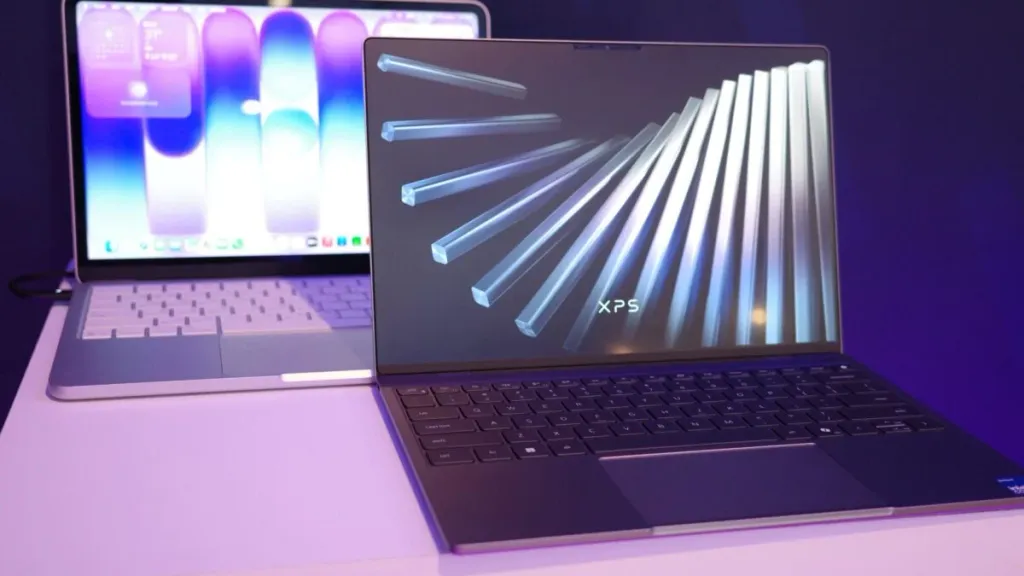
Dell's XPS 13 is positioned as a strong competitor to Apple's MacBook Neo, particularly for budget-conscious consumers. While it offers solid build quality and competitive specifications, the trackpad's performance is a notable drawback. Overall, the XPS 13 presents a viable option for those seeking a quality laptop under $1,000.
- ▪The XPS 13 starts at $700, with a student discount bringing it down to $600.
- ▪It features an Intel Core 5 processor, 8GB of RAM, and 256GB of storage.
- ▪The trackpad's responsiveness is disappointing compared to the MacBook Neo.
- ▪The XPS 13 has a full 2.5K touch panel with a refresh rate of up to 120Hz.
- ▪Dell aims to provide more choices for quality budget laptops in the market.
Gizmodo files mainly under tech. We currently carry 694 of its stories.
Story provenance
Source · retrieval · rights · ranking — open for full record
inspect →
Story provenance
Attribution is not the same as permission. This drawer separates discovery metadata, excerpts, WeSearch-generated summaries, reuse status, and whether the publisher receives the visit. Nothing here claims a legal grant the publisher has not made.
Record
| Original publisher | Gizmodo |
| Canonical URL | https://gizmodo.com/dells-xps-13-could-beat-the-macbook-neo-but-theres-one-big-problem-2000766781 |
| Publication time | Wed, 03 Jun 2026 08:36:48 +0000 |
| Retrieval time | 2026-06-03T08:41:59.255Z |
| Last seen | 2026-06-03T08:41:59.255Z |
| Headline source | Publisher (no WeSearch rewrite) |
| Excerpt source | publisher body |
| Excerpt method | First ~120 words (~800 chars) of extracted publisher body, fair-use limited. |
| Summary | WeSearch · cerebras-chat (WeSearch summarizer) |
| Summary source text | contentText |
| Citation coverage | Summary is a WeSearch-generated derivative; primary citation is the original publisher URL. |
| Cluster | 8-O1LNb57r4B |
| Cluster logic | Grouped by semantic title/content similarity across sources within a rolling window. Same-publisher template collisions are excluded from coverage comparison. |
| Ranking reason | Story pages are not engagement-ranked. Hub feeds use recency, with optional source-diversified chronological ordering (cap consecutive stories per source). No personalized ranking. |
| Publisher visit | Yes — open original |
| Substitutes article? | No — link-out required for full text |
Rights status (four layers)
WeSearch handling by dimension
| Indexing | May the item be indexed (stored, ranked, made findable)? | Allowed |
| Snippet | May a short excerpt of the publisher's text be shown? | Allowed |
| AI summary | May WeSearch generate its own short summary of the article? | Limited |
| Retrieval / RAG | May the content be exposed for third-party retrieval-augmented generation? | Not asserted |
| Model training | May the content be used to train AI models? | Not asserted |
| Commercial reuse | May the content be reused commercially? | Not permitted |
Basis: Derived from the published RSS/Atom feed. Contact: [email protected]. Reviewed: 2026-07-24.
Opening excerpt (first ~120 words) tap to expand
Every few years, the PC industry needs a brutal reminder that most of us aren’t made of money. Apple’s $600 MacBook Neo was a wake-up call for many in the industry—a reminder there’s a demand for laptops under $1,000 that don’t suck. By first impressions, Dell’s XPS 13 seems to be doing everything it needs to. But there’s one detail that just barely misses the mark. The XPS 13 starts at $700, though you can get the device for $600 with a student discount. Specs-wise, it doesn’t sound the most exciting; the base model has 8GB of RAM and 256GB of storage (both similar to the MacBook Neo). It’s running an Intel Core 5, one of the new Wildcat Lake chips built for lower-end PCs. On its face, it should be perfectly fine for work and streaming. If only the trackpad were as nice as the keyboard.
…
Excerpt limited to ~120 words for fair-use compliance. The full article is at Gizmodo.
Discussion
0 commentsMore from Gizmodo