Discovering Dennis Ritchie's Lost Dissertation (2020)
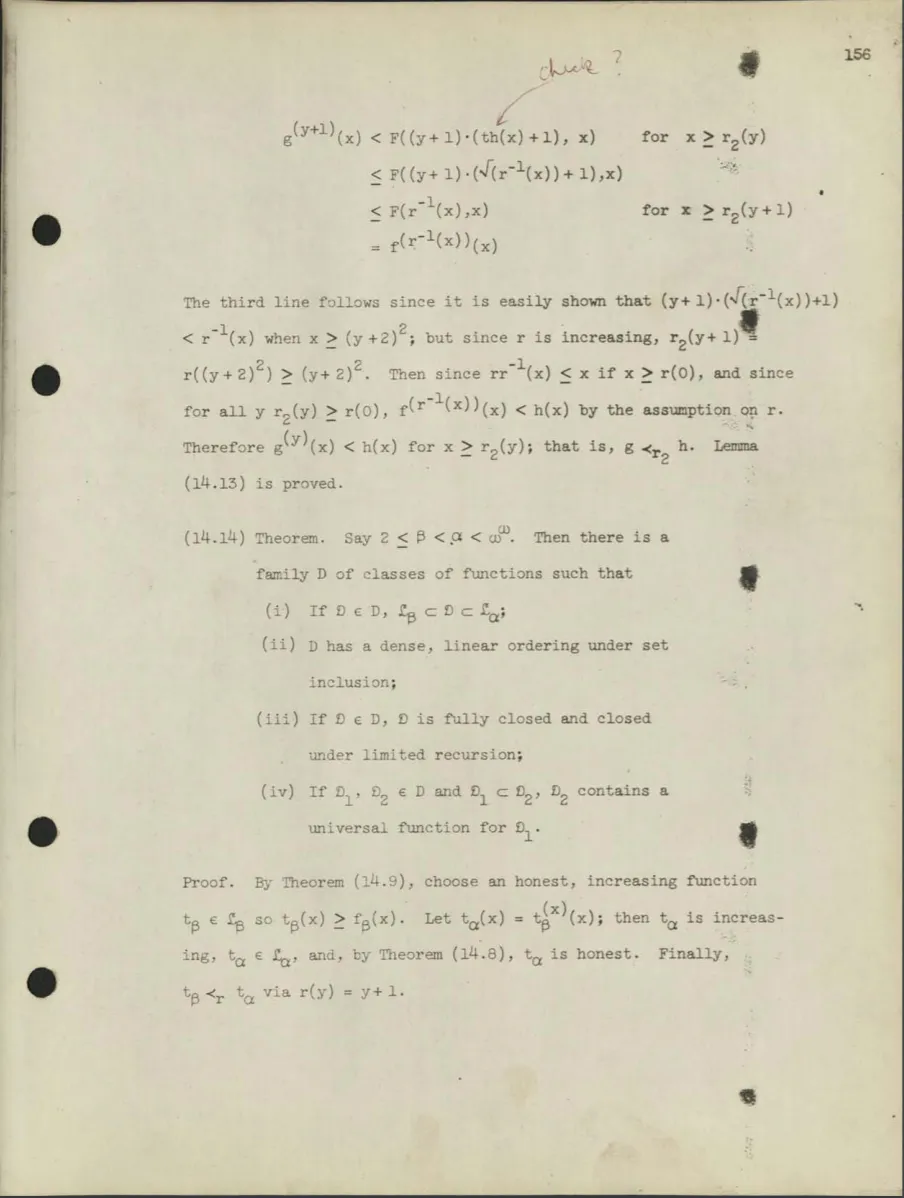
Dennis Ritchie's lost dissertation, which had been unpublished and absent from public collections, has recently been discovered. Ritchie, a key figure in the development of Unix and the C programming language, never officially submitted his dissertation to Harvard, which prevented him from obtaining his PhD. His sister's search for the document revealed a copy from his former advisor's widow, highlighting the significance of Ritchie's contributions to computing despite his lack of formal academic recognition.
- ▪Dennis Ritchie was a pivotal figure in the creation of Unix and the C programming language.
- ▪His dissertation, completed in 1968, was lost and unpublished until recently.
- ▪Ritchie never received his PhD because he did not submit a bound copy of his dissertation to Harvard's library.
Hacker News (Newest) files mainly under programming. We currently carry 5,306 of its stories.
Story provenance
Source · retrieval · rights · ranking — open for full record
inspect →
Story provenance
Attribution is not the same as permission. This drawer separates discovery metadata, excerpts, WeSearch-generated summaries, reuse status, and whether the publisher receives the visit. Nothing here claims a legal grant the publisher has not made.
Record
| Original publisher | CHM |
| Canonical URL | https://computerhistory.org/blog/discovering-dennis-ritchies-lost-dissertation/ |
| Publication time | Fri, 29 May 2026 14:45:53 +0000 |
| Retrieval time | 2026-05-29T14:50:01.336Z |
| Last seen | 2026-05-29T14:50:01.336Z |
| Headline source | Publisher (no WeSearch rewrite) |
| Excerpt source | publisher body |
| Excerpt method | First ~120 words (~800 chars) of extracted publisher body, fair-use limited. |
| Summary | WeSearch · cerebras-chat (WeSearch summarizer) |
| Summary source text | contentText |
| Citation coverage | Summary is a WeSearch-generated derivative; primary citation is the original publisher URL. |
| Cluster | uB-ej990Fu1T |
| Cluster logic | Grouped by semantic title/content similarity across sources within a rolling window. Same-publisher template collisions are excluded from coverage comparison. |
| Ranking reason | Story pages are not engagement-ranked. Hub feeds use recency, with optional source-diversified chronological ordering (cap consecutive stories per source). No personalized ranking. |
| Publisher visit | Yes — open original |
| Substitutes article? | No — link-out required for full text |
Rights status (four layers)
WeSearch handling by dimension
| Indexing | May the item be indexed (stored, ranked, made findable)? | Allowed |
| Snippet | May a short excerpt of the publisher's text be shown? | Allowed |
| AI summary | May WeSearch generate its own short summary of the article? | Limited |
| Retrieval / RAG | May the content be exposed for third-party retrieval-augmented generation? | Not asserted |
| Model training | May the content be used to train AI models? | Not asserted |
| Commercial reuse | May the content be reused commercially? | Not permitted |
Basis: Derived from the published RSS/Atom feed. Contact: [email protected]. Reviewed: 2026-07-24.
Opening excerpt (first ~120 words) tap to expand
Many of you, dear readers, will have heard of Dennis Ritchie. In the late 1960s, he left graduate studies in applied mathematics at Harvard for a position at the Bell Telephone Laboratories, where he spent the entirety of his career. Not long after joining the Labs, Ritchie linked arms with Ken Thompson in efforts that would create a fundamental dyad of the digital world that followed: the operating system Unix and the programming language C. Thompson led the development of the system, while Ritchie was lead in the creation of C, in which Thompson rewrote Unix. In time, Unix became the basis for most of the operating systems on which our digital world is built, while C became—and remains—one of the most popular languages for creating the software that animates this world.
…
Excerpt limited to ~120 words for fair-use compliance. The full article is at CHM.
Discussion
0 commentsMore from CHM