Early Herders Didn’t Give Up Hunting and Gathering as Quickly as Previously Thought
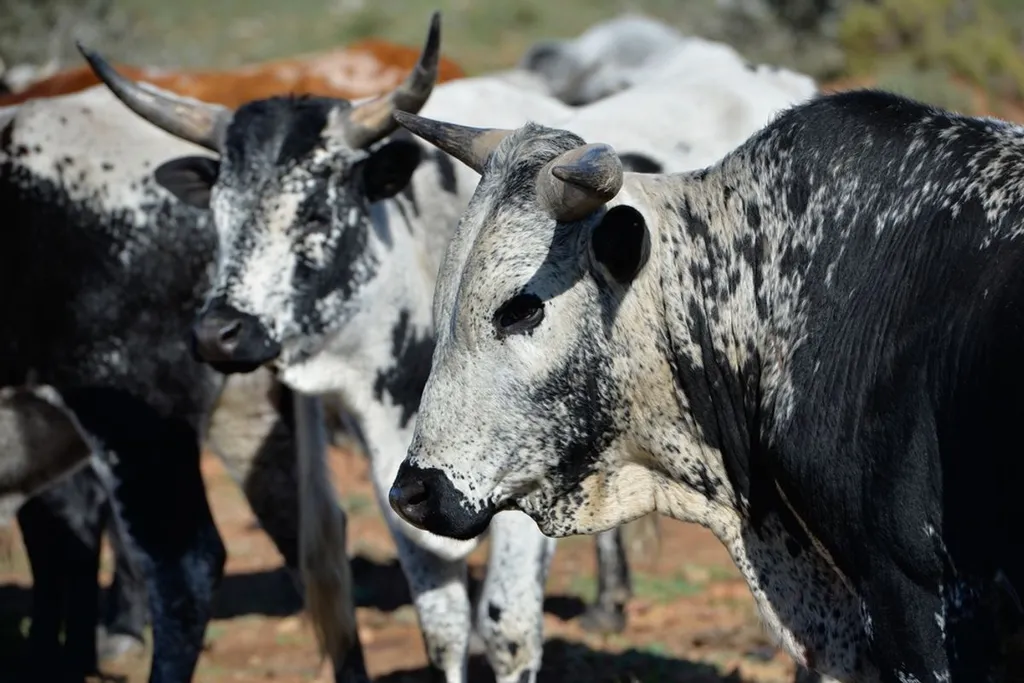
Recent research challenges the assumption that early herders quickly abandoned hunting and gathering for livestock farming. Instead, it suggests that these ancient pastoralists maintained a diverse diet, including wild animals, for over a millennium after adopting herding. The study highlights the resilience and adaptability of early human societies in response to environmental changes.
- ▪Researchers studied ancient livestock herders in Kenya and Tanzania, revealing they continued to consume a variety of foods for at least a thousand years after starting to herd.
- ▪Chemical analysis of ancient teeth showed that early herders had diets similar to hunter-gatherers, including both domesticated and wild animals.
- ▪The findings indicate that environmental changes influenced herders to maintain multiple food sources rather than relying solely on livestock.
Discover Magazine files mainly under science. We currently carry 86 of its stories.
Story provenance
Source · retrieval · rights · ranking — open for full record
inspect →
Story provenance
Attribution is not the same as permission. This drawer separates discovery metadata, excerpts, WeSearch-generated summaries, reuse status, and whether the publisher receives the visit. Nothing here claims a legal grant the publisher has not made.
Record
| Original publisher | Discover Magazine |
| Canonical URL | https://www.discovermagazine.com/early-herders-didn-t-give-up-hunting-and-gathering-as-quickly-as-previously-thought-49132 |
| Publication time | Wed, 20 May 2026 21:20:00 GMT |
| Retrieval time | 2026-05-20T21:25:02.995Z |
| Last seen | 2026-05-20T21:25:02.995Z |
| Headline source | Publisher (no WeSearch rewrite) |
| Excerpt source | publisher body |
| Excerpt method | First ~120 words (~800 chars) of extracted publisher body, fair-use limited. |
| Summary | WeSearch · cerebras-chat (WeSearch summarizer) |
| Summary source text | contentText |
| Citation coverage | Summary is a WeSearch-generated derivative; primary citation is the original publisher URL. |
| Cluster | D-mZc9fryN_y |
| Cluster logic | Grouped by semantic title/content similarity across sources within a rolling window. Same-publisher template collisions are excluded from coverage comparison. |
| Ranking reason | Story pages are not engagement-ranked. Hub feeds use recency, with optional source-diversified chronological ordering (cap consecutive stories per source). No personalized ranking. |
| Publisher visit | Yes — open original |
| Substitutes article? | No — link-out required for full text |
Rights status (four layers)
WeSearch handling by dimension
| Indexing | May the item be indexed (stored, ranked, made findable)? | Allowed |
| Snippet | May a short excerpt of the publisher's text be shown? | Allowed |
| AI summary | May WeSearch generate its own short summary of the article? | Limited |
| Retrieval / RAG | May the content be exposed for third-party retrieval-augmented generation? | Not asserted |
| Model training | May the content be used to train AI models? | Not asserted |
| Commercial reuse | May the content be reused commercially? | Not permitted |
Basis: Derived from the published RSS/Atom feed. Contact: [email protected]. Reviewed: 2026-07-24.
Opening excerpt (first ~120 words) tap to expand
Anthropologists have often assumed that once human societies start producing their own food, they quickly abandon hunter-gatherer practices. Researchers studying some of the earliest adopters of livestock farming in eastern Africa have turned that idea on its head. The new work instead suggests that these ancient pastoralists continued to eat a wider variety of foods, including wild animals, for at least a millennium after they began herding livestock.“These early herders didn’t put all their eggs in one basket.
…
Excerpt limited to ~120 words for fair-use compliance. The full article is at Discover Magazine.
Discussion
0 commentsMore from Discover Magazine