Entanglement Builds Space-Time. Now “Magic” Gives It Gravity.
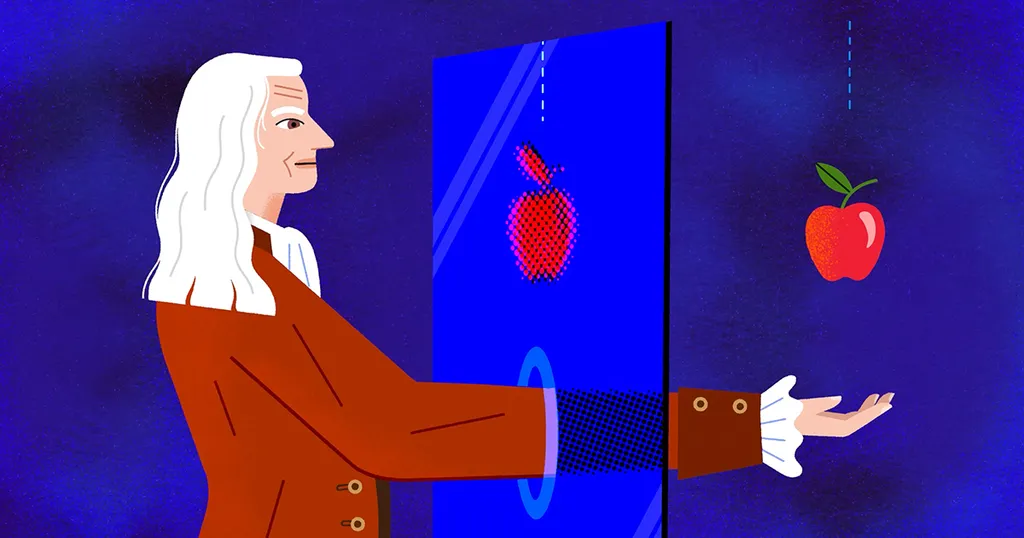
Physicists are exploring the relationship between quantum mechanics and the structure of space-time, particularly in the context of black holes. Recent research has identified a quantum property known as 'magic' that allows matter to influence the curvature of space-time. This discovery could provide new insights into the fundamental nature of gravity and the universe.
- ▪Physicists have traced the pliability of space-time to its quantum roots, specifically a measure known as 'magic.'
- ▪Entanglement between quantum particles has been found to give space-time its structure, allowing matter to move within it.
- ▪Recent studies have shown how quantum particles can cause space-time to bend, addressing a long-standing challenge in theoretical physics.
Quanta Magazine files mainly under science. We currently carry 16 of its stories.
Story provenance
Source · retrieval · rights · ranking — open for full record
inspect →
Story provenance
Attribution is not the same as permission. This drawer separates discovery metadata, excerpts, WeSearch-generated summaries, reuse status, and whether the publisher receives the visit. Nothing here claims a legal grant the publisher has not made.
Record
| Original publisher | Quanta Magazine |
| Canonical URL | https://www.quantamagazine.org/entanglement-builds-space-time-now-magic-gives-it-gravity-20260603/ |
| Publication time | Wed, 03 Jun 2026 14:34:29 +0000 |
| Retrieval time | 2026-06-03T14:37:09.680Z |
| Last seen | 2026-06-03T14:37:09.680Z |
| Headline source | Publisher (no WeSearch rewrite) |
| Excerpt source | publisher body |
| Excerpt method | First ~120 words (~800 chars) of extracted publisher body, fair-use limited. |
| Summary | WeSearch · cerebras-chat (WeSearch summarizer) |
| Summary source text | contentText |
| Citation coverage | Summary is a WeSearch-generated derivative; primary citation is the original publisher URL. |
| Cluster | opYzOO5wX-HR |
| Cluster logic | Grouped by semantic title/content similarity across sources within a rolling window. Same-publisher template collisions are excluded from coverage comparison. |
| Ranking reason | Story pages are not engagement-ranked. Hub feeds use recency, with optional source-diversified chronological ordering (cap consecutive stories per source). No personalized ranking. |
| Publisher visit | Yes — open original |
| Substitutes article? | No — link-out required for full text |
Rights status (four layers)
WeSearch handling by dimension
| Indexing | May the item be indexed (stored, ranked, made findable)? | Allowed |
| Snippet | May a short excerpt of the publisher's text be shown? | Allowed |
| AI summary | May WeSearch generate its own short summary of the article? | Limited |
| Retrieval / RAG | May the content be exposed for third-party retrieval-augmented generation? | Not asserted |
| Model training | May the content be used to train AI models? | Not asserted |
| Commercial reuse | May the content be reused commercially? | Not permitted |
Basis: Derived from the published RSS/Atom feed. Contact: [email protected]. Reviewed: 2026-07-24.
Opening excerpt (first ~120 words) tap to expand
Home Entanglement Builds Space-Time. Now “Magic” Gives It Gravity. Comment Save Article Read Later Share Facebook Copied! Copy link Email Pocket Reddit Ycombinator Comment Comments Save Article Read Later Read Later quantum gravity Entanglement Builds Space-Time. Now “Magic” Gives It Gravity. By Charlie Wood June 3, 2026 In holographic theories, physicists may have traced the pliability of space-time to its quantum roots: a measure of quantumness known as “magic.” Comment Save Article Read Later .blue-accent{ color: #0000fe; } Irene Pérez for Quanta Magazine By Charlie Wood Staff Writer June 3, 2026 View PDF/Print Mode error correction feature general relativity gravity physics quantum gravity quantum physics space-time theoretical physics All topics In 1973, John Archibald Wheeler…
Excerpt limited to ~120 words for fair-use compliance. The full article is at Quanta Magazine.
Discussion
0 commentsMore from Quanta Magazine