Erdogan and Putin, the End of an Unlikely Partnership
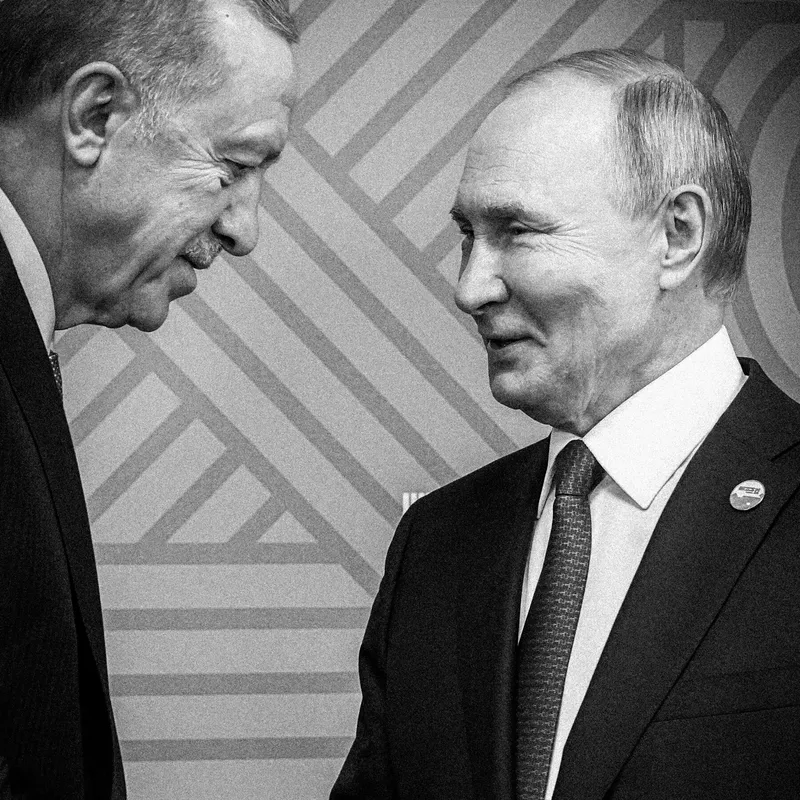
The article examines the deterioration of the strategic relationship between Turkish President Recep Tayyip Erdogan and Russian President Vladimir Putin. It notes that shared interests in energy and regional influence once bound the two leaders, but diverging positions on the Ukraine war and Turkey’s NATO commitments have created friction. The author argues that the partnership is likely to fade as both sides pursue divergent foreign‑policy goals.
- ▪Erdogan and Putin forged a pragmatic partnership after the 2016 coup attempt, cooperating on energy projects and regional security matters.
- ▪Turkey’s decision to align more closely with NATO and condemn Russia’s invasion of Ukraine strained the bilateral relationship.
- ▪Recent diplomatic spats, including Turkey’s criticism of Russian actions in Syria and Moscow’s retaliation over sanctions, signal an emerging rift.
- ▪Analysts cited in the article suggest that both leaders now view the alliance as a tactical convenience rather than a long‑term commitment.
NYT — Home files mainly under news. We currently carry 1,563 of its stories.
Story provenance
Source · retrieval · rights · ranking — open for full record
inspect →
Story provenance
Attribution is not the same as permission. This drawer separates discovery metadata, excerpts, WeSearch-generated summaries, reuse status, and whether the publisher receives the visit. Nothing here claims a legal grant the publisher has not made.
Record
| Original publisher | NYT > Top Stories |
| Canonical URL | https://www.nytimes.com/2026/06/07/opinion/russia-turkey-putin-erdogan-ukraine.html |
| Publication time | Sun, 07 Jun 2026 06:40:48 +0000 |
| Retrieval time | 2026-06-07T05:55:57.042Z |
| Last seen | 2026-06-07T08:42:05.328Z |
| Headline source | Publisher (no WeSearch rewrite) |
| Excerpt source | publisher body |
| Excerpt method | First ~120 words (~800 chars) of extracted publisher body, fair-use limited. |
| Summary | WeSearch · cerebras-chat (WeSearch summarizer) |
| Summary source text | contentText |
| Citation coverage | Summary is a WeSearch-generated derivative; primary citation is the original publisher URL. |
| Cluster | BlHHHKl4o-xM |
| Cluster logic | Grouped by semantic title/content similarity across sources within a rolling window. Same-publisher template collisions are excluded from coverage comparison. |
| Ranking reason | Story pages are not engagement-ranked. Hub feeds use recency, with optional source-diversified chronological ordering (cap consecutive stories per source). No personalized ranking. |
| Publisher visit | Yes — open original |
| Substitutes article? | No — link-out required for full text |
Rights status (four layers)
WeSearch handling by dimension
| Indexing | May the item be indexed (stored, ranked, made findable)? | Allowed |
| Snippet | May a short excerpt of the publisher's text be shown? | Allowed |
| AI summary | May WeSearch generate its own short summary of the article? | Limited |
| Retrieval / RAG | May the content be exposed for third-party retrieval-augmented generation? | Not asserted |
| Model training | May the content be used to train AI models? | Not asserted |
| Commercial reuse | May the content be reused commercially? | Not permitted |
Basis: Derived from the published RSS/Atom feed. Contact: [email protected]. Reviewed: 2026-07-24.
Opening excerpt (first ~120 words) tap to expand
AdvertisementSKIP ADVERTISEMENTYou have a preview view of this article while we are checking your access. When we have confirmed access, the full article content will load.OpinionSupported bySKIP ADVERTISEMENTGuest EssayErdogan and Putin, the End of an Unlikely PartnershipJune 7, 2026Credit...Pool photo by Alexander ZemlianichenkoListen · 4:30 min Share full article30By Gonul TolMs. Tol is a senior fellow at the Middle East Institute and the author of a book about Recep Tayyip Erdogan.
…
Excerpt limited to ~120 words for fair-use compliance. The full article is at NYT > Top Stories.
Discussion
0 commentsMore from NYT > Top Stories