EV Stupidity Checklist
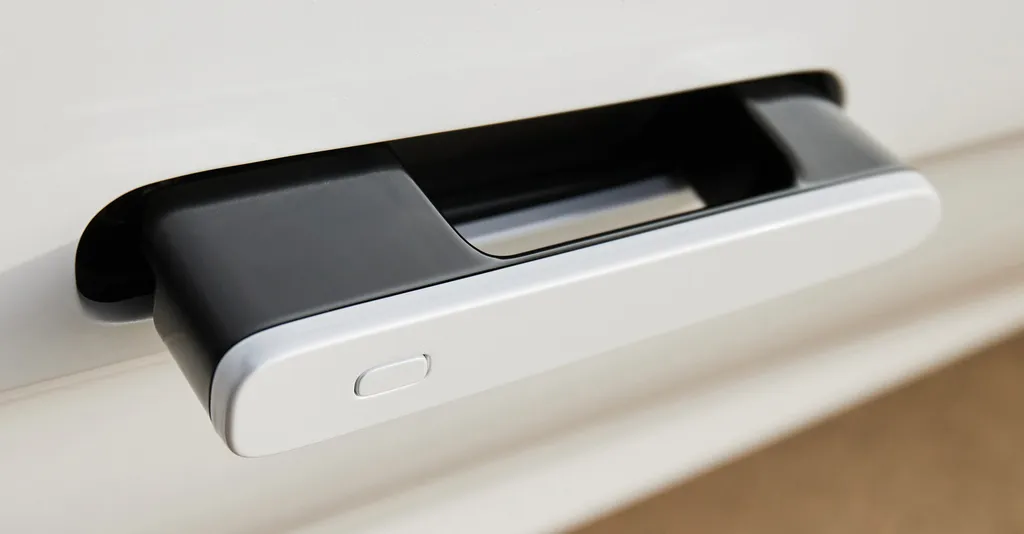
The article critiques modern electric vehicle (EV) designs, arguing that they often sacrifice functionality and safety for aesthetics. It highlights specific design flaws, such as unreliable electronic door mechanisms and the overuse of touch screens. The author provides a checklist for car designers to improve usability and reliability in both EVs and traditional vehicles.
- ▪Modern EVs often replace reliable features with less functional designs.
- ▪Touch screens, while cost-effective, have proven unpopular and can compromise safety.
- ▪The article suggests a checklist for car designers to enhance usability and reliability in vehicles.
Hacker News (Newest) files mainly under programming. We currently carry 5,306 of its stories.
Story provenance
Source · retrieval · rights · ranking — open for full record
inspect →
Story provenance
Attribution is not the same as permission. This drawer separates discovery metadata, excerpts, WeSearch-generated summaries, reuse status, and whether the publisher receives the visit. Nothing here claims a legal grant the publisher has not made.
Record
| Original publisher | Hypercritical |
| Canonical URL | http://hypercritical.co/2026/05/29/ev-stupidity-checklist |
| Publication time | Fri, 29 May 2026 21:29:51 +0000 |
| Retrieval time | 2026-05-29T21:50:35.556Z |
| Last seen | 2026-05-29T21:50:35.556Z |
| Headline source | Publisher (no WeSearch rewrite) |
| Excerpt source | publisher body |
| Excerpt method | First ~120 words (~800 chars) of extracted publisher body, fair-use limited. |
| Summary | WeSearch · cerebras-chat (WeSearch summarizer) |
| Summary source text | contentText |
| Citation coverage | Summary is a WeSearch-generated derivative; primary citation is the original publisher URL. |
| Cluster | None |
| Cluster logic | Not yet clustered, or no peer story found in the clustering window. |
| Ranking reason | Story pages are not engagement-ranked. Hub feeds use recency, with optional source-diversified chronological ordering (cap consecutive stories per source). No personalized ranking. |
| Publisher visit | Yes — open original |
| Substitutes article? | No — link-out required for full text |
Rights status (four layers)
WeSearch handling by dimension
| Indexing | May the item be indexed (stored, ranked, made findable)? | Allowed |
| Snippet | May a short excerpt of the publisher's text be shown? | Allowed |
| AI summary | May WeSearch generate its own short summary of the article? | Limited |
| Retrieval / RAG | May the content be exposed for third-party retrieval-augmented generation? | Not asserted |
| Model training | May the content be used to train AI models? | Not asserted |
| Commercial reuse | May the content be reused commercially? | Not permitted |
Basis: Derived from the published RSS/Atom feed. Contact: [email protected]. Reviewed: 2026-07-24.
Opening excerpt (first ~120 words) tap to expand
Automobiles have been around for well over a century. During that time, we’ve gotten pretty good at designing and building their basic components and controls: seats, doors, pedals, steering wheels, mirrors, etc. But when today’s automakers decide to make an electric vehicle (EV), they seemingly forget much of what they once knew, creating new versions of features that are objectively, obviously worse than the time-tested designs they replace. When Tesla ushered in the modern EV era in the early 2000s, some of these changes made sense, at least from a marketing perspective.
…
Excerpt limited to ~120 words for fair-use compliance. The full article is at Hypercritical.
Discussion
0 commentsMore from Hypercritical