Fixing LLM Writing with Distribution Fine Tuning
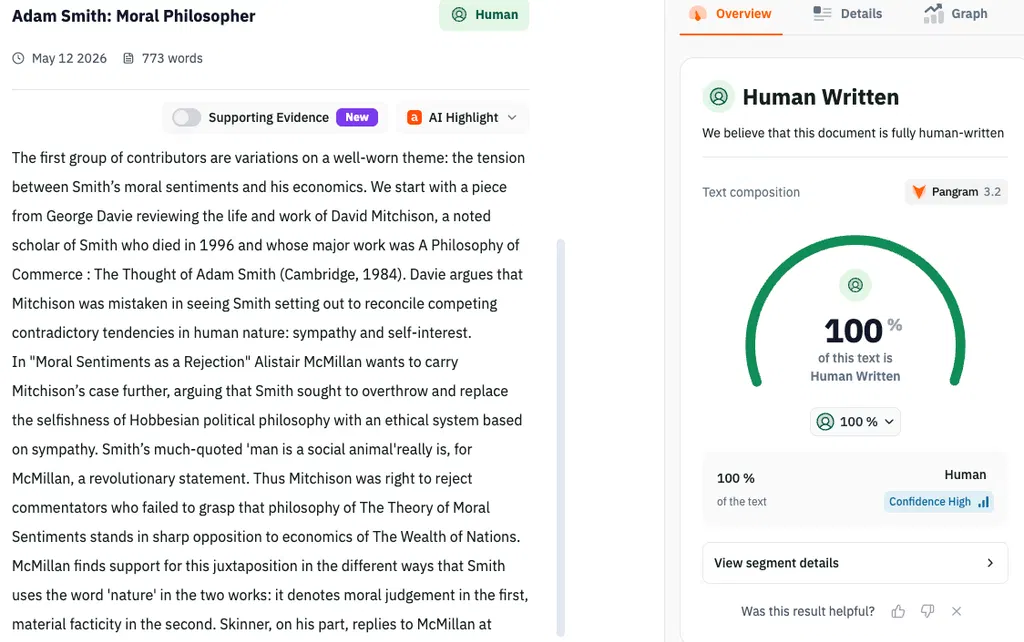
A new training algorithm called Distribution Fine Tuning (DFT) has been developed to improve the writing quality of language models. DFT significantly enhances the distribution of model outputs, resulting in better creativity, coherence, and clarity compared to traditional Supervised Fine Tuning (SFT). The model trained with DFT has been shown to produce outputs that are indistinguishable from human writing according to a detection tool.
- ▪Models trained with Distribution Fine Tuning (DFT) show a 49% improvement in Maximum Mean Discrepancy (MMD) and a 63% improvement in Judge Model Quality (JMQ).
- ▪The DFT algorithm improves creativity scores by 164%, coherence by 28%, and clarity by 16%.
- ▪Outputs from the DFT-trained model were scored as 100% human written by the Pangram AI detector.
2 outlets in our directory ran this story, first to last over 1 hour. All of the coverage we found sits in one bucket: centre. That one-sidedness is itself worth noticing.
- ▪ Distribution Fine Tuning (DFT): A post training step that fixes LLM writing — X (formerly Twitter)
Hacker News (AI / LLM) files mainly under ai. We currently carry 3,311 of its stories.
Story provenance
Source · retrieval · rights · ranking — open for full record
inspect →
Story provenance
Attribution is not the same as permission. This drawer separates discovery metadata, excerpts, WeSearch-generated summaries, reuse status, and whether the publisher receives the visit. Nothing here claims a legal grant the publisher has not made.
Record
| Original publisher | Rosmine ML Blog |
| Canonical URL | https://rosmine.ai/2026/05/18/fixing-llm-writing-with-distribution-fine-tuning/ |
| Publication time | Mon, 18 May 2026 20:01:47 +0000 |
| Retrieval time | 2026-05-18T20:14:56.949Z |
| Last seen | 2026-05-18T20:14:56.949Z |
| Headline source | Publisher (no WeSearch rewrite) |
| Excerpt source | publisher body |
| Excerpt method | First ~120 words (~800 chars) of extracted publisher body, fair-use limited. |
| Summary | WeSearch · cerebras-chat (WeSearch summarizer) |
| Summary source text | contentText |
| Citation coverage | Summary is a WeSearch-generated derivative; primary citation is the original publisher URL. |
| Cluster | L6nZ_2LRmrge · 2 stories |
| Cluster logic | Grouped by semantic title/content similarity across sources within a rolling window. Same-publisher template collisions are excluded from coverage comparison. |
| Ranking reason | Story pages are not engagement-ranked. Hub feeds use recency, with optional source-diversified chronological ordering (cap consecutive stories per source). No personalized ranking. |
| Publisher visit | Yes — open original |
| Substitutes article? | No — link-out required for full text |
Rights status (four layers)
WeSearch handling by dimension
| Indexing | May the item be indexed (stored, ranked, made findable)? | Allowed |
| Snippet | May a short excerpt of the publisher's text be shown? | Allowed |
| AI summary | May WeSearch generate its own short summary of the article? | Limited |
| Retrieval / RAG | May the content be exposed for third-party retrieval-augmented generation? | Not asserted |
| Model training | May the content be used to train AI models? | Not asserted |
| Commercial reuse | May the content be reused commercially? | Not permitted |
Basis: Derived from the published RSS/Atom feed. Contact: [email protected]. Reviewed: 2026-07-24.
Opening excerpt (first ~120 words) tap to expand
Abstract/TLDR: LLMs are notoriously formulaic at writing, overusing certain tokens or phrases. I show that models trained with SFT fail to match the distribution of the training data by using Maximum Mean Discrepancy (MMD), Judge Model Quality (JMQ), and L2 Token Distribution. To fix this, I created a new training algorithm, Distribution Fine Tuning (DFT), an LLM post training step that makes the distribution of model outputs better match the training distribution (improving MMD by 49% and JMQ by 63%). The model trained with DFT is much better at writing than an SFT baseline, improving creativity scores by +164%, as well as coherence (+28%), clarity (+16%), meaningful detail (+146%) and it does not have any overused “slop signs” like too many emdashes, or “it’s not X, it’s Y”.
…
Excerpt limited to ~120 words for fair-use compliance. The full article is at Rosmine ML Blog.
Discussion
0 commentsMore from Rosmine ML Blog