Four Russian satellites are now within striking distance of an ICEYE radarsat
Four Russian military satellites have altered their orbits to align with an ICEYE radar surveillance satellite, raising concerns about Russia's intentions. The adjustments, which are fuel-intensive, position the satellites to pass near the ICEYE-X36 satellite, used for military imaging. This behavior is seen as part of a broader pattern of Russian military activity in space, potentially linked to anti-satellite capabilities.
- ▪Four Russian satellites changed their orbits to match that of an ICEYE radar surveillance satellite.
- ▪The maneuvers were identified through open source orbital tracking data.
- ▪These satellites are now positioned to routinely pass near the ICEYE-X36 satellite, which provides all-weather radar images.
2 outlets in our directory ran this story, first to last over 5 hours. All of the coverage we found sits in one bucket: centre. That one-sidedness is itself worth noticing.
Ars Technica files mainly under tech. We currently carry 190 of its stories.
Story provenance
Source · retrieval · rights · ranking — open for full record
inspect →
Story provenance
Attribution is not the same as permission. This drawer separates discovery metadata, excerpts, WeSearch-generated summaries, reuse status, and whether the publisher receives the visit. Nothing here claims a legal grant the publisher has not made.
Record
| Original publisher | Ars Technica - All content |
| Canonical URL | https://arstechnica.com/space/2026/05/a-satellite-company-supporting-ukraine-appears-to-be-in-russias-crosshairs/ |
| Publication time | Fri, 22 May 2026 22:50:23 +0000 |
| Retrieval time | 2026-05-22T23:17:03.464Z |
| Last seen | 2026-05-23T02:50:54.108Z |
| Headline source | Publisher (no WeSearch rewrite) |
| Excerpt source | publisher body |
| Excerpt method | First ~120 words (~800 chars) of extracted publisher body, fair-use limited. |
| Summary | WeSearch · cerebras-chat (WeSearch summarizer) |
| Summary source text | contentText |
| Citation coverage | Summary is a WeSearch-generated derivative; primary citation is the original publisher URL. |
| Cluster | i0UbtlihZOKS · 2 stories |
| Cluster logic | Grouped by semantic title/content similarity across sources within a rolling window. Same-publisher template collisions are excluded from coverage comparison. |
| Ranking reason | Story pages are not engagement-ranked. Hub feeds use recency, with optional source-diversified chronological ordering (cap consecutive stories per source). No personalized ranking. |
| Publisher visit | Yes — open original |
| Substitutes article? | No — link-out required for full text |
Rights status (four layers)
WeSearch handling by dimension
| Indexing | May the item be indexed (stored, ranked, made findable)? | Allowed |
| Snippet | May a short excerpt of the publisher's text be shown? | Allowed |
| AI summary | May WeSearch generate its own short summary of the article? | Limited |
| Retrieval / RAG | May the content be exposed for third-party retrieval-augmented generation? | Not asserted |
| Model training | May the content be used to train AI models? | Not asserted |
| Commercial reuse | May the content be reused commercially? | Not permitted |
Basis: Derived from the published RSS/Atom feed. Contact: [email protected]. Reviewed: 2026-07-24.
Opening excerpt (first ~120 words) tap to expand
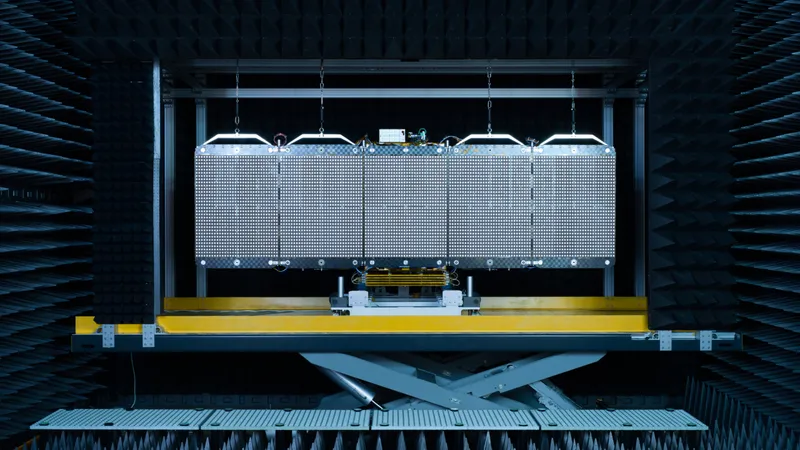
In plane Four Russian satellites are now within striking distance of an ICEYE radarsat “This capability is not common for satellites conducting typical missions.” Stephen Clark – May 22, 2026 6:50 pm | 0 An ICEYE satellite undergoing testing in an anechoic chamber. Credit: ICEYE An ICEYE satellite undergoing testing in an anechoic chamber. Credit: ICEYE Text settings Story text Size Small Standard Large Width * Standard Wide Links Standard Orange * Subscribers only Learn more Minimize to nav At least four Russian military satellites changed their orbits to match that of a Finnish-American radar surveillance satellite in the last week, raising questions about Russia’s intentions amid an ever-expanding standoff high above Earth.
…
Excerpt limited to ~120 words for fair-use compliance. The full article is at Ars Technica - All content.
Discussion
0 commentsMore from Ars Technica - All content