Free the Mail
The article discusses the declining relevance of the United States Postal Service (USPS) as digital communication becomes more prevalent. It highlights the financial struggles of the USPS, which has lost $120 billion over the past 20 years and faces a shrinking market. The author argues for the privatization of mail delivery and the repeal of laws that restrict competition in the sector.
- ▪Mail volume has decreased by half in the last 20 years, leading to concerns about the USPS's future.
- ▪The USPS has lost $120 billion over the past two decades and continues to operate at a loss despite increasing stamp prices.
- ▪The author suggests that Congress should repeal laws that prevent private companies from competing in mail delivery.
Hot Air files mainly under politics. We currently carry 437 of its stories.
Story provenance
Source · retrieval · rights · ranking — open for full record
inspect →
Story provenance
Attribution is not the same as permission. This drawer separates discovery metadata, excerpts, WeSearch-generated summaries, reuse status, and whether the publisher receives the visit. Nothing here claims a legal grant the publisher has not made.
Record
| Original publisher | Hot Air |
| Canonical URL | https://hotair.com/stephen-moore/2026/05/23/free-the-mail-n3815220 |
| Publication time | Sat, 23 May 2026 08:30:00 -0400 |
| Retrieval time | 2026-05-23T12:37:26.700Z |
| Last seen | 2026-05-23T12:37:26.700Z |
| Headline source | Publisher (no WeSearch rewrite) |
| Excerpt source | publisher body |
| Excerpt method | First ~120 words (~800 chars) of extracted publisher body, fair-use limited. |
| Summary | WeSearch · cerebras-chat (WeSearch summarizer) |
| Summary source text | contentText |
| Citation coverage | Summary is a WeSearch-generated derivative; primary citation is the original publisher URL. |
| Cluster | None |
| Cluster logic | Not yet clustered, or no peer story found in the clustering window. |
| Ranking reason | Story pages are not engagement-ranked. Hub feeds use recency, with optional source-diversified chronological ordering (cap consecutive stories per source). No personalized ranking. |
| Publisher visit | Yes — open original |
| Substitutes article? | No — link-out required for full text |
Rights status (four layers)
WeSearch handling by dimension
| Indexing | May the item be indexed (stored, ranked, made findable)? | Allowed |
| Snippet | May a short excerpt of the publisher's text be shown? | Allowed |
| AI summary | May WeSearch generate its own short summary of the article? | Limited |
| Retrieval / RAG | May the content be exposed for third-party retrieval-augmented generation? | Not asserted |
| Model training | May the content be used to train AI models? | Not asserted |
| Commercial reuse | May the content be reused commercially? | Not permitted |
Basis: Derived from the published RSS/Atom feed. Contact: [email protected]. Reviewed: 2026-07-24.
Opening excerpt (first ~120 words) tap to expand
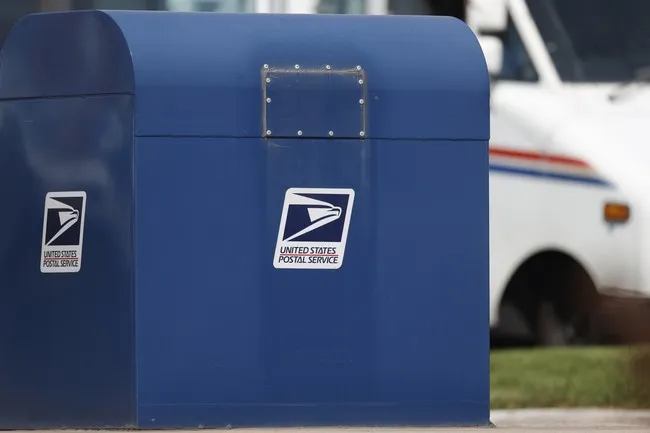
Free the Mail Stephen Moore 8:30 AM | May 23, 2026 AP Photo/David Zalubowski Those of us of a certain age -- born before about 1970 -- have fond memories of the mailman (yes, that's what we called him, not "postal carrier") dropping off a pile of letters and cards into the mailbox down the driveway six days a week. Advertisement googletag.cmd.push(function () { googletag.display("div-gpt-300x250_4"); //googletag.pubads().refresh([gptAdSlot["div-gpt-300x250_4"]]) }); But those days are long past. Now if we have something important to say -- "I love you," "I hate you," "happy birthday" -- we text or email or hop onto Instagram. Even most bills are paid electronically, so that mail function is also close to obsolete.
…
Excerpt limited to ~120 words for fair-use compliance. The full article is at Hot Air.
Discussion
0 commentsMore from Hot Air