From indemnity to indispensability: China’s 125-year reversal
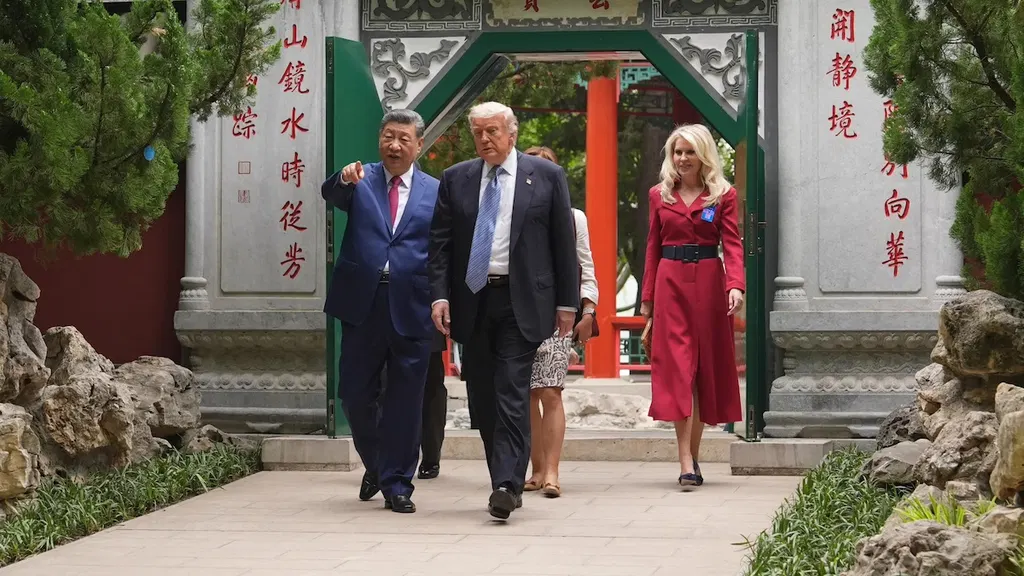
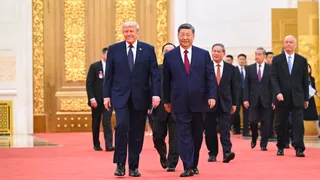
The article discusses the significant shift in China's global standing over the past 125 years, from being subjected to foreign domination to hosting world leaders as equals. It highlights the contrasting dynamics of the 1900 Boxer Protocol and the 2026 Trump-Xi summit, emphasizing China's newfound role as a diplomatic power. The piece concludes by noting that while China's current position may seem strong, it faces underlying challenges that could impact its future.
- ▪In 1900, foreign troops occupied Beijing and imposed the Boxer Protocol, marking a low point for Chinese sovereignty.
- ▪By 2026, the dynamics have shifted, with China hosting the US and Russian presidents as equals in diplomatic discussions.
- ▪China's current geopolitical status is characterized by both strength and underlying demographic and economic challenges.
Asia Times files mainly under world. We currently carry 156 of its stories.
Story provenance
Source · retrieval · rights · ranking — open for full record
inspect →
Story provenance
Attribution is not the same as permission. This drawer separates discovery metadata, excerpts, WeSearch-generated summaries, reuse status, and whether the publisher receives the visit. Nothing here claims a legal grant the publisher has not made.
Record
| Original publisher | Asia Times |
| Canonical URL | https://asiatimes.com/2026/05/from-indemnity-to-indispensability-chinas-125-year-reversal/ |
| Publication time | Mon, 18 May 2026 02:14:39 +0000 |
| Retrieval time | 2026-05-18T02:18:21.423Z |
| Last seen | 2026-05-18T02:18:21.423Z |
| Headline source | Publisher (no WeSearch rewrite) |
| Excerpt source | publisher body |
| Excerpt method | First ~120 words (~800 chars) of extracted publisher body, fair-use limited. |
| Summary | WeSearch · cerebras-chat (WeSearch summarizer) |
| Summary source text | contentText |
| Citation coverage | Summary is a WeSearch-generated derivative; primary citation is the original publisher URL. |
| Cluster | QjYVLjaELO28 |
| Cluster logic | Grouped by semantic title/content similarity across sources within a rolling window. Same-publisher template collisions are excluded from coverage comparison. |
| Ranking reason | Story pages are not engagement-ranked. Hub feeds use recency, with optional source-diversified chronological ordering (cap consecutive stories per source). No personalized ranking. |
| Publisher visit | Yes — open original |
| Substitutes article? | No — link-out required for full text |
Rights status (four layers)
WeSearch handling by dimension
| Indexing | May the item be indexed (stored, ranked, made findable)? | Allowed |
| Snippet | May a short excerpt of the publisher's text be shown? | Allowed |
| AI summary | May WeSearch generate its own short summary of the article? | Limited |
| Retrieval / RAG | May the content be exposed for third-party retrieval-augmented generation? | Not asserted |
| Model training | May the content be used to train AI models? | Not asserted |
| Commercial reuse | May the content be reused commercially? | Not permitted |
Basis: Derived from the published RSS/Atom feed. Contact: [email protected]. Reviewed: 2026-07-24.
Opening excerpt (first ~120 words) tap to expand
When eight foreign flags flew over Beijing in August 1900, no one in the Forbidden City could have imagined that the city would, 125 years later, host the president of the United States as a guest of honor and the president of Russia just days afterward. The contrast is almost cinematic. In 1900, some 51,755 troops from Austria-Hungary, Britain, France, Germany, Italy, Japan, Russia and the United States marched into the Chinese capital, looted the Forbidden City and the Old Summer Palace, destroyed volumes of the Yongle Dadian and the Siku Quanshu, and imposed the punitive Boxer Protocol of September 1901. In May 2026, those same eight capitals — through their successors and alliances — watch as Beijing, not foreign legations, sets the choreography of great-power diplomacy.
…
Excerpt limited to ~120 words for fair-use compliance. The full article is at Asia Times.
Discussion
0 commentsMore from Asia Times