Garlic May Stop Mosquitoes and Fruit Flies From Mating, and Could Inspire New Pest Controls
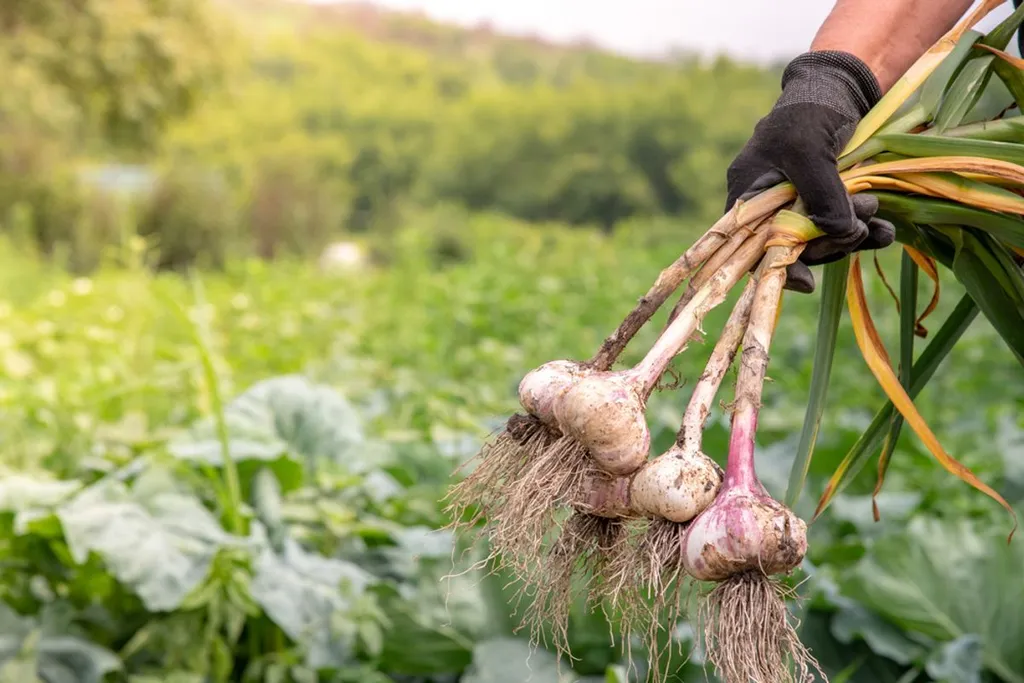
Researchers have found that garlic may prevent mosquitoes and fruit flies from mating, potentially offering a new form of eco-friendly pest control. The study identified diallyl disulfide, a compound in garlic, as the key factor that deters mating and egg-laying behaviors in these insects. This discovery could lead to the development of natural pest control methods that are safe and accessible.
- ▪Garlic has been shown to completely abolish mating in fruit flies when tested in a controlled environment.
- ▪The compound responsible for this effect is diallyl disulfide, which triggers a sensory receptor in the insects.
- ▪Garlic's potential as a natural insect deterrent could lead to new, eco-friendly pest control solutions.
Discover Magazine files mainly under science. We currently carry 86 of its stories.
Story provenance
Source · retrieval · rights · ranking — open for full record
inspect →
Story provenance
Attribution is not the same as permission. This drawer separates discovery metadata, excerpts, WeSearch-generated summaries, reuse status, and whether the publisher receives the visit. Nothing here claims a legal grant the publisher has not made.
Record
| Original publisher | Discover Magazine |
| Canonical URL | https://www.discovermagazine.com/garlic-may-stop-mosquitoes-and-fruit-flies-from-mating-and-could-inspire-new-pest-controls-49116 |
| Publication time | Mon, 18 May 2026 20:45:00 GMT |
| Retrieval time | 2026-05-18T20:54:56.946Z |
| Last seen | 2026-05-18T20:54:56.946Z |
| Headline source | Publisher (no WeSearch rewrite) |
| Excerpt source | publisher body |
| Excerpt method | First ~120 words (~800 chars) of extracted publisher body, fair-use limited. |
| Summary | WeSearch · cerebras-chat (WeSearch summarizer) |
| Summary source text | contentText |
| Citation coverage | Summary is a WeSearch-generated derivative; primary citation is the original publisher URL. |
| Cluster | DFtVZpEzvmOr |
| Cluster logic | Grouped by semantic title/content similarity across sources within a rolling window. Same-publisher template collisions are excluded from coverage comparison. |
| Ranking reason | Story pages are not engagement-ranked. Hub feeds use recency, with optional source-diversified chronological ordering (cap consecutive stories per source). No personalized ranking. |
| Publisher visit | Yes — open original |
| Substitutes article? | No — link-out required for full text |
Rights status (four layers)
WeSearch handling by dimension
| Indexing | May the item be indexed (stored, ranked, made findable)? | Allowed |
| Snippet | May a short excerpt of the publisher's text be shown? | Allowed |
| AI summary | May WeSearch generate its own short summary of the article? | Limited |
| Retrieval / RAG | May the content be exposed for third-party retrieval-augmented generation? | Not asserted |
| Model training | May the content be used to train AI models? | Not asserted |
| Commercial reuse | May the content be reused commercially? | Not permitted |
Basis: Derived from the published RSS/Atom feed. Contact: [email protected]. Reviewed: 2026-07-24.
Opening excerpt (first ~120 words) tap to expand
What do mosquitoes and vampires have in common? Leaving aside their blood-sucking tendencies, the pair share a strong aversion to garlic. Researchers tested insects’ response to a selection of different fruit and vegetables, and discovered that the pungent allium may prevent mosquitoes (and various other winged insects) from mating. By blocking the mating process, the team hopes garlic can offer an eco-friendly and affordable form of pest control. “The notion of using garlic to deter blood-feeding creatures was proposed in 1897 by Bram Stoker in his novel [Dracula],” John Carlson, professor of Molecular, Cellular, and Developmental Biology at Yale University, said in a statement.
…
Excerpt limited to ~120 words for fair-use compliance. The full article is at Discover Magazine.
Discussion
0 commentsMore from Discover Magazine