Glow worms and slime moulds found in Scotland's declining rainforest
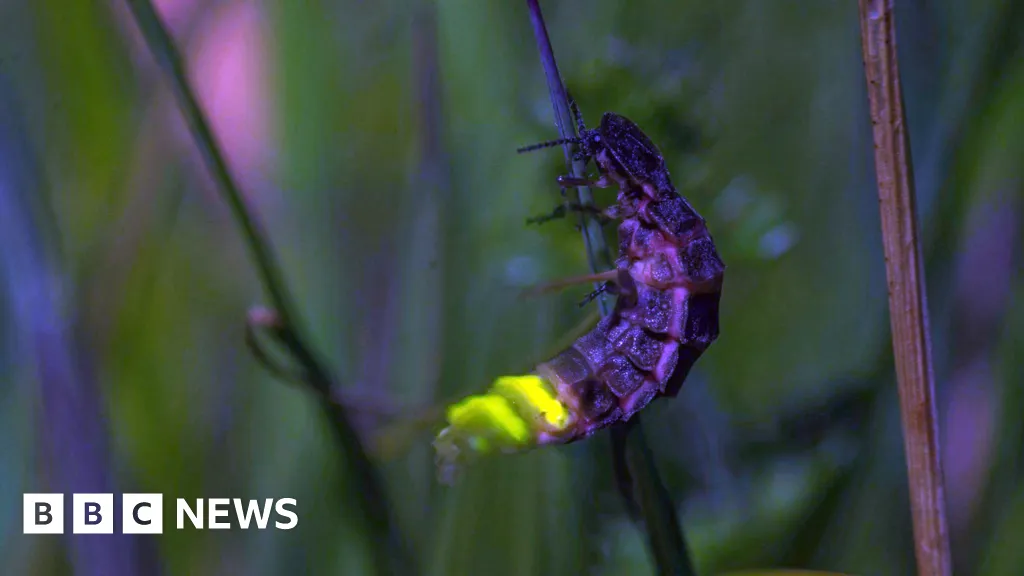
A recent survey on the West Cowal Peninsula in Scotland has identified 1,109 species, including glow worms and slime moulds, in the region's temperate rainforest. This survey, the first in fifty years, is part of a citizen science project aimed at understanding biodiversity in these ecosystems. The findings come as the Scottish government prepares to set new targets for nature restoration amid significant declines in biodiversity.
- ▪The survey recorded 1,109 species in Scotland's rainforest, including glow worms and rare lichens.
- ▪Volunteers used a mobile app to log species and their GPS locations, aiding in faster identification.
- ▪Scotland's temperate rainforests face threats from deer overpopulation and invasive rhododendron plants.
BBC News — Science publishes from United Kingdom and files mainly under science. We currently carry 116 of its stories.
Story provenance
Source · retrieval · rights · ranking — open for full record
inspect →
Story provenance
Attribution is not the same as permission. This drawer separates discovery metadata, excerpts, WeSearch-generated summaries, reuse status, and whether the publisher receives the visit. Nothing here claims a legal grant the publisher has not made.
Record
| Original publisher | BBC News — Science |
| Canonical URL | https://www.bbc.com/news/articles/ce8pe9k304jo?at_medium=RSS&at_campaign=rss |
| Publication time | Thu, 21 May 2026 21:53:53 GMT |
| Retrieval time | 2026-05-21T21:56:35.716Z |
| Last seen | 2026-05-21T21:56:35.716Z |
| Headline source | Publisher (no WeSearch rewrite) |
| Excerpt source | publisher body |
| Excerpt method | First ~120 words (~800 chars) of extracted publisher body, fair-use limited. |
| Summary | WeSearch · cerebras-chat (WeSearch summarizer) |
| Summary source text | contentText |
| Citation coverage | Summary is a WeSearch-generated derivative; primary citation is the original publisher URL. |
| Cluster | VftJrA-H6vj4 |
| Cluster logic | Grouped by semantic title/content similarity across sources within a rolling window. Same-publisher template collisions are excluded from coverage comparison. |
| Ranking reason | Story pages are not engagement-ranked. Hub feeds use recency, with optional source-diversified chronological ordering (cap consecutive stories per source). No personalized ranking. |
| Publisher visit | Yes — open original |
| Substitutes article? | No — link-out required for full text |
Rights status (four layers)
WeSearch handling by dimension
| Indexing | May the item be indexed (stored, ranked, made findable)? | Allowed |
| Snippet | May a short excerpt of the publisher's text be shown? | Allowed |
| AI summary | May WeSearch generate its own short summary of the article? | Limited |
| Retrieval / RAG | May the content be exposed for third-party retrieval-augmented generation? | Not asserted |
| Model training | May the content be used to train AI models? | Not asserted |
| Commercial reuse | May the content be reused commercially? | Not permitted |
Basis: Derived from the published RSS/Atom feed. Contact: [email protected]. Reviewed: 2026-07-24.
Opening excerpt (first ~120 words) tap to expand
Glow worms and slime moulds found in Scotland's declining rainforestJust nowShareSaveAdd as preferred on GoogleBen MitchellGlow worms are among the species that have been found on the West Cowal PeninsulaKevin KeaneScotland environment, energy and rural affairs correspondentGlow worms, slime moulds and rare lichens are among 1,109 species discovered in just one corner of Scotland's rainforest.They were recorded on the West Cowal peninsula by the Argyll Countryside Trust (ACT) in the first survey to be carried out in the area in half a century.The survey is part of a citizen science project which aims to better understand the role played by rainforests in supporting biodiversity. The project hopes to establish a baseline of the type of life being supported.
…
Excerpt limited to ~120 words for fair-use compliance. The full article is at BBC News — Science.
Discussion
0 commentsMore from BBC News — Science