Googlebooks Are Chromebooks That Want to Be MacBooks
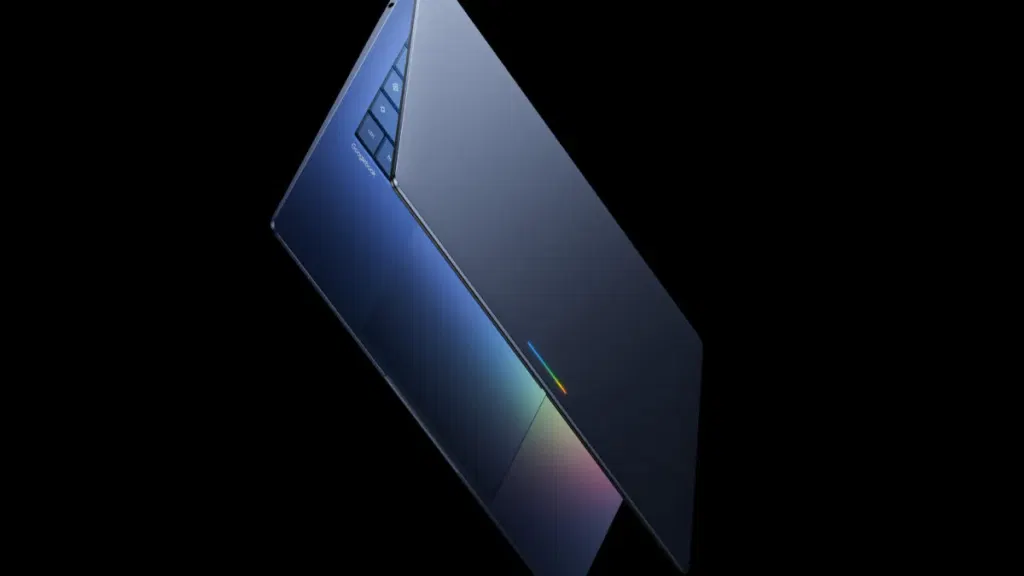
Googlebooks are anticipated to be a new line of laptops that aim to enhance the Android experience on larger screens. While details remain sparse, Google is pushing for developers to create apps that can function effectively on these devices. The upcoming laptops are expected to feature more powerful hardware, potentially elevating the Android app experience to a new level.
- ▪Googlebooks are part of a broader strategy to improve Android devices.
- ▪The new laptops are expected to run a next-generation Android-based operating system.
- ▪Developers are encouraged to design apps for larger screens and multitasking capabilities.
Gizmodo files mainly under tech. We currently carry 702 of its stories.
Story provenance
Source · retrieval · rights · ranking — open for full record
inspect →
Story provenance
Attribution is not the same as permission. This drawer separates discovery metadata, excerpts, WeSearch-generated summaries, reuse status, and whether the publisher receives the visit. Nothing here claims a legal grant the publisher has not made.
Record
| Original publisher | Gizmodo |
| Canonical URL | https://gizmodo.com/googlebooks-are-chromebooks-that-want-to-be-macbooks-2000760155 |
| Publication time | Wed, 20 May 2026 17:30:21 +0000 |
| Retrieval time | 2026-05-20T17:35:02.741Z |
| Last seen | 2026-05-20T17:35:02.741Z |
| Headline source | Publisher (no WeSearch rewrite) |
| Excerpt source | publisher body |
| Excerpt method | First ~120 words (~800 chars) of extracted publisher body, fair-use limited. |
| Summary | WeSearch · cerebras-chat (WeSearch summarizer) |
| Summary source text | contentText |
| Citation coverage | Summary is a WeSearch-generated derivative; primary citation is the original publisher URL. |
| Cluster | Fp3c6xRhmIFg |
| Cluster logic | Grouped by semantic title/content similarity across sources within a rolling window. Same-publisher template collisions are excluded from coverage comparison. |
| Ranking reason | Story pages are not engagement-ranked. Hub feeds use recency, with optional source-diversified chronological ordering (cap consecutive stories per source). No personalized ranking. |
| Publisher visit | Yes — open original |
| Substitutes article? | No — link-out required for full text |
Rights status (four layers)
WeSearch handling by dimension
| Indexing | May the item be indexed (stored, ranked, made findable)? | Allowed |
| Snippet | May a short excerpt of the publisher's text be shown? | Allowed |
| AI summary | May WeSearch generate its own short summary of the article? | Limited |
| Retrieval / RAG | May the content be exposed for third-party retrieval-augmented generation? | Not asserted |
| Model training | May the content be used to train AI models? | Not asserted |
| Commercial reuse | May the content be reused commercially? | Not permitted |
Basis: Derived from the published RSS/Atom feed. Contact: [email protected]. Reviewed: 2026-07-24.
Opening excerpt (first ~120 words) tap to expand
The I/O 2026 keynote came and went, and Google still has given us few reasons to care about Googlebooks beyond a mouse cursor stuffed with AI. The few inklings we managed to squeeze from this drought of news indicate these upcoming laptops are only one part of a larger strategy for Android devices. Logically, Googlebooks should offer a leap in capabilities beyond existing Chromebooks running on ChromeOS. If you glanced at the Android developer blog too quickly, you would have missed a very brief mention of Googlebooks and the supposed evolution of Android on desktop.
…
Excerpt limited to ~120 words for fair-use compliance. The full article is at Gizmodo.
Discussion
0 commentsMore from Gizmodo