Gray Whales Keep Turning Up in Rivers — What Is Driving This Strange Behavior?
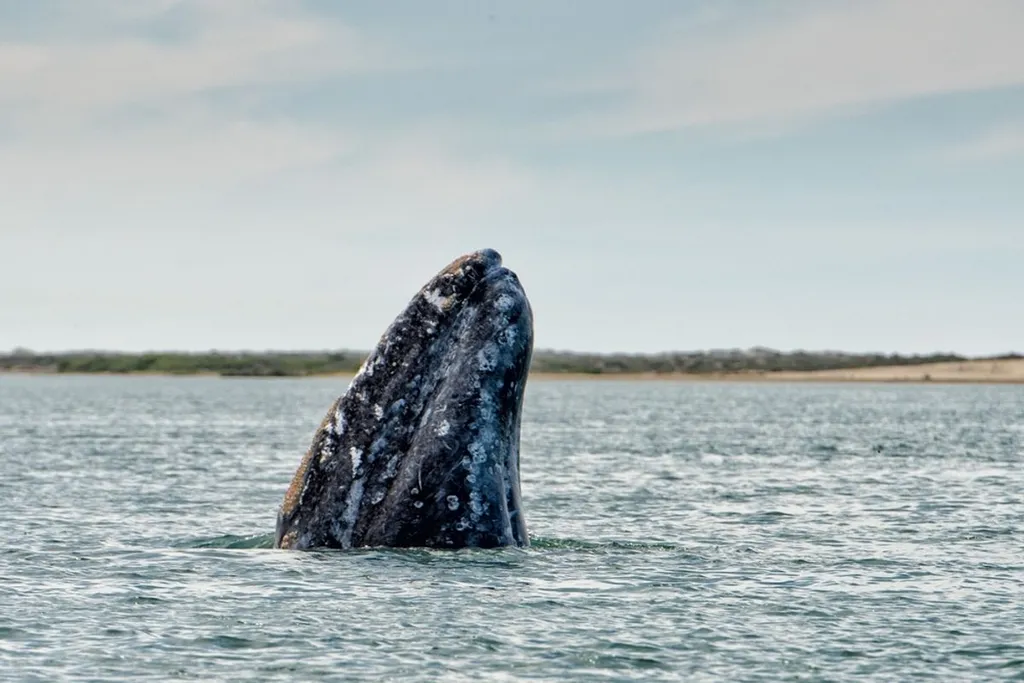
Gray whales have been observed swimming into rivers, a behavior that is unusual for these oceanic creatures. This phenomenon is linked to a wave of gray whale deaths, with researchers investigating the causes behind it. Factors such as changes in oceanic patterns and loss of ice cover in feeding grounds are believed to contribute to the whales' inability to complete their migrations.
- ▪In April 2026, a young male gray whale was found swimming 20 miles upriver in the Willapa River before it died.
- ▪By the end of April 2026, 17 gray whales had stranded on beaches in Washington state, marking a new record for the year.
- ▪Researchers suspect that the loss of ice cover in the Arctic is affecting the whales' food supply, leading to hunger and navigational issues.
Discover Magazine files mainly under science. We currently carry 86 of its stories.
Story provenance
Source · retrieval · rights · ranking — open for full record
inspect →
Story provenance
Attribution is not the same as permission. This drawer separates discovery metadata, excerpts, WeSearch-generated summaries, reuse status, and whether the publisher receives the visit. Nothing here claims a legal grant the publisher has not made.
Record
| Original publisher | Discover Magazine |
| Canonical URL | https://www.discovermagazine.com/gray-whales-keep-turning-up-in-rivers-what-is-driving-this-strange-behavior-49143 |
| Publication time | Mon, 25 May 2026 16:30:00 GMT |
| Retrieval time | 2026-05-25T16:32:38.242Z |
| Last seen | 2026-05-25T16:32:38.242Z |
| Headline source | Publisher (no WeSearch rewrite) |
| Excerpt source | publisher body |
| Excerpt method | First ~120 words (~800 chars) of extracted publisher body, fair-use limited. |
| Summary | WeSearch · cerebras-chat (WeSearch summarizer) |
| Summary source text | contentText |
| Citation coverage | Summary is a WeSearch-generated derivative; primary citation is the original publisher URL. |
| Cluster | jMxVFrY-utBx |
| Cluster logic | Grouped by semantic title/content similarity across sources within a rolling window. Same-publisher template collisions are excluded from coverage comparison. |
| Ranking reason | Story pages are not engagement-ranked. Hub feeds use recency, with optional source-diversified chronological ordering (cap consecutive stories per source). No personalized ranking. |
| Publisher visit | Yes — open original |
| Substitutes article? | No — link-out required for full text |
Rights status (four layers)
WeSearch handling by dimension
| Indexing | May the item be indexed (stored, ranked, made findable)? | Allowed |
| Snippet | May a short excerpt of the publisher's text be shown? | Allowed |
| AI summary | May WeSearch generate its own short summary of the article? | Limited |
| Retrieval / RAG | May the content be exposed for third-party retrieval-augmented generation? | Not asserted |
| Model training | May the content be used to train AI models? | Not asserted |
| Commercial reuse | May the content be reused commercially? | Not permitted |
Basis: Derived from the published RSS/Atom feed. Contact: [email protected]. Reviewed: 2026-07-24.
Opening excerpt (first ~120 words) tap to expand
It was April 2026, and for days, locals had reported a very strange sight in the Willapa River in Washington state. A young male gray whale was swimming about 20 miles upriver in freshwater — strange behavior for an oceanic creature, and unsustainable in the long run. After only a few days, officials reported the whale dead.The death was just part of a wave of recent deaths of gray whales that researchers are working to better understand. The details of what drove this individual so far from its oceanic home aren’t completely clear, but some biologists suspect the answer has to do with widespread changes in oceanic patterns thousands of miles away that left the Willapa River juvenile and others incapable of completing their annual migration.“We think that was just a reflection of a…
Excerpt limited to ~120 words for fair-use compliance. The full article is at Discover Magazine.
Discussion
0 commentsMore from Discover Magazine