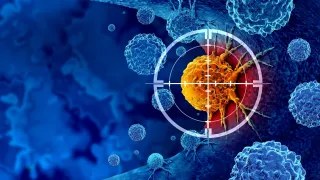
Hidden sugar patterns on human cells could reveal cancer early
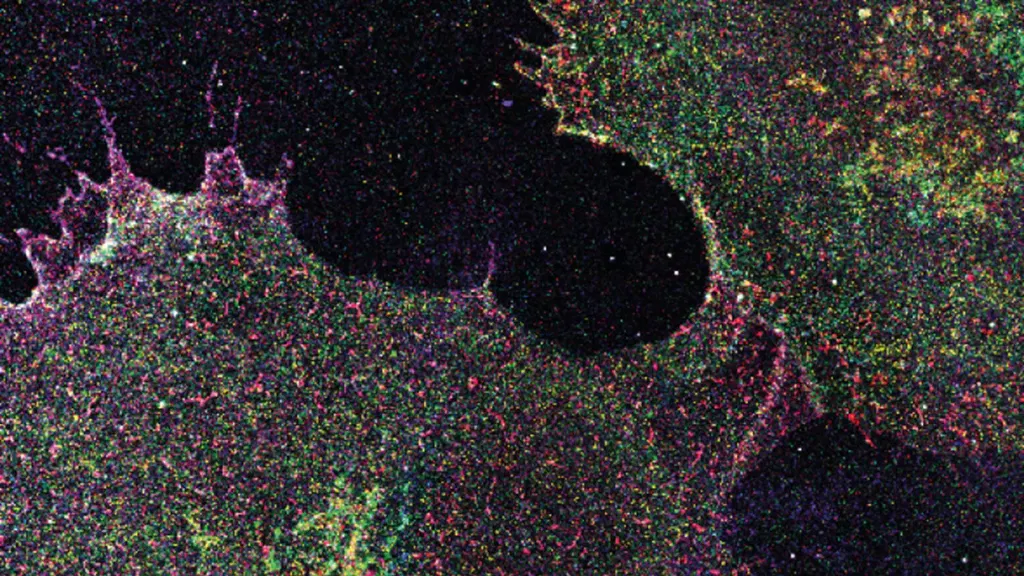
Researchers at the Max Planck Institute have discovered a 'sugar code' on human cells that could aid in early disease detection. Using a technique called Glycan Atlasing, they mapped sugar structures on cell surfaces, revealing that these patterns change based on the cell's activity. This breakthrough may lead to new diagnostic methods for diseases like cancer by analyzing these sugar patterns.
- ▪The study reveals that the glycocalyx, a sugar layer on cells, changes its structure based on the cell's condition.
- ▪Researchers found that these sugar patterns can distinguish between healthy and cancerous tissues.
- ▪The Glycan Atlasing technique allows for detailed mapping of sugar structures at the molecular level.
ScienceDaily files mainly under science. We currently carry 84 of its stories.
Story provenance
Source · retrieval · rights · ranking — open for full record
inspect →
Story provenance
Attribution is not the same as permission. This drawer separates discovery metadata, excerpts, WeSearch-generated summaries, reuse status, and whether the publisher receives the visit. Nothing here claims a legal grant the publisher has not made.
Record
| Original publisher | ScienceDaily |
| Canonical URL | https://www.sciencedaily.com/releases/2026/05/260517211431.htm |
| Publication time | Mon, 18 May 2026 19:57:14 EDT |
| Retrieval time | 2026-05-18T23:59:56.959Z |
| Last seen | 2026-05-18T23:59:56.959Z |
| Headline source | Publisher (no WeSearch rewrite) |
| Excerpt source | publisher body |
| Excerpt method | First ~120 words (~800 chars) of extracted publisher body, fair-use limited. |
| Summary | WeSearch · cerebras-chat (WeSearch summarizer) |
| Summary source text | contentText |
| Citation coverage | Summary is a WeSearch-generated derivative; primary citation is the original publisher URL. |
| Cluster | AONF4WEX6pjn |
| Cluster logic | Grouped by semantic title/content similarity across sources within a rolling window. Same-publisher template collisions are excluded from coverage comparison. |
| Ranking reason | Story pages are not engagement-ranked. Hub feeds use recency, with optional source-diversified chronological ordering (cap consecutive stories per source). No personalized ranking. |
| Publisher visit | Yes — open original |
| Substitutes article? | No — link-out required for full text |
Rights status (four layers)
WeSearch handling by dimension
| Indexing | May the item be indexed (stored, ranked, made findable)? | Allowed |
| Snippet | May a short excerpt of the publisher's text be shown? | Allowed |
| AI summary | May WeSearch generate its own short summary of the article? | Limited |
| Retrieval / RAG | May the content be exposed for third-party retrieval-augmented generation? | Not asserted |
| Model training | May the content be used to train AI models? | Not asserted |
| Commercial reuse | May the content be reused commercially? | Not permitted |
Basis: Derived from the published RSS/Atom feed. Contact: [email protected]. Reviewed: 2026-07-24.
Opening excerpt (first ~120 words) tap to expand
Science News from research organizations Hidden sugar patterns on human cells could reveal cancer early Human cells may secretly advertise their health status through shifting sugar patterns — and scientists just learned how to read the signals. Date: May 18, 2026 Source: Max Planck Institute for the Science of Light Summary: Scientists have uncovered a hidden “sugar code” on the surface of human cells that could transform how diseases are detected. Using an advanced imaging technique called Glycan Atlasing, researchers at the Max Planck Institute mapped the tiny sugar structures coating cells and discovered that these patterns shift depending on what the cell is doing.
…
Excerpt limited to ~120 words for fair-use compliance. The full article is at ScienceDaily.
Discussion
0 commentsMore from ScienceDaily