How Did We Miss the Asteroid That Will Narrowly Miss Us?
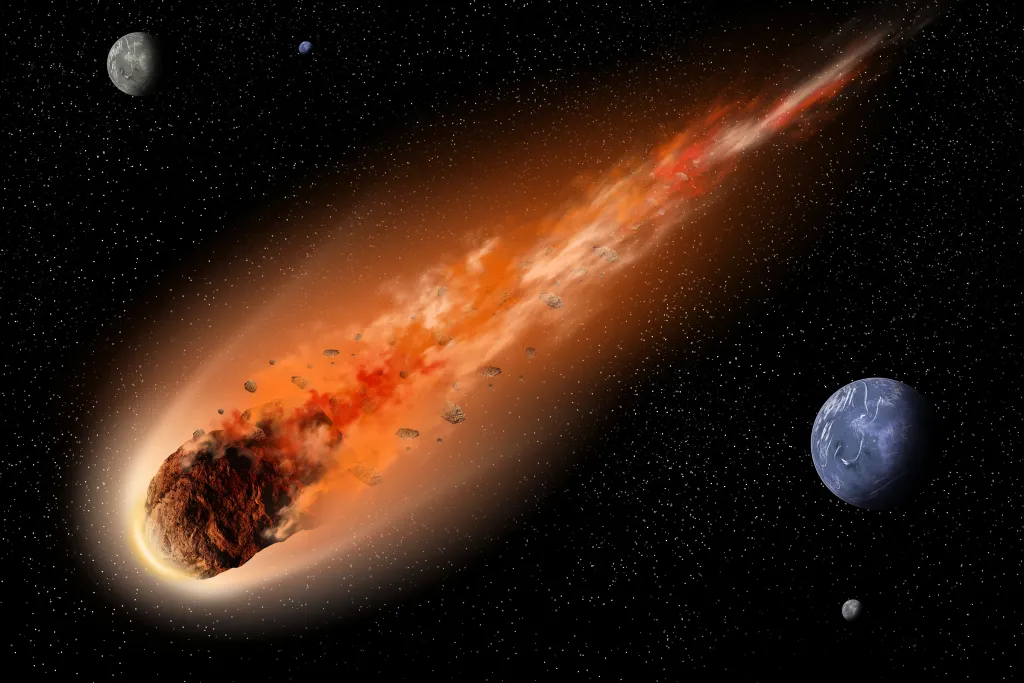
An asteroid the size of a blue whale will pass within 56,500 miles of Earth this evening. Humanity only became aware of this asteroid, named 2026 JH2, about a week ago due to compromised radar capabilities. This incident highlights the ongoing challenges in detecting near-Earth objects despite advancements in astronomical technology.
- ▪The asteroid 2026 JH2 will pass close to Earth, approximately 24 percent of the average Earth-moon distance.
- ▪Astronomers were unaware of the asteroid's existence until just a week prior to its close approach.
- ▪Current radar capabilities are limited due to the collapse of the Arecibo telescope and repairs on NASA's Goldstone antenna.
2 outlets in our directory ran this story, first to last over 1 hour. All of the coverage we found sits in one bucket: centre. That one-sidedness is itself worth noticing.
Nautilus files mainly under culture. We currently carry 31 of its stories.
Story provenance
Source · retrieval · rights · ranking — open for full record
inspect →
Story provenance
Attribution is not the same as permission. This drawer separates discovery metadata, excerpts, WeSearch-generated summaries, reuse status, and whether the publisher receives the visit. Nothing here claims a legal grant the publisher has not made.
Record
| Original publisher | Nautil |
| Canonical URL | https://nautil.us/how-did-we-miss-the-asteroid-that-will-narrowly-miss-us-1280943/ |
| Publication time | Mon, 18 May 2026 21:00:00 +0000 |
| Retrieval time | 2026-05-18T21:04:56.980Z |
| Last seen | 2026-05-18T21:04:56.980Z |
| Headline source | Publisher (no WeSearch rewrite) |
| Excerpt source | publisher body |
| Excerpt method | First ~120 words (~800 chars) of extracted publisher body, fair-use limited. |
| Summary | WeSearch · cerebras-chat (WeSearch summarizer) |
| Summary source text | contentText |
| Citation coverage | Summary is a WeSearch-generated derivative; primary citation is the original publisher URL. |
| Cluster | WhWh1OkzhJs7 · 2 stories |
| Cluster logic | Grouped by semantic title/content similarity across sources within a rolling window. Same-publisher template collisions are excluded from coverage comparison. |
| Ranking reason | Story pages are not engagement-ranked. Hub feeds use recency, with optional source-diversified chronological ordering (cap consecutive stories per source). No personalized ranking. |
| Publisher visit | Yes — open original |
| Substitutes article? | No — link-out required for full text |
Rights status (four layers)
WeSearch handling by dimension
| Indexing | May the item be indexed (stored, ranked, made findable)? | Allowed |
| Snippet | May a short excerpt of the publisher's text be shown? | Allowed |
| AI summary | May WeSearch generate its own short summary of the article? | Limited |
| Retrieval / RAG | May the content be exposed for third-party retrieval-augmented generation? | Not asserted |
| Model training | May the content be used to train AI models? | Not asserted |
| Commercial reuse | May the content be reused commercially? | Not permitted |
Basis: Derived from the published RSS/Atom feed. Contact: [email protected]. Reviewed: 2026-07-24.
Opening excerpt (first ~120 words) tap to expand
{"@context":"https://schema.org","@type":"Article","headline":"How Did We Miss the Asteroid That Will Narrowly Miss Us?","description":"How Did We Miss the Asteroid That Will Narrowly Miss Us?: Space still harbors surprises aplenty, even with our rapidly evolving technologies","image":["https://lede-admin.nautil.us/wp-content/uploads/sites/70/2026/05/AdobeStock_10432752.jpeg"],"datePublished":"2026-05-18T21:00:00+00:00","dateModified":"2026-05-18T20:47:27+00:00","author":[{"@type":"Person","name":"Bob…
Excerpt limited to ~120 words for fair-use compliance. The full article is at Nautil.
Discussion
0 commentsMore from Nautil