How to get rid of Japanese knotweed and stop this invasive weed from taking over your yard
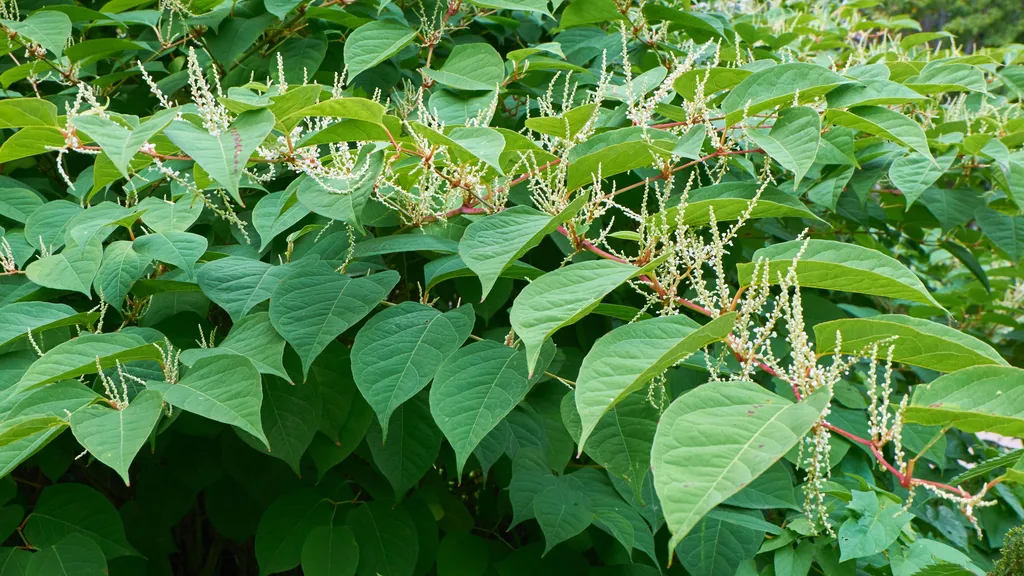
Japanese knotweed is a highly invasive plant that poses a threat to homeowners due to its rapid spread and potential to damage property. Identifying this plant is crucial, as it can crack concrete and penetrate foundations if left uncontrolled. Expert advice is available on how to recognize and manage Japanese knotweed effectively.
- ▪Japanese knotweed is recognized as one of the worst invasive plant species by the World Conservation Union.
- ▪The plant features tall, thick, hollow stems with red/purplish freckles and shovel-shaped leaves.
- ▪Its roots can be woody and dark brown, snapping like a carrot to reveal a bright orange center.
Tom's Guide files mainly under tech. We currently carry 1,143 of its stories.
Story provenance
Source · retrieval · rights · ranking — open for full record
inspect →
Story provenance
Attribution is not the same as permission. This drawer separates discovery metadata, excerpts, WeSearch-generated summaries, reuse status, and whether the publisher receives the visit. Nothing here claims a legal grant the publisher has not made.
Record
| Original publisher | Tom's Guide |
| Canonical URL | https://www.tomsguide.com/home/how-to-get-rid-of-japanese-knotweed-and-stop-this-invasive-weed-from-taking-over-your-yard |
| Publication time | Thu, 21 May 2026 05:30:00 +0000 |
| Retrieval time | 2026-05-21T05:35:03.513Z |
| Last seen | 2026-05-21T05:35:03.513Z |
| Headline source | Publisher (no WeSearch rewrite) |
| Excerpt source | publisher body |
| Excerpt method | First ~120 words (~800 chars) of extracted publisher body, fair-use limited. |
| Summary | WeSearch · cerebras-chat (WeSearch summarizer) |
| Summary source text | contentText |
| Citation coverage | Summary is a WeSearch-generated derivative; primary citation is the original publisher URL. |
| Cluster | Zl6Rjmt2KdLV |
| Cluster logic | Grouped by semantic title/content similarity across sources within a rolling window. Same-publisher template collisions are excluded from coverage comparison. |
| Ranking reason | Story pages are not engagement-ranked. Hub feeds use recency, with optional source-diversified chronological ordering (cap consecutive stories per source). No personalized ranking. |
| Publisher visit | Yes — open original |
| Substitutes article? | No — link-out required for full text |
Rights status (four layers)
WeSearch handling by dimension
| Indexing | May the item be indexed (stored, ranked, made findable)? | Allowed |
| Snippet | May a short excerpt of the publisher's text be shown? | Allowed |
| AI summary | May WeSearch generate its own short summary of the article? | Limited |
| Retrieval / RAG | May the content be exposed for third-party retrieval-augmented generation? | Not asserted |
| Model training | May the content be used to train AI models? | Not asserted |
| Commercial reuse | May the content be reused commercially? | Not permitted |
Basis: Derived from the published RSS/Atom feed. Contact: [email protected]. Reviewed: 2026-07-24.
Opening excerpt (first ~120 words) tap to expand
Home Outdoors Gardening How to get rid of Japanese knotweed and stop this invasive weed from taking over your yard How To By Camilla Sharman published 21 May 2026 This invasive weed is difficult to clear When you purchase through links on our site, we may earn an affiliate commission. Here’s how it works. Japanese Knotweed plant (Image credit: Shutterstock) Copy link Facebook X Reddit Email Share this article 0 Join the conversation Follow us Add us as a preferred source on Google Newsletter Subscribe to our newsletter Japanese knotweed is an invasive plant that all homeowners need to know about.
…
Excerpt limited to ~120 words for fair-use compliance. The full article is at Tom's Guide.
Discussion
0 commentsMore from Tom's Guide