How to Rule the World
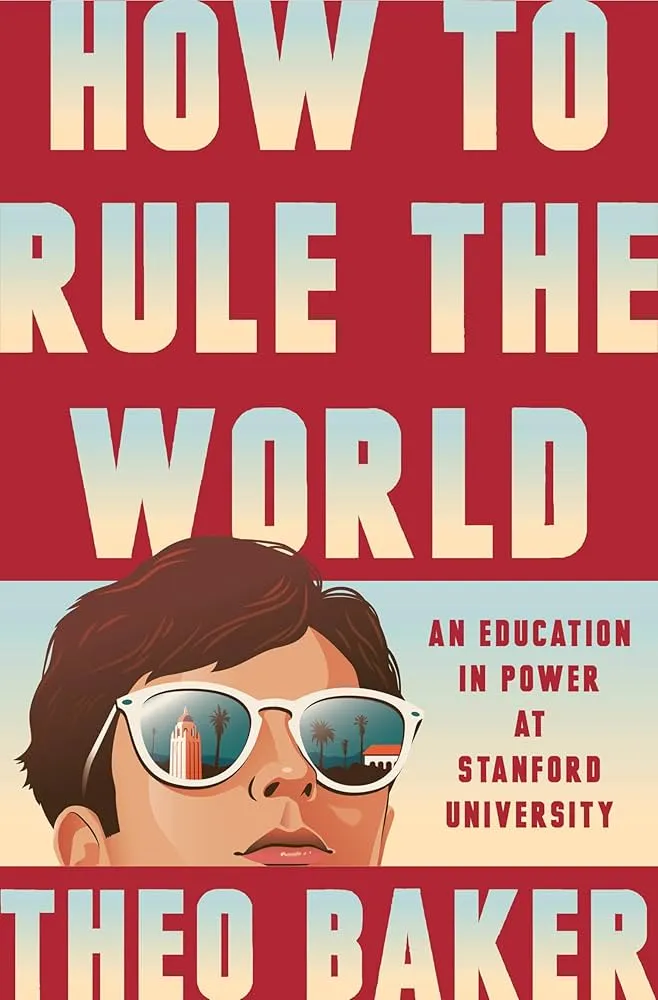
Theo Baker's memoir, 'How to Rule the World: An Education in Power at Stanford University,' chronicles his impactful freshman year at Stanford. His investigative reporting led to the resignation of the university's president over misconduct, showcasing the challenges of confronting powerful institutions. The book offers insights into the dynamics of power, ethics, and the unique experiences of being a young journalist in a prestigious environment.
- ▪Theo Baker's reporting in the Stanford Daily resulted in the resignation of President Marc Tessier-Lavigne.
- ▪He became the youngest recipient of the George Polk Award for his investigative work.
- ▪The memoir explores the intersection of power, ethics, and the university's venture capital culture.
2 outlets in our directory ran this story, first to last over 27 hours. All of the coverage we found sits in one bucket: centre. That one-sidedness is itself worth noticing.
- ▪ How Many Questions Can the World Afford to Ask AI? — The University of Chicago Booth School of Business
Hacker News (Newest) files mainly under programming. We currently carry 5,306 of its stories.
Story provenance
Source · retrieval · rights · ranking — open for full record
inspect →
Story provenance
Attribution is not the same as permission. This drawer separates discovery metadata, excerpts, WeSearch-generated summaries, reuse status, and whether the publisher receives the visit. Nothing here claims a legal grant the publisher has not made.
Record
| Original publisher | Feld Thoughts |
| Canonical URL | https://feld.com/archives/2026/05/how-to-rule-the-world/ |
| Publication time | Fri, 22 May 2026 02:35:08 +0000 |
| Retrieval time | 2026-05-22T03:00:08.501Z |
| Last seen | 2026-05-22T03:00:18.856Z |
| Headline source | Publisher (no WeSearch rewrite) |
| Excerpt source | publisher body |
| Excerpt method | First ~120 words (~800 chars) of extracted publisher body, fair-use limited. |
| Summary | WeSearch · cerebras-chat (WeSearch summarizer) |
| Summary source text | contentText |
| Citation coverage | Summary is a WeSearch-generated derivative; primary citation is the original publisher URL. |
| Cluster | JRhH2bDvlnsP · 2 stories |
| Cluster logic | Grouped by semantic title/content similarity across sources within a rolling window. Same-publisher template collisions are excluded from coverage comparison. |
| Ranking reason | Story pages are not engagement-ranked. Hub feeds use recency, with optional source-diversified chronological ordering (cap consecutive stories per source). No personalized ranking. |
| Publisher visit | Yes — open original |
| Substitutes article? | No — link-out required for full text |
Rights status (four layers)
WeSearch handling by dimension
| Indexing | May the item be indexed (stored, ranked, made findable)? | Allowed |
| Snippet | May a short excerpt of the publisher's text be shown? | Allowed |
| AI summary | May WeSearch generate its own short summary of the article? | Limited |
| Retrieval / RAG | May the content be exposed for third-party retrieval-augmented generation? | Not asserted |
| Model training | May the content be used to train AI models? | Not asserted |
| Commercial reuse | May the content be reused commercially? | Not permitted |
Basis: Derived from the published RSS/Atom feed. Contact: [email protected]. Reviewed: 2026-07-24.
Opening excerpt (first ~120 words) tap to expand
Home » BlogHow to Rule the WorldI read Theo Baker's How to Rule the World in the last 24 hours. It works on a lot of levels at once - memoir, investigation, a study in how power dismisses inconvenient reporting, and a master class in what not to do at the board level.May 21, 2026 · 3 min · Brad FeldI read Theo Baker’s How to Rule the World: An Education in Power at Stanford University in the last 24 hours. I was entranced, horrified, and amused, often on the same page.Baker arrived at Stanford as a seventeen-year-old freshman in 2022. By the end of his first year, his reporting in the Stanford Daily had forced the resignation of the university’s president, Marc Tessier-Lavigne, over research misconduct. He became the youngest person ever to win the George Polk Award.
…
Excerpt limited to ~120 words for fair-use compliance. The full article is at Feld Thoughts.
Discussion
0 commentsMore from Feld Thoughts