Human organoids reveal how to reverse “irreversible” nerve damage
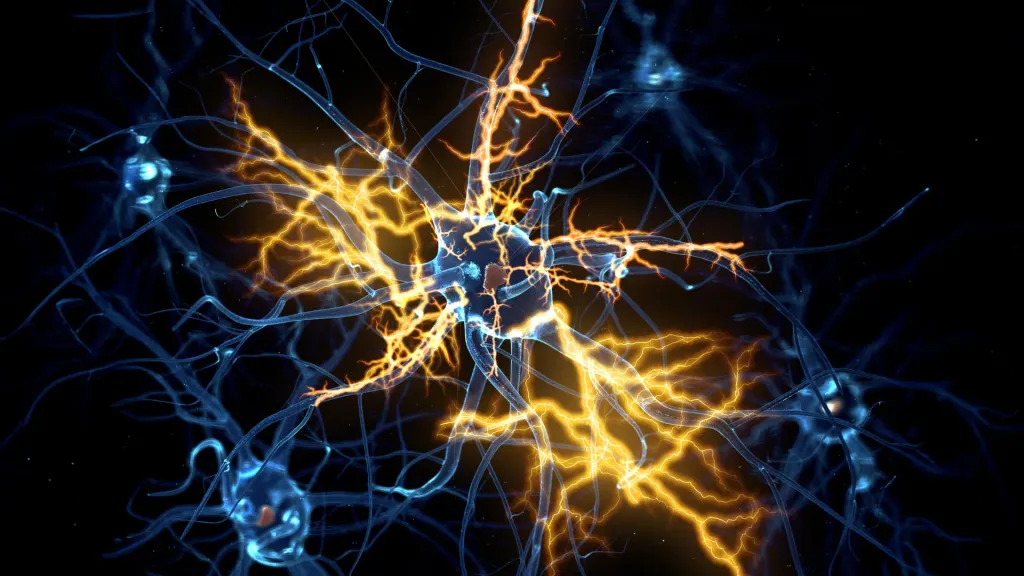
Researchers at the University of Cambridge have developed miniature brain and spinal cord systems that can mimic nerve signal transmission. They found that the ability of human neurons to regrow after damage declines during development, but this ability can potentially be restored. A hormone drug was identified that significantly boosts nerve fiber regrowth in damaged neurons.
- ▪The study revealed that nerve damage previously thought to be permanent may be reversible under certain conditions.
- ▪The researchers created lab-grown organoids that allowed them to observe axon growth and neural circuit functionality.
- ▪Blocking specific gene regulators in mature neurons restored their ability to grow axons.
ScienceDaily files mainly under science. We currently carry 84 of its stories.
Story provenance
Source · retrieval · rights · ranking — open for full record
inspect →
Story provenance
Attribution is not the same as permission. This drawer separates discovery metadata, excerpts, WeSearch-generated summaries, reuse status, and whether the publisher receives the visit. Nothing here claims a legal grant the publisher has not made.
Record
| Original publisher | ScienceDaily |
| Canonical URL | https://www.sciencedaily.com/releases/2026/05/260528082459.htm |
| Publication time | Thu, 28 May 2026 22:55:05 EDT |
| Retrieval time | 2026-05-29T02:59:40.976Z |
| Last seen | 2026-05-29T02:59:40.976Z |
| Headline source | Publisher (no WeSearch rewrite) |
| Excerpt source | publisher body |
| Excerpt method | First ~120 words (~800 chars) of extracted publisher body, fair-use limited. |
| Summary | WeSearch · cerebras-chat (WeSearch summarizer) |
| Summary source text | contentText |
| Citation coverage | Summary is a WeSearch-generated derivative; primary citation is the original publisher URL. |
| Cluster | 1YjOS9WLjmJL |
| Cluster logic | Grouped by semantic title/content similarity across sources within a rolling window. Same-publisher template collisions are excluded from coverage comparison. |
| Ranking reason | Story pages are not engagement-ranked. Hub feeds use recency, with optional source-diversified chronological ordering (cap consecutive stories per source). No personalized ranking. |
| Publisher visit | Yes — open original |
| Substitutes article? | No — link-out required for full text |
Rights status (four layers)
WeSearch handling by dimension
| Indexing | May the item be indexed (stored, ranked, made findable)? | Allowed |
| Snippet | May a short excerpt of the publisher's text be shown? | Allowed |
| AI summary | May WeSearch generate its own short summary of the article? | Limited |
| Retrieval / RAG | May the content be exposed for third-party retrieval-augmented generation? | Not asserted |
| Model training | May the content be used to train AI models? | Not asserted |
| Commercial reuse | May the content be reused commercially? | Not permitted |
Basis: Derived from the published RSS/Atom feed. Contact: [email protected]. Reviewed: 2026-07-24.
Opening excerpt (first ~120 words) tap to expand
Science News from research organizations Human organoids reveal how to reverse “irreversible” nerve damage Date: May 28, 2026 Source: University of Cambridge Summary: Cambridge researchers created miniature brain-and-spinal-cord systems in the lab that can send signals and even trigger tiny muscle contractions. They discovered that human neurons gradually lose their ability to regrow after damage during development — but that ability can potentially be switched back on. The team identified a gene network controlling this process and found that an existing hormone drug dramatically boosted nerve fiber regrowth. Share: Facebook Twitter Pinterest LinkedIN Email FULL STORY Scientists may have found a way to “switch back on” the human nervous system’s lost ability to repair itself.
…
Excerpt limited to ~120 words for fair-use compliance. The full article is at ScienceDaily.
Discussion
0 commentsMore from ScienceDaily