In addition to space stations, Vast says it will now build high-power satellites
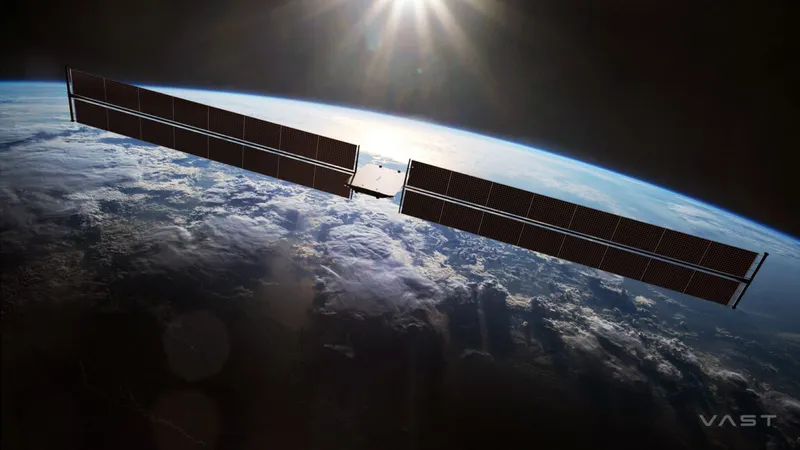
Vast Space has announced plans to diversify its offerings by building high-powered satellites in addition to its private space station. The company's first satellite bus will be a 15 kW-class model designed for various demanding missions. Vast aims to launch at least 10 satellites by the fourth quarter of 2027, targeting a growing market for modular satellite solutions.
- ▪Vast Space plans to begin selling high-powered satellite buses following the success of its demonstration spacecraft.
- ▪The first offering is a 15 kW-class satellite bus, designed for applications ranging from telecommunications to observation.
- ▪Vast has already signed a customer for four satellites and aims to launch at least 10 by late 2027.
Ars Technica files mainly under tech. We currently carry 190 of its stories.
Story provenance
Source · retrieval · rights · ranking — open for full record
inspect →
Story provenance
Attribution is not the same as permission. This drawer separates discovery metadata, excerpts, WeSearch-generated summaries, reuse status, and whether the publisher receives the visit. Nothing here claims a legal grant the publisher has not made.
Record
| Original publisher | Ars Technica - All content |
| Canonical URL | https://arstechnica.com/space/2026/05/vast-space-seeks-to-diversify-by-building-satellites-as-well-as-space-stations/ |
| Publication time | Tue, 19 May 2026 13:00:45 +0000 |
| Retrieval time | 2026-05-19T13:49:44.945Z |
| Last seen | 2026-05-19T13:49:44.945Z |
| Headline source | Publisher (no WeSearch rewrite) |
| Excerpt source | publisher body |
| Excerpt method | First ~120 words (~800 chars) of extracted publisher body, fair-use limited. |
| Summary | WeSearch · cerebras-chat (WeSearch summarizer) |
| Summary source text | contentText |
| Citation coverage | Summary is a WeSearch-generated derivative; primary citation is the original publisher URL. |
| Cluster | 3ZM3c0vjna7r |
| Cluster logic | Grouped by semantic title/content similarity across sources within a rolling window. Same-publisher template collisions are excluded from coverage comparison. |
| Ranking reason | Story pages are not engagement-ranked. Hub feeds use recency, with optional source-diversified chronological ordering (cap consecutive stories per source). No personalized ranking. |
| Publisher visit | Yes — open original |
| Substitutes article? | No — link-out required for full text |
Rights status (four layers)
WeSearch handling by dimension
| Indexing | May the item be indexed (stored, ranked, made findable)? | Allowed |
| Snippet | May a short excerpt of the publisher's text be shown? | Allowed |
| AI summary | May WeSearch generate its own short summary of the article? | Limited |
| Retrieval / RAG | May the content be exposed for third-party retrieval-augmented generation? | Not asserted |
| Model training | May the content be used to train AI models? | Not asserted |
| Commercial reuse | May the content be reused commercially? | Not permitted |
Basis: Derived from the published RSS/Atom feed. Contact: [email protected]. Reviewed: 2026-07-24.
Opening excerpt (first ~120 words) tap to expand
Catching the satellite bus In addition to space stations, Vast says it will now build high-power satellites “Every single successful space company is diversified in its products.” Eric Berger – May 19, 2026 9:00 am | 6 A rendering of Vast's 15 kW satellite. Credit: Vast Space A rendering of Vast's 15 kW satellite. Credit: Vast Space Text settings Story text Size Small Standard Large Width * Standard Wide Links Standard Orange * Subscribers only Learn more Minimize to nav As part of its plan to develop a private space station, Vast Space built and then launched a small demonstration spacecraft in early November. This vehicle then completed dozens of test objectives with flying colors before making a successful de-orbit three months later.
…
Excerpt limited to ~120 words for fair-use compliance. The full article is at Ars Technica - All content.
Discussion
0 commentsMore from Ars Technica - All content