'In the End I Was Right': How a Harvard Historian Helped Reagan Topple Soviet Communism
Such crude censorship failed to conceal the grim reality of Bolshevik rule from those millions who were unfortunate enough to be trapped behind the Iron Curtain. Yet many European and North American government officials and intellectuals were duped, naïvely overestimating Soviet strength in the same way that Nicholas Kristof of the New York Times now touts the life expectancy of children born in Beijing. Fortunately for America and for those under the jackboot of Soviet Communism, there were some who saw past the propaganda to the cruel truth.
- ▪Such crude censorship failed to conceal the grim reality of Bolshevik rule from those millions who were unfortunate enough to be trapped behind the Iron Curtain.
- ▪Yet many European and North American government officials and intellectuals were duped, naïvely overestimating Soviet strength in the same way that Nicholas Kristof of the New York Times now touts the life expectancy of children born in Bei
- ▪Fortunately for America and for those under the jackboot of Soviet Communism, there were some who saw past the propaganda to the cruel truth.
Washington Free Beacon files mainly under politics. We currently carry 130 of its stories.
Story provenance
Source · retrieval · rights · ranking — open for full record
inspect →
Story provenance
Attribution is not the same as permission. This drawer separates discovery metadata, excerpts, WeSearch-generated summaries, reuse status, and whether the publisher receives the visit. Nothing here claims a legal grant the publisher has not made.
Record
| Original publisher | Freebeacon |
| Canonical URL | https://freebeacon.com/national-security/in-the-end-i-was-right-how-a-harvard-historian-helped-reagan-topple-soviet-communism/ |
| Publication time | Sun, 28 Jun 2026 09:00:24 +0000 |
| Retrieval time | 2026-06-28T09:50:52.146Z |
| Last seen | 2026-06-28T09:50:52.146Z |
| Headline source | Publisher (no WeSearch rewrite) |
| Excerpt source | publisher body |
| Excerpt method | First ~120 words (~800 chars) of extracted publisher body, fair-use limited. |
| Summary | WeSearch · cerebras-chat (WeSearch summarizer) |
| Summary source text | contentText |
| Citation coverage | Summary is a WeSearch-generated derivative; primary citation is the original publisher URL. |
| Cluster | ez7J6QULA8lp |
| Cluster logic | Grouped by semantic title/content similarity across sources within a rolling window. Same-publisher template collisions are excluded from coverage comparison. |
| Ranking reason | Story pages are not engagement-ranked. Hub feeds use recency, with optional source-diversified chronological ordering (cap consecutive stories per source). No personalized ranking. |
| Publisher visit | Yes — open original |
| Substitutes article? | No — link-out required for full text |
Rights status (four layers)
WeSearch handling by dimension
| Indexing | May the item be indexed (stored, ranked, made findable)? | Allowed |
| Snippet | May a short excerpt of the publisher's text be shown? | Allowed |
| AI summary | May WeSearch generate its own short summary of the article? | Limited |
| Retrieval / RAG | May the content be exposed for third-party retrieval-augmented generation? | Not asserted |
| Model training | May the content be used to train AI models? | Not asserted |
| Commercial reuse | May the content be reused commercially? | Not permitted |
Basis: Derived from the published RSS/Atom feed. Contact: [email protected]. Reviewed: 2026-07-24.
Opening excerpt (first ~120 words) tap to expand
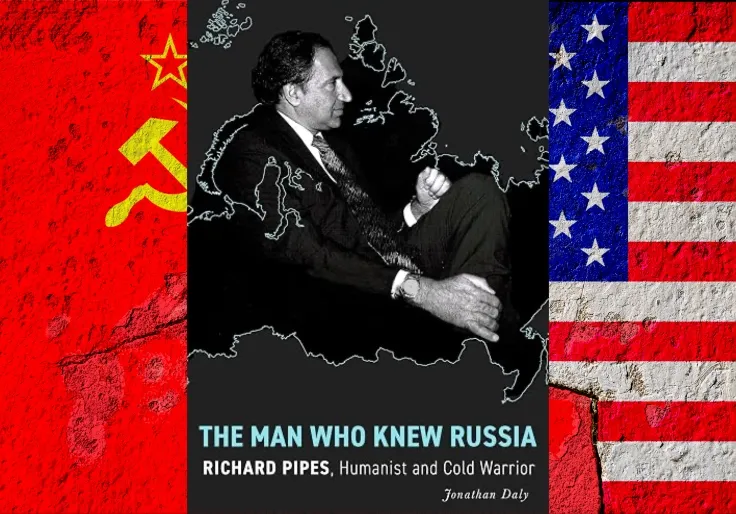
National Security 'In the End I Was Right': How a Harvard Historian Helped Reagan Topple Soviet Communism REVIEW: 'The Man Who Knew Russia: Richard Pipes, Humanist and Cold Warrior' by Jonathan Daly 'The Man Who Knew Russia' (Amazon), Soviet, American flags (Grabien) Ira Stoll June 28, 2026 image/svg+xml .st0{fill:none;stroke:#384f61;stroke-width:2;stroke-linecap:round;stroke-linejoin:round;stroke-miterlimit:10;} .st1{fill:none;stroke:#384f61;stroke-width:2;stroke-linejoin:round;stroke-miterlimit:10;} In 1949, during Stalin's reign as dictator of the Soviet Union, obituaries in the Communist-controlled newspapers stopped including the ages of those who died, "presumably for fear of revealing a declining life expectancy," Jonathan Daly writes in The Man Who Knew Russia, his new biography…
Excerpt limited to ~120 words for fair-use compliance. The full article is at Freebeacon.
Discussion
0 commentsMore from Freebeacon